

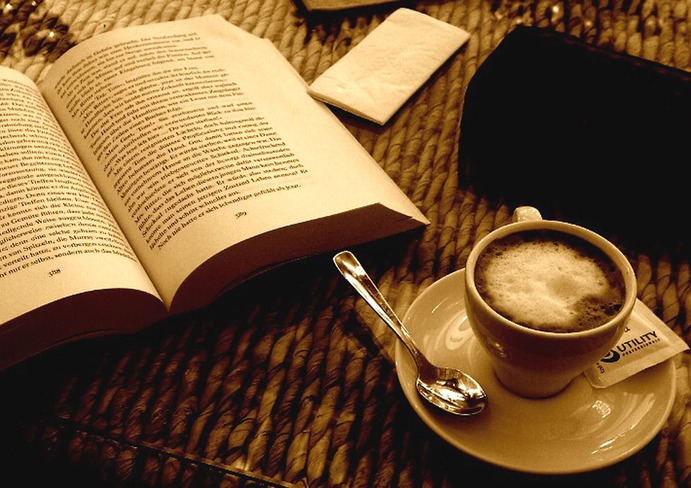
As the world gears to commemorate the Prophet Muhammad’s birth, a mother prepares material for the holiday feast, a group of qawwals stays late at night rehearsing for the awaited occasion, while too a few stiff-lipped hard-liners sincerely share social media messages denouncing all festivities as sinful. Amidst all this, an enthusiastic Islamophobe prints flyers that promise to ‘expose the real truth’ about the prophet of Islam, and a father and son spend their evenings together putting up decoration lights.
Thus, the fateful day returns this year, even as people continue to fight and fuss over its exact date. And as contested as the prophet’s legacy remains, the occasion returns when everyone seeks to revisit it.
This year, we may happily engage in whatever variety of activities we choose to mark our reaction to the Milad with. Yet we can seldom refuse to acknowledge the diversity of responses distinct from our own, the contested legacy of the prophet, and the increasing need of seeking to understand, if not sympathise with, the other claimants to Muhammad’s legacy.
To this noble end, I present a brief bibliography we may use to learn – and relearn – the life and legacy of the Messenger of God:
Martin Lings’ ‘Muhammad: His Life Based on the Earliest Sources’ (Cambridge, Islamic Texts Society)
Claimed as the definitive biography of the Prophet in modern English, its literary elegance is only matched by its rigorous scholarship. A traditional account, enlivened through an unparalleled beauty of prose.
Tariq Ramadan’s ‘The Messenger: The Meanings of the Life of Muhammad’ (Penguin UK)
A meditative and reflective reading of the Prophet’s life offering insights from the classical biography for the contemporary challenges of our times. Deeply spiritual and ever intelligent.
Jonathan Brown’s ‘Muhammad: A Very Short Introduction’ (Oxford University Press)
Part of the phenomenal ‘Very Short Introduction’ series from Oxford University Press, this book by a leading scholar of the field, offers a brief yet succinct summary of the classical biography of the prophet. Coupled with an enlightening discussion on how the Seerah literature develops in history, it deftly manages to cover important contemporary debates in such few pages.
Karen Armstrong’s ‘Muhammad: Biography of the Prophet’ (Orion Publishing Group)
A highly readable and scholarly account by a sympathetic non-Muslim that goes a long way in dispelling many myths about the prophet’s life that continue to be propagated in popular media. The first chapter traces the harrowing history of European perceptions of the prophet as ‘the enemy’ as part of the narrative of the Crusades – whose legacy continues in ignorant stereotypes that still abide.
Lesley Hazleton’s ‘The First Muslim: The Story of Muhammad’ (Atlantic Books)
A captivating retelling of the classical Sirah by an Agnostic Jew, that tells the tale of the Prophet with equal sympathy and intelligence. Weaving together diverse tropes from history, politics, literature and psychology, Hazleton is compellingly critical while never disrespectful.
Ahmed Von Denffer’s ‘A Day with the Prophet’ (The Islamic Foundation)
A compilation of traditions of the Prophet (Hadith) that paint a vivid picture of a model day of the Messenger. A practical manual of the Prophet’s Way (Sunnah).
Annemarie Schimmel’s ‘And Muhammad is His Messenger: The Veneration of the Prophet in Islamic Piety’ (Islamic Book Trust, Kuala Lumpur)
A spectacular read on the Prophet in the Sufi tradition. A classic that draws on poetry and art, with much emphasis on the Islamic traditions of the Indian subcontinent; And finally:
Jonathan Brown’s ‘Misquoting Muhammad: The Challenges and Choices of Interpreting the Prophet’s Legacy’
A romp through the genesis and shaping of Islamic intellectual traditions in history up to the present, and a robust engagement with the predicament of tradition in the modern world. With a staggering command on classical scholarship and an erudite array of comparisons with the likes of Biblical hermeneutics, western moral philosophy and deconstruction theory, Brown never fails to enthral.
Alas! A great many worthy recommendations had to be left out of this ‘brief list’. Instead of inundating you with even more reading suggestions, I would like to remind us that while books are indeed instrumental to a sound understanding, they cannot capture the feeling for the Prophet that say, a Burdah evokes, or that a Qawwali incites – that almost intoxicating devotion that it can invoke in the heart of the listener. So perhaps someone should compile a list of Qawwalis in praise of the Prophet, but I wouldn’t venture there in deference to our well-meaning stiff-lipped brothers and sisters. However, I would also not hesitate to invite them and you to grab a cup of coffee or a cutting of chai and pick up one of these books to sit and sip your cup, alone or in company.

[…] can read Prophet Muhammad’s biography The Sealed Nectar by Safi-ur-Rahman Mubarakpuri besides several scholarly works. Sceptics or critics might consider Misquoting Muhammad by Jonathan Brown; Islam at Crossroads by […]