The day Taliban captured Kabul; apprehensions grew large enough that the event engrossed global attention. Anxieties prompted, fear of upcoming persecution and terrorism multiplied further. Apparently, it was quite evident that the international community is very much concerned about large-scale human rights violations that, they perceived, the new regime is going to unleash.
However, in the days that followed, curiosity among the international community to help people out of the prevailing situation began to wither away. Now at a time when there exists a complete Humanitarian emergency, the international community stays merely a mute spectator.
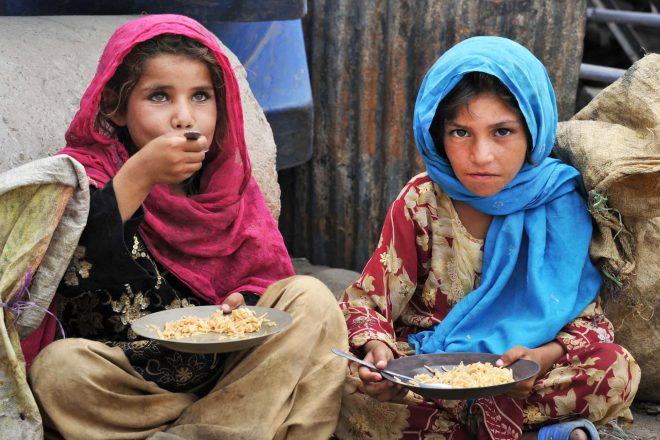
The UN estimates nearly half the country’s population or its 23 million people, is facing acute hunger, and about 3.2 million children under the age of five are expected to suffer from acute malnutrition by the end of this year. If humanitarian assistance does not come on time, more than half a million children will die of malnutrition.
Decades-long Legacy
Afghanistan was facing a humanitarian crisis before the Taliban seized power, thanks to its severe climatic conditions and decade long war and conflict. The dire economic condition was further exacerbated by the US freezing Afghanistan’s foreign assets amounting to nearly US $9.5 billion. and withholding other international institutions and aid that use to come with the former regime. All this has led to a complete disruption of the country’s financial and public sectors.
The UN World Food Programme has already issued multiple warnings owing to Afghanistan’s worsening food insecurity and the possibility of causing large-scale deaths due to mass starvation in approaching harsh winters. Hospitals have already run out of bed, public officials at schools and other government institutions are unpaid for months now. People are taking desperate measures to make fraught decisions. Some are selling their household items and others are forced to migrate, only to put food on their table. The drama unfolds under the surveillance of the international community which owes the onus of actively creating a preventable famine.
An Absurd act of Hypocrisy
Zabihullah Mujahid, the Taliban’s chief spokesperson told CBS News’ Imtiaz Tyab that “on the one hand they (US) say a million children will die, but on the other, the US is holding our money. They should immediately release our money so that we can save more children”.
The head of the UNWFP David Beasley has warned last week that by winter, Afghanistan would be Hell on Earth. In a message to the world leaders, Mr. Beasley has said,” To the world leaders, to the billionaires, imagine if this was your little girl or your little boy or your grandchild about to starve to death, you would do everything you could. And when there is $400 trillion of wealth on the earth- shame on us if we let any child die from hunger.”
There still exist a lot of hues and cries concerning women’s liberty, girls education, inclusiveness of the government, and such others but when it comes to humanitarian aid which is need of the hour, the general response is quite absurd and if at all there is, it comes with preconditions attached.
The underline motive of the states is to use aid as a bargaining chip to force the Taliban to come to their terms. A coalition of 17 aid organizations has called on world leaders to stop playing politics with people’s lives and work collectively in reinstating funds to Afghanistan.
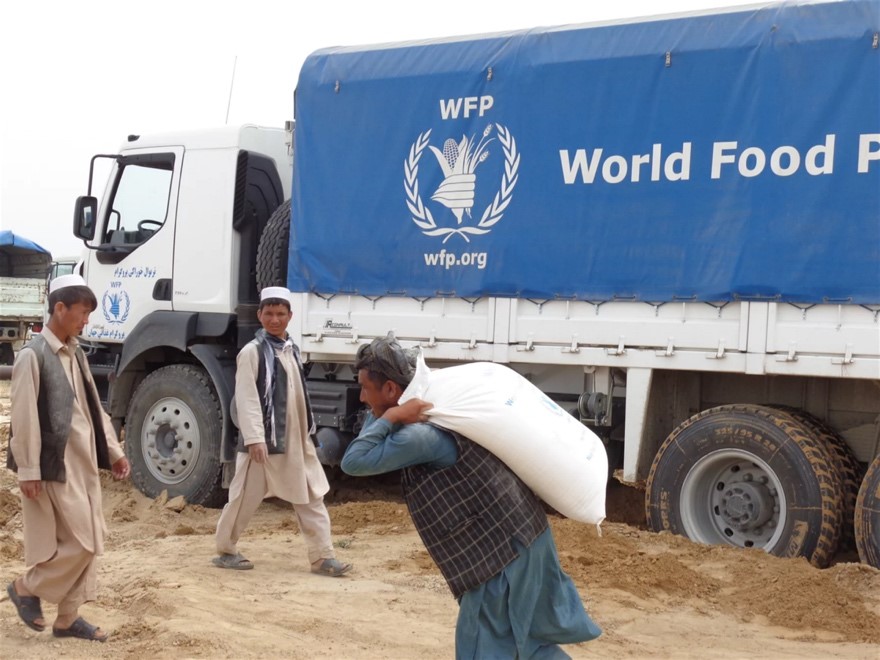
Nevertheless, there are also some positive steps coming in though very meagre; World Food Programme head for Afghanistan has said that we do have access to all 34 provinces and every day we have around 170 trucks on the road which move freely across the border with food. India has also pledged to send 50,000 tons of wheat to Afghanistan and Pakistan has also agreed to provide its territorial access. The current government in Kabul has launched a Wheat-For-Work scheme wherein laborers in Kabul will be paid in wheat instead of cash. The government has also pledged to distribute around 11,600 tons of wheat in Kabul.
The international community must take into consideration that the Afghanistan issue is central to peace and stability particularly in South Asia. Any step that is intended to create turmoil could further fuel problems like the ongoing refugee crises at Belarus- Poland border, keeping aside the large refugee influx that has already taken place in neighboring countries particularly Pakistan, Iran, and Turkey. Therefore, the international community, while keeping their vested interests aside, must take cognizance of the hunger apocalypse that is unfolding in Afghanistan.