
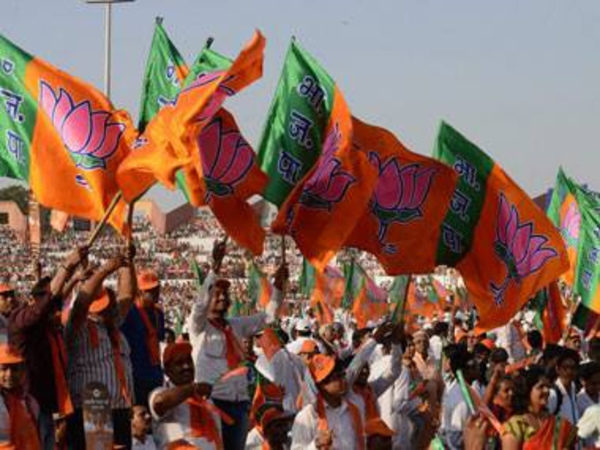
Today the BJP is in power in 19 states, commands a majority in the Lok Sabha and is inching towards a majority in the Rajya Sabha. It has formed governments in unlikely areas such as Jammu and Kashmir and Manipur, traditionally considered to be its NO-GO areas. The BJP’s rise through that quintessentially democratic process of elections is one of the most fascinating stories of the contemporary India. It has altered politics, created new social coalitions, dissolved old fault lines, generated new conflicts, empowered a few, alienated others and is having a profound impact on state institutions. When a charismatic leader, a powerful strategist, astute social alliances, a formidable ideological and organisational setup and religion and a ruthlessly ambitious pragmatic and flexible culture merge, politics and democracy can perhaps change irrevocably and in unanticipated ways.
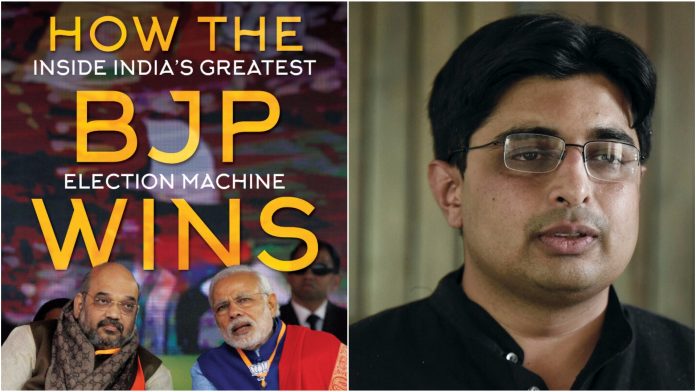
The author of the book- How BJP Wins- tries to figure out the strategies the party deploys to emerge as the most dominant party after the Congress in the 1980s. The party under Amit Shah is not just seeking to expand its footprint the nation all over, but to win every election from the Panchayat to the Parliament.
The Modi Hawa
2014 elections redefined the Indian politics. Since 1984, no party had an absolute majority in national elections. India, it was widely assumed would continue to have a fragmented polity with two weak poles around which regional parties coalesced and coalition governments formed. The above 90% strike rate in terms of seats in the Hindi heartland and securing 282/544 on its own in a country as diverse as India is no mean feat. It owes it to one man, Narendra Modi. The book Election that Changed India 2014 documents his ability of building organisational structure, his art of manpower management, his ability to sell dreams and his talent of crafting social and political alliances to stitch together a rainbow coalition.
He was a development man for the Gujarat Model having been the CM of the state for 13 years. His experience of running the state was compared to Rahul Gandhi who had no personal governance experience. The parliamentary election was converted to a presidential one between Modi versus Rahul. A macho, development oriented, ultranationalist image of Modi versus the political novice of a pappu Rahul were projected as the only options.
Modi appealed to most of the segments of the Indian society. To the upper castes, he represented a party which was in tune with their aspirations and would bring in stability, order and progress, to the deprived he was one of their own who would deliver justice and jobs, to the middle classes he was a man who would make them richer through his liberal economic policies, to the disadvantaged, he was a Chaiwala who had made it big. All this led to unparalleled consolidation of various segments in favour of the party .
Modi’s multiple avatars worked in 2014 but not in Delhi and Bihar. Rahul Gandhi’s powerful jibe of Suit Boot ki Sarkar pushed him to make drastic policy changes. For he was seen being a man for the rich spending time on a world tour rather than a man for all Indians. An astute politician as Modi is, the book tells the story of how Modi repositioned himself as a Garibon Ka Neta through policy measures.
Shah’s Sangathan
The party was driven by boundless expansionist tendencies (in terms of both territorial limits and social base) under Amit shah. This expansion was achieved through winning elections intraditional strongholds where party may have faltered in recent years like UP, targeting newer geographies where there is political space for alternatives like the North East and striving to become the principal opposition force in states where it has been historically weak like West Bengal and Odisha. Modi’s mass connect along with Shah’s work in transforming the party into an election machine is an equally important element of the story.
Shah has energized the party sangathan and carefully made booth committees the centre and focus of all activities. He has created a centralized yet decentralized structure where information flows both-from top to bottom and the other way round and decision making is rapid, and further has instituted independent data-based feedback mechanisms to identify core issues the organisations should be taking up and ensured that leaders at all levels are held accountable. The book offers a precise and detailed understanding of the components of Amit Shah School Of Election Management.
Social engineering
Caste is an important element of the Indian society. The caste and religious composition in UP was problematic as 40% of its population comprising the Yadav OBCs, the Jatav SCs and Muslims did not vote for it. The party thus had a 60% vote bank to rely upon and it did it remarkably well in the narrowed segment. It held onto its traditional upper caste vote and it consolidated the non Yadav OBCs and the non Jatav Dalits to make a winning rainbow coalition. After Shah became the party chief; in absence of a strong organisation, he had to get the arithmetic right in the assembly elections. Changes in the party’s organisational structure to make it more inclusive, reformulation of its messaging so that backward communities felt both a sense of emancipation and victimhood: and alliances with parties with a base among these communities were key to his plans. Transitioning of the BJP from being a Brahmin-Baniya upper caste party to become an all-inclusive Hindu party is an important that change that was undertaken in the process.
All Indian states have dispersed backward classes. The party decided to focus on the strategy of political mobilization against the privileged castes like Maratha and Jats in Maharashtra and Haryana elections respectively. With the rise of Mandal politics, assertion of OBC and their mobilisation, the more numerically and socially dominant of these groups from peasant backgrounds have also become politically dominant. But precisely because of that, a range of other castes both traditionally powerful and marginalised feel alienated. Thus the ploy of mobilizing these castes and building an alliance against the dominant caste, which in post Mandal era is usually numerically the largest middle caste of the particular setting is a difficult task that was achieved. This did not work in Bihar. The comment by the RSS chief on reservation was cunningly exploited by Lalu and Nitish that made Bihar a forward–backward election against the BJP’s wishes of Hindu Muslim-chunav and anti dominant caste election. The book talks about of why the party succeeded in UP but failed in Bihar.
BJP is Sangh and Sangh is BJP
The RSS remains the source, supplement and the shadow-contributing to BJP’s phenomenal electoral success, shaping it but also getting shaped in the process. The Sangh is its ideological parent, the alma mater of almost its entire leadership with Modi being its most distinguished alumni. The Sangh with a strong emphasis on organisation and aversion to personality cult has reconciled with a strong leader like Modi. This is due to the ideological convergence, regular coordination and smooth working relationship he has with the Sangh leadership. The Sangh is also proud of the Hindu identity Modi flaunts. The current political realities also forced Rahul Gandhi to do the same in the Gujarat election to not appear as anti-Hindu.
Rarely has RSS been as intimately involved in an election as it was in 2014. There were 2 campaigns running parallel during the 2014 elections. One was the high decibel Modi blitzkrieg and the other a much quieter parallel campaign by the Sangh with active coordination between the two at the highest level. The role of sangh was confined to encouraging citizens to vote and and ensuring a higher voter turnout through mass contact. This was done through use of data , technology and massive ground level work. The book brings out this complementary and supplementary aid the sangh provides to the BJP.
Hindu-Muslim Chunav
The BJP cannot with its ideological framework win elections in North and East India without a strong element of communal polarisation. These states have a Muslim population of 20% or more and the party starts with a minus 20 disadvantage. To consolidate the rest of the spectrum, it needs to be internally inclusive of all Hindu castes. But it also crucially needs to construct the Muslim as the other, as the community that would exercise disproportionate power if others won, as the community that needs to be taught a lesson. It needs to tap into existing prejudices, needs to stoke resentment, and needs to play up perception, often rooted in reality–that others are focusing on winning muslim vote. To achieve this, the BJP and its affiliates relied in the most sophisticated yet crude propaganda involving technology and falsehood. They have been actively complicit in anti Muslim riots and violence and benefited from the anger and anxieties such moments produce. The Hindu sense of victimhood is sharpened. They have triggered low intensity but persistent tensions causing religious discord. This serves both the goals of getting different castes to vote together and larger ideological goal of the Hindu unity. When the polarization succeeds, the election becomes an India-Pakistan election. Many tend to compartmentalize the BJP’s use of developmental card, law and order card and Hindu card and are treated as distinct platforms. But the book portrays how the party portrays all 3 into a common narrative.
Beyond the heartland
The expansion beyond its traditional areas is part of Modi-Shah duo’s carefully crafted plan which is executed through an old RSS hand-Ram Madhav. The expansion of the party here was rested on key strategies: Co-option of existing political elite including former rivals of the congress, dilution of its ideological core and an attempt to reposition itself as a party that respects diversity: and adaptation to specific realities of different regions.
He has been the man responsible in crafting party’s strategy in J&K and the North East. The party initiated a talk with PDP known for its soft separatism and and came to power by working on an agenda of alliance. He was then deputed to north East. His abilities were utilised in North East, Assam in particular where they co-opted former congress leaders like Himant Biswa Sarma. There were other strategies that were exploited-when you cannot win it yourself, get the man who can win on your side, to get the extra vote, disrupt the opposition and win over those who can get it for you. They also deployed all means such that an alliance of between Ajmal and congress does not fructify.
The party had no base in Manipur and was dependent on modisimage and strength of local candidate. Likeco-optingsarma in Assam, they brought in N Birensingh from congress in Manipur. It also had to fight election on ground in a state with different Christian tribal communities in hills and Hindus in the mainland. It had to navigate the Meitei-Naga divide. The party commissioned surveys to identify the key issues .The party was conscious enough not to push the anti beef agenda by diluting its ideological core. The party’s Christian tribal candidates went around the hills telling people that BJP is bhartiya jesus party. The party opened channels with the underground outfits and were managed through means-monetary inducements, promise of future rehabilitation and political settlements. The party formed governmenteven after securing 21 seats out of 60 by forming a coalition .The Manipur election had revealed the BJP’s continued pragmatism and its willingness to absorb leaders from other outfits who commanded influence.
The future of Hegemon
The BJP looks increasingly invincible in the contemporary political space. Most predict that Modi will return to power in 2019. Even Nitish Kumar shifted sides. But Indian politics is unpredictable and democracy has its own ways of introducing checks and balances within the polity. Four broad factors will decide whether India will see a greater expansion and a continued hegemony of BJP, or whether its march will halt. The first factor is whether Modi would be able to sustain a multi-class of poor, middle class and rich in tune with SabkaSaathSabkaVikas or will it become a zero sum game between these different communities. Another factor whether Modi can sustain his appeal depends on policy, delivery, and governance. The economy and jobs creation pose serious challenge for his election in 2019.
Politics is the art of managing contradictions. Will Modi be able to reconcile between the multiple caste contradictions or will they unravel. Can this coalition last?? The power in UP seems to be cornered by the upper castes. The Dalit anger across the country is indicative of the fragile caste coalition. The belligerent focus on gauraksha may help in Hindu consolidation, this politics has costs. The 2019 strategy rests on expanding its presence in the South and North East. But its focus on beef in the heartland may boomerang in these new frontiers. Other issues that erode BJP’s claims of providing order and governance are mob violence which generates insecurity. The final variable that will determine the party’s future is the state of the opposition. Whether Congress gets its act together remains to be seen. Also a key variable which will determine party’s future is index of opposition unity. Will the opposition unite nationally as in the case of Bihar’s maha gathbandhan or will the issue of leadership of the alliance keep them divided?? In the Gujarat elections, the aforementioned vulnerabilities on economy, job creation and caste alliances were enough to give BJP a scare in its own fiefdom. Will they play out with larger intensity on multiple fronts remains to be seen.
The BJP’s rise is a transformational moment in Indian democracy. It may remain powerful, it may become hegemonic or it may collapse as rapidly as it grew. But through a mix of strategies, the party has changed the nature of political contestation in India and is on its way to redefining what it means to be an Indian. The book offers a panoramic view of the changing political landscape of the country and promises a read worth it.