On May 7, the nation woke up to news of “Operation Sindoor”, carried out in response to the attack of April 22nd by five Pakistani armed terrorists on civilians near Pahalgam in Jammu and Kashmir, which claimed twenty-six lives.
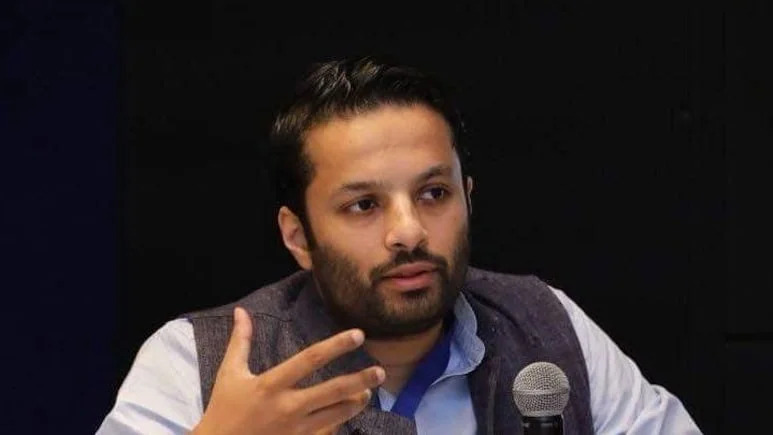
Televised valour, military heroism, and neatly choreographed nationalism were everywhere, culminating in a high-profile debrief with Foreign Secretary Vikram Misri, Colonel Sofia Qureshi and Wing Commander Vyomika Singh. What should have been a routine briefing turned into a national spectacle. Social media accounts flooded with hashtags, hyperbole, and unsolicited lessons in patriotism. But a dangerous undertow revealed itself in the cacophony of pride and posturing. Dr. Ali Khan Mahmudabad, Head of the Department and associate professor of Political Science at Ashoka University (Haryana, India), posted a comment. A thoughtful reflection. A critical one. And that was enough. Within hours, a smear campaign began. Within days, he was arrested.
Arrest as a Spectacle: Policing Thought, Not Law
In the early morning of Sunday, 18th May, what should have been another ordinary day, the state arrested not just a man but an idea that a Muslim in India could be intellectually independent, historically rigorous, politically engaged, and unapologetically critical.
Dr. Ali Khan Mahmudabad, an Indian historian, public intellectual, and associate professor of both Political Science and History at Ashoka University, by Haryana Police after two separate FIRs were registered against him including complaint by one Yogesh Jatheri, general secretary of the BJP’s state Yuva Morcha and sarpanch of Jatheri village and Haryana women’s commission chairperson Renu Bhatia.
“The first FIR was filed based on a complaint by Yogesh Jatheri under sections 196, 197, 152 and 299 of BNS, and the second FIR was registered following a complaint from Haryana women’s commission chairperson Renu Bhatia under sections 353, 79, 152, and 169 (1) of BNS. He will be produced in court, and the police will seek his remand for further investigation,” Deputy Commissioner of Police, Narender Kadyan, said.
The real offence, however, here is not a set of social media posts critical of the Indian State but being an articulate Muslim academic who refuses to contort his scholarship or conscience to fit the narrow confines of performative nationalism.
The arrest is not simply an aberration in a rule-of-law democracy. It is the latest instance in a pattern of state overreach cloaked in procedural formality, where law enforcement acts not in pursuit of justice but in obedience to the shrill demands of far-right outrage machinery. However, what is striking is not just the action of the state, but the silence of the institutions that should have been his first line of defence.
A Muslim Scholar as a Threat
Dr. Mahmudabad is not a radical. He is not incendiary. He is a historian, one who writes with care, archival precision, and a deep understanding of the complexity of India’s past. His academic work raises questions that should concern any serious student of Indian history. But when a Muslim scholar engages these themes, especially in a moment of manufactured nationalist hysteria, the reception is fundamentally different.
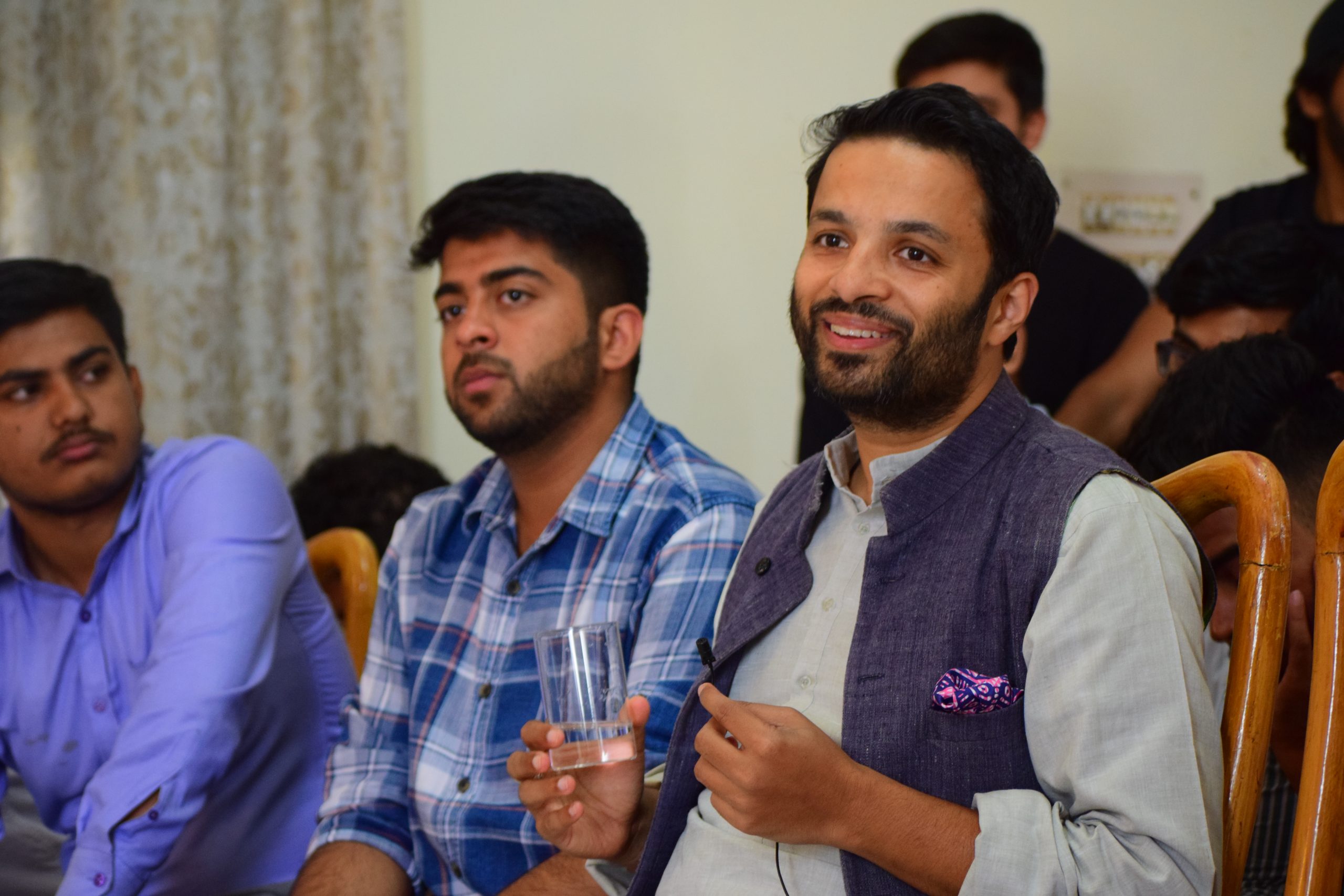
What would be read as critical analysis from another becomes subversion when spoken by a Muslim. This is the burden Muslims carry in today’s India: that intellectuals are never just intellectuals, they are constantly surveilled as potential sites of betrayal.
To be a Muslim in Indian academia today is to live with the persistent presumption that one’s patriotism is conditional, one’s loyalty is uncertain, and one’s scholarship is suspect. And in Dr. Mahmudabad’s case, that presumption was finally enforced by the state, with handcuffs.
Cowardice in the Cloak of Neutrality: Ashoka University’s Failure
In the aftermath of Dr. Ali Khan Mahmudabad’s arrest, Ashoka University issued a statement that quickly drew widespread criticism. Rather than defending its faculty member or affirming the principles of academic freedom, the university chose to distance itself entirely from the controversy.
“The comments made by a faculty member on his personal social media pages do not represent the opinion of the university,” the statement read.
It went on to add: “The university stands firmly with the nation and its armed forces.”
This response, tepid, evasive, and deeply revealing, was condemned by students, scholars, and activists alike. In its attempt to assert institutional neutrality, Ashoka instead offered itself up as a textbook example of how elite academic institutions abandon their moral responsibility in moments of political crisis. By reaffirming allegiance to the nation and its armed forces, while remaining silent on the violation of due process, academic freedom, and constitutional rights, the university effectively sanctioned the state’s punitive action against one of its own.
In an additional statement regarding the arrest of the professor, Ashoka University said:
“We have been made aware that Professor Ali Khan Mahmudabad has been taken into police custody earlier today. We are in the process of ascertaining details of the case. The university will cooperate with the police and local authorities in the investigation fully.”
This performance of ‘neutrality’, in reality, is anything but neutral. It is a form of political alignment, one that preserves institutional comfort at the cost of academic integrity. It tells faculty and students, particularly those from minority and marginalised communities, that the university will not stand by them when they are targeted. It tells us that speaking critically, even within the bounds of legality, scholarship, and constitutional reason, will be met not with protection, but with abandonment.
In contrast, the Faculty Association of Ashoka University issued a statement regarding his arrest. It unequivocally condemned the arrest and the procedural violations that accompanied it:
“The Faculty Association of Ashoka University strongly condemns the arrest of Professor Ali Khan Mahmudabad, Associate Professor and Head of the Department of Political Science, on 18 May 2025, on groundless and untenable charges. We condemn the calculated harassment to which Professor Mahmudabad has been subjected: after being arrested early in the morning from his home in New Delhi, he was taken to Sonipat, not allowed access to necessary medication, and driven around for hours without any communication about his whereabouts.”
The statement went further to affirm Dr. Mahmudabad’s scholarly contributions and values:
“Professor Mahmudabad is well-versed in diverse literary and linguistic traditions and is a widely acclaimed expert and scholar of history and political science in South Asia and beyond. In all of his writing, both for academic and wider public fora, he has emphasised the importance of justice, pluralism, and solidarity, and has always advocated a profound respect for Constitutional values and morality.”
The contrast between the administration’s silence and the faculty’s clarity is stark and telling. One speaks from fear, the other from principle. One preserves itself, the other defends the integrity of academic life.
This posture, however, is not unique to Ashoka but emblematic of a deeper malaise in Indian academia: the quiet internalisation of fear, the normalisation of complicity, and the slow erasure of principled intellectual life in favour of compliance and self-preservation.
Not an Isolated Incident, but a Pattern of Control
To understand what is at stake, we must widen our lens beyond a single arrest. This is not about one man, or even one university. It is part of a growing, systematic effort to delegitimise Muslim intellectual life in India.
We have seen collaborations cancelled with Turkish universities, not because of academic concerns, but because of diplomatic ties between Islamabad and Ankara. We have seen Muslim students suspended for political opinions. We have seen historians, poets, and writers branded as anti-national for ‘invoking’ the constitution, for quoting Faiz, for speaking Urdu, for remembering Kashmir.
It is not simply that Muslims are being excluded from spaces of power; it is that their very presence is problematized, perceived as inherently political, provocative, and suspect. The Muslim voice, particularly when critical, is no longer just heard as dissent but is increasingly framed as disloyalty to the nation itself. This shift transforms political expression into a perceived threat, rendering Muslim participation in public discourse as something to be managed, contained, or silenced.
The Epistemic Violence of Conditional Citizenship
What is happening here is more than political repression. It is epistemic violence. It is a campaign to narrow the range of permissible thought, especially when that thought comes from marginalised or minoritised voices. It is an effort to erase the Muslims not only from public discourse, but from intellectual life itself.
This is not merely about state surveillance. It is about the internalisation of fear by Muslims who write, teach, and speak. It is about the quiet choices we make: to not post, to not publish, to not speak in our names. It is about the slow erosion of our confidence in the idea that our voices will be heard as scholars, rather than dismissed as threats.
Universities at the Moral Crossroads
What, then, is the role of the academic institution?
It is tempting to fall back on the language of institutional helplessness: we cannot interfere with the law, we must remain ‘apolitical’. We are simply an educational body. But these positions are neither neutral nor harmless. The idea of being apolitical is itself a political fiction. One that allows institutions to preserve their comfort while disavowing responsibility. In times of systemic repression, to claim apoliticality is not to rise above politics, but to endorse the status quo. It is to pretend neutrality while enabling power to go unchallenged.
If universities will not defend their scholars from politically motivated persecution, what is left of their moral core?
The University Must Be the Conscience of the Nation
We must insist that the university is not the handmaiden of the state, but its ethical counterpoint. That it exists not to reproduce state ideology but to interrogate it. That its allegiance is not to power, but to truth, even uncomfortable ones. And that its first duty is to protect the freedom to think, to dissent, and to teach without fear.
The arrest of Dr. Mahmudabad should have elicited institutional outrage. Instead, we got silence. But silence, in moments like these, is not passive. It is a form of complicity.
Conclusion: A Reckoning for Indian Academia
We are at a crossroads. Will Indian academia choose courage or convenience? Will it protect the sanctity of thought, or allow itself to be consumed by the rising tide of ideological conformity?
This is not merely a political question. It is a moral one. And the stakes are nothing less than the future of intellectual life in India.