
India, the land of diversity and struggle witnessed by historical monuments, or mountains be it for freedom by leaders or peasants, men or women but somehow history has forgotten many. Several brave hearts remain in shadows, unsung for their valor except for few often repeated names like Sarojini Naidu’s or Annie Besant’s, the contribution of women in the freedom struggle of India especially the Muslim women have over the years received less attention as compared to their male counterparts. It is estimated that there were about 225 Muslim women who committed their lives, but many are not recognized by historians. They belonged to conservative households with no formal education, who were imprisoned, fined, exiled or killed for their freedom struggle.
As a famous saying ‘There is no chance of welfare unless the condition of women is improved. It is not possible for a bird to fly on one wing.’ Let us know about two such great personalities and how they struggled in their own way for freedom.
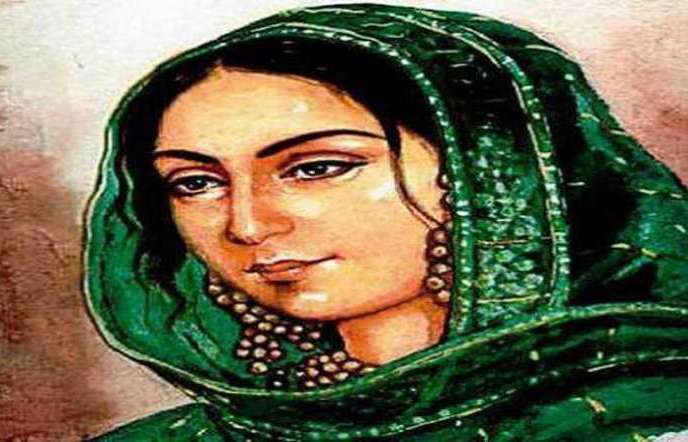
BEGUM HAZRAT MAHAL
Also known as Begum of Awadh declared war against East India Company in 1857 at Great Mutiny popularly termed the first war of independence. The East India Company had attacked the kingdom of Awadh for its great resource of cotton and indigo. During this war Lucknow was bitterly destroyed but Begum Hazrat Mahal did not succumb. She motivated the population of Awadh and led a ‘peasants in uniform’ military rebellion in Awadh. She was successful at creating harmony and social equality between people of all castes and religions. The freedom of Awadh was never her only concern. Instead, she aspired towards freedom for India. She used to ride on an elephant and be physically present at the battleground to encourage soldiers against the advancing British troops.
In March 1856, Begum Hazrat Mahal fought and recaptured Awadh after her husband Nawab Wajid Ali Shah was exiled from his throne and sent to Calcutta. She declared her 14-year son, Prince Birjis Qadr as the ruler of Awadh under her as a regent. His rule lasted for 10 months as British overpowered Lucknow. Begum Hazrat Mahal was offered a pension by English royalty, which she refused and left Lucknow. She joined guerrilla attacks on British military centers till November 1859. Later Begum Mahal did not find asylum in most Indian kingdoms and took refuge in Nepal, where she died in 1879.
ABADI BANO BEGUM
Popularly known as Bi Amma, she was one of the first Muslim women who struggled to free her country from British rule. She was born in Uttar Pradesh in 1850 and witnessed the 1857 war and suffering faced by her nation. She was the proud mother of Mohammed Ali Jauhar and Shaukat Ali (the Ali brothers) widowed at young age. Bi Amma knew the value of education, she sold off her jewelry to educate her sons in Aligarh Muslim University and Oxford University raising them to be prominent figures of Khilafat movement.
All her life she observed strict purdah when her son was put behind bars for his activities she toured the whole country, addressed the public inspiring them to participate in freedom struggle all within purdah. It was the first time a Muslim woman addressed political gathering wearing a burqa. Even Gandhiji encouraged her to speak as she got a lot of support from the women in the freedom movement. In 1917 All India Muslim League sessions she gave a touching forceful speech which left a lasting impression on the nation. According to M.K.Gandhi she was an old lady but had the energy of youth. She was restless to see the country free from the foreign yoke. She herself used to spin cloth for her use and convinced people to use Khadi. She tried hard for Hindu-Muslim unity. She was a huge contributor to Khilafat Movement and Indian Independence movement until her death on 13 November 1924. Later on 14th August 1990, Pakistan issued a commemorative postage stamp in her honors.
Even today there are still a lot of women who fight for their independence, some actively and many passively. But the best outcome would be when the struggle is done in unity against the wrong in our society.