

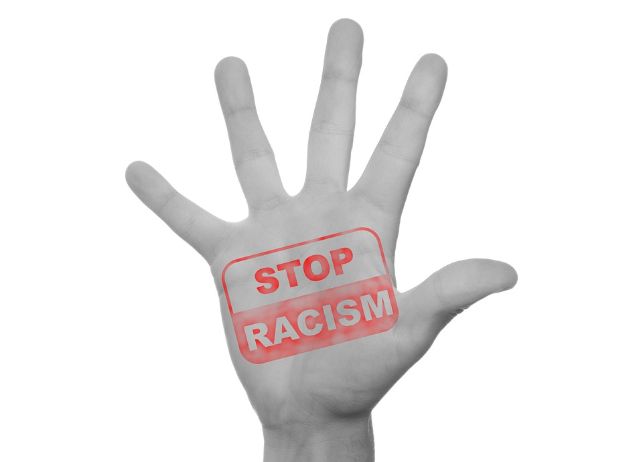
Racism is an invisible pandemic with belief that some are superiors while others are inferiors based on religion, cast, creed and color.
Though racism is deep rooted in western countries especially, India has its own racism problem. In India, usually the politicians and even majority of people put a great deal of energy into denying that racism exists in India. Even if it’s existence is recognised somehow, stressed is laid upon the notion that it is not as bad as in the other parts of the world. Yet in recent years there has been an increased willingness to debate race and racism within India. There has been a shift among politicians and the media from denial to acknowledgement and thereafter, attempts to ‘fix’ racism.
As socialogist Duncan McDuie-Ra writes in his book, debating race in contemporary India, – there is a strong sense among Northeast communities that the violence, discrimination, and negative stereotyping they experience is the result of their belonging to tribal and indigenous communities rather than simply a symptom of high crime rates and inter-community tensions in a culturally diverse polity. There have been a lot of evidences in recent years how north east people have been subjected to the hatred, even blamed for spreading Covid 19 pandemic targeting their “Chinese” look. They are called as ‘chinky, momo, chowmein,’ says a Northeastern woman. South Indians are generally called black.
Recently India has seen a multifold increase in crimes against minorities based on religion. Muslims are being called “jihadis” “terrorists”. Dalits are considered as of low standards. Not surprisingly, many of the educated folks entertain the same thinking. Ethnic cleansing is becoming new norm in India.
Talking about the complexion based racism, which is not as fatal as religion and caste based racism that has resulted in lynching, murders and other heinous crimes, it has done no less damage to the society. India’s obsession with fair skin is well known and deep-rooted. People with dark complexion are made to feel inferior as if they are not good enough because of the colour of their skin. People constantly compare their complexion to others. It is almost impossible to escape their comments and judgements based on color and look. Even members of their own family make jokes on them. Some are even asked whether they are Africans. Recently an African student in India penned down his pain in an article published in HT about how Africans are looked down in ‘Unity in Diversity’ modelled India. Once so excited to experience Mahatma Gandhi’s India, now he is desperate to go back to his country once his course completes leaving behind the hatred and discrimination he faced here.
Color prejudice is widespread and practiced openly across the country. And media plays a significant role in spreading the feeling of being not enough just because of not having light skin tone. A lot of advertisements are created on how to become fair and even fairer by using such and such creams and treatments in order to face the world with confidence and be successful in life. The crooked beauty and cosmetics industries leave no stone unturned to limit a person’s identity to his look luring people to focus more on their looks rather than their self worth. Fake beauty standards are created based on different tones of skin color. Moreover, almost everyone wants a fair girl to marry. Boys with dark complexion are often called kallu. The identity of a person is reduced merely to his/her color and appearance. The damage is inevitable. Sometimes mental trauma faced by the victims steal away their desire even to remain alive.
In job hiring practices, racism is apparent. In certain professions such as Air Hostess, girls from certain regions namely Punjab are preferred. However, the aviation industry has taken racism to a new height, where fair skinned slim girls are recruited. Similarly certain geographies are associated with stereotypes. For example, people from Bihar and Uttar Pradesh are often jibed at as lazy ‘ganwaar’ (uncivilised). In fact, there is rural-urban divide when it comes to racism.
To conclude, though it depends on person to person, society to society, family to family as people judge us no matter how good we are, racism is strengthening its roots in Indian society more strongly than ever before. The Unity in Diversity spirit has been diluted. We need to change our thinking before it’s too late. We need to discuss about it, find and apply remedies of it. Let’s not pretend that racism is not such a threat in India as in other countries. Starting at individual level, let’s not judge any person based on his/her place, religion, caste, color and look even in our families and surroundings. Let’s talk more about the qualities of a person rather than their appearance and give each other the value we deserve as human beings.
“No one is born hating another person because of the color of his skin, or his background, or his religion. People must learn to hate, and if they can learn to hate, they can be taught to love, for love comes more naturally to the human heart than its opposite.”
Great work stay safe author kashish Azeem