

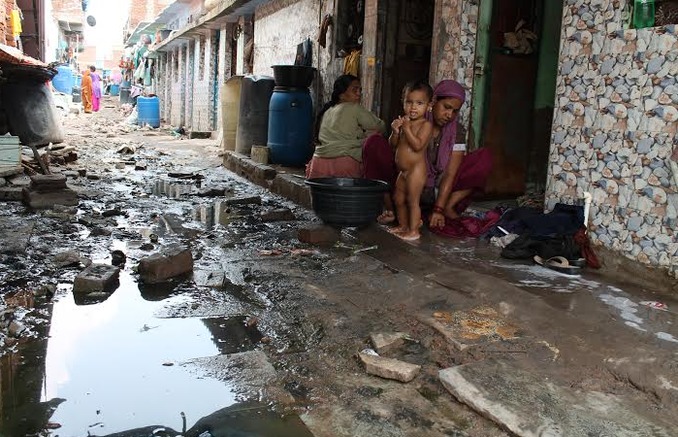
With the fruits of economic growth not being accruable to various social groups uniformly, they happen to be marginalized. Their marginalization manifests in not only unfavorable exclusion from social, economic and political spheres but also in unfavorable inclusion, where they tend to be placed on less-privileged terms vis-à-vis others[1]. The mediation of marginalization through exclusion results into the lack of economic opportunities, including low income, low productivity, low wages, and low occupational attainments, etc. In India, the brunt of such social and economic exclusion is faced by the historically discriminated communities like STs and SCs, and women, and ethnic, religious minorities. While numerous studies have been conducted on the question of socio-economic exclusion and marginalization faced by the disadvantaged sections of STs, SCs, and women, the religious minorities have not been able to garner sufficient attention in academia, despite the fact that they perform similar or even worse compared to SCs/STs in some indicators. There is no denying the fact that the SCs/STs are affected by the overlap between ascriptive statuses of caste on the one hand and deprivation and marginalization on the other, this is also true that large sections of ethnic minorities are on the margins of economic activity as well[2]. However, in modern democratic nation-states where the majoritarianism dictates the rules, regulations and institutions, their disadvantage is often acknowledged less. The rise of nation-states with their distinctive characteristics of majoritarian hegemony over language, culture and politics has actually jeopardized the minorities. The dominant discourse in the affairs of the state which is at the hands of the majority groups, tries to suppress the differentiated attributes of the minorities by constantly carrying out the assimilation of language and culture of the minorities with those of majorities. The problem of a minority becomes complicated if it is not only a political minority but also a religious, ethnic or cultural minority. A religious minority gets victimized by the majority if it does not conform to the national ‘secular’ ethos. If the religious minority happens to be politically crippled, a democracy may even disappoint the minority and can be the agent of the tyranny of the majority. Additionally, the discussions and debates on minorities have often emphasized on the aspects of identity and security, and less of development and equity (ibid). Despite the constitutional safeguards for the rights of religious minorities including the freedom of religion, their rights to spheres of economic and production activities along with proportional representation in democracies are missed out from the institutional framework.
Muslims are the largest religious minority in India and constitute 14.4% of the total population (census, 2011). The socio-economic backwardness of the Muslim community was first documented by the Gopal Singh committee of early 1980s and then the Sachar Committee report, barring some yet genuine criticism, in 2006 has brought out extensively the varied facets of its backwardness and acute marginality. Even before the Sachar Report, there were a lot of other studies as such Shariff (1999)[3], Shariff and Azam (2004)[4], Reddy (2002)[5] and Ali and Sikand (2006)[6] which showed that Muslims are socio-economically and educationally backward community. The community faces marginalization partly due to indifferent attitude of the government and partly due to the growing influence of the Hindutva propaganda against Muslims (Ali & Sikand, 2006). The so-called ‘appeasement politics’ which the majority Hindu group accuses the secular government of, have not even worked to the progress of the Muslim community (Reddy, 2002). That Muslims are benefiting off the fruits of ‘state appeasement’ can well be refuted by looking at relative position of the community on the socio-economic indicators like literacy, landholding size, employment statuses, unemployment rate, income and their political participation. Islam (2012)[7] writes
“Today, Indian Muslims neither own the major means of production nor control the policy making decisions of the state. Rarely do we find the presence of big capital and big landlords among the Muslim community in contemporary India” (2012, p. 64).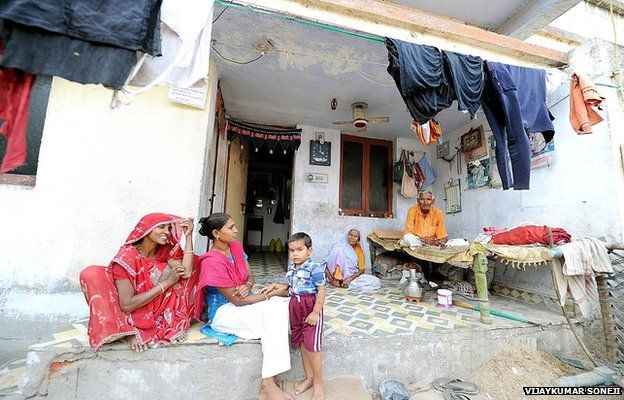
The Sachar Report discusses the problems faced by the Muslims relating to security, identity and equity, and their problems as a combination of those faced by all poor people (Muslims are largely poor), minorities and exclusively by Muslims. The relative deprivation among Muslims has been explained by factors like differentials in endowments across social groups, actual or perceived discrimination, behavior patterns or attitudes and supply of educational and employment opportunities (Basant, 2012)[8]. Low education is a key concern of the community. Constant neglect of provisioning primary education in the mother tongue and communalization of the reading materials are additional discontents. High incidence of poverty and low assets base on top of designating areas with Muslim concentration as ‘red zones’ (where credit facilities are not offered through conventional banking system) add further to the economic backwardness of the community. Issues of insecurity and vulnerability, low representation in public and private regular employment sectors, collective alienation, absence of ardent political voices, perceptions of discrimination in government employment as well as private sector, and constant harassment of Muslim youths in judicial interrogation by state apparatuses and agencies have led to the ghettoisation of Muslims. The phenomenon of Ghettoisation has been on rise majorly because of a series of communal pogroms, and the politics of lynching under the current fascist RSS sponsored BJP-led NDA regime may have aggravated the same ( a conjecture which I personally prefer, must be untrue if found empirically). Ghettoisation reduces the possibilities of mainstreaming the community, and pushes it to the perils of multidimensional economic deprivations by shutting down opportunities, avenues and exercise of freedom and choices. Robinson (2005)[9] argues that the vulnerability of Muslims as exposed to communal strife is exacerbated by their fragile economic position and low levels of asset accumulation.
The neoliberal policies being pursued by the successive governments in India have badly affected the Muslim community and particularly its artisans, weavers and craftsmen (Ali & Sikand, 2006). This marginalization is further worsened by the prevailing educational backwardness among the community and the lack of government support for them. Though occupations carried by Muslims are diversified, Muslims as a whole are poor. It has also been noticed by Jeemol Unni (2010)[10] that the proportion of working poor (those who are working but are below poverty line) is higher among Muslims than Hindus not only in the urban private sector jobs but also in the self-employment non-agriculture activity. The unemployment rate is the highest among Muslims than any other socio-religious community (Abhijeet, Bertrand, Datta, & Mullainathan, 2009)[11].
Various studies have documented the multifaceted marginalization the Muslim community is trapped in as compared to other religious groups. “Muslims are clearly on the margins of the structures of economic, social and political relevance” (Robinson, 2007, p. 839)[12]. The study by John and Mutatkar (2005)[13] while estimating the incidence of poverty among minorities in India like Sikhs, Christians, and Muslims in comparison with Hindus, finds that Muslims have the lowest average monthly per capita expenditure in both rural and urban areas. This is consistent with the findings of the Sachar Report. The urban Muslims are worse hit religious group as they are the poorest with their headcount ratio (a measure of poverty implying the number of people who are below poverty line) being 15% higher than Hindus (John & Mutatkar, 2005). It was noted in the study by Sengupta, Kannan, and Raveendran (2008)[14] that while the overall poverty had declined during 1993-94 to 2004-05 from 31 to 22 percent, the Muslim community witnessed a lower decline in poverty, even lower than SC/ST communities. Muslims are also lagging behind every other socio-religious group in education except SC/ST. The literacy rate is the lowest among Muslims except for ST/SC. In fact, the illiteracy rate declined much faster for SC/ST (5-9%) than for Muslims (4.8%) between 1999-2000 and 2004-05 (Basant & Shariff, 2010)[15]. This is mainly because of the highest dropout rate which seems to increase after middle school (ibid). Further, the community faces financial exclusion from credit and banking services. The findings of the Sachar Report spill the beans on the meager availability of credit and banking facilities to Muslims households as compared to others, and much lower in those villages which have a sizable proportion of Muslim population. The extent of marginalization spreads to instances of concentration in low-paying informal jobs, absence from the judiciary, administration and the police forces, and utterly poor representation in the political participation.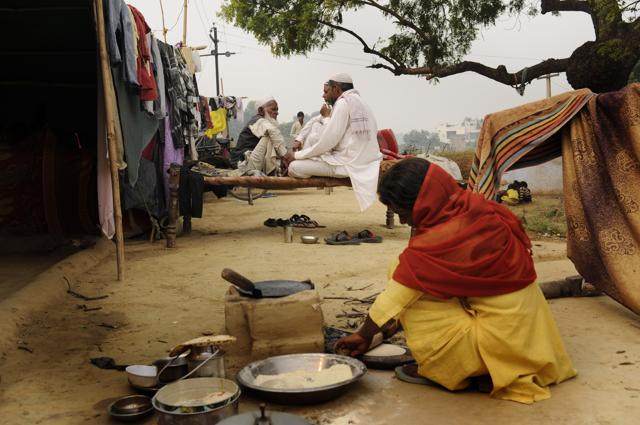
A quick look at the latest NSS (National Sample Survey) 2011-12 data reveals a very poor educational attainment of Muslims. Around 31% of Muslims are illiterate as against 26% of Hindus. Though Muslims are slightly better off in the levels of ‘literate below primary’ and primary education (19% against 16% of Hindus, and 15% compared to 13% of Hindus), their proportions in post-middle (especially higher secondary) and higher education (both graduation and post-graduation) reduce far below than Hindu counterparts. At levels of graduation and post-graduation, merely 3.5% and less than 1% (0.96%) of Muslims are enrolled in colleges and universities, when compared to 6.30% and 2% of Hindus, respectively. The high dropout rates right after primary and more so after secondary education indicate towards the greater economic burdens of the Muslim community vis-à-vis Hindus, which push them out from education (schooling and college/university learning) into the job (labor) market to supplement to the family’s incomes. However, the marginality of Muslims is seen even in the labor market. They are unfavorably included in the self-employment activities and discriminately excluded from formal employment as well. From the NSS data it is revealed that bulk of Muslims is self-employed, the proportion standing at 55% among urban males as opposed to 43% of Hindus. Though we do not get data on the earnings of the self-employed people, it is believed that self-employment activities are precarious. Studies which have documented lower monthly per capita expenditure (which is often taken as a proxy of income in empirical literature) and higher incidence of poverty among Muslims in general than all other groups except STs/SCs (Basant and Shariff, 2010) give us some indication that preponderance of Muslim workers in self-employment do not seem to improve their socio-economic conditions., and moreover a higher proportion of Muslims is found fending themselves as street vendors, motor vehicle drivers and machinery and mechanic fitters, which probably do not offer prospects of economic affluence much. Further, as compared to Hindu men in urban areas, higher proportions of Muslims are seen working as construction laborers and transport laborers. These works are mostly casual in nature. Only around 28% of working Muslim men are employed in formal sector/regular salaried jobs in urban areas, whereas 42% Hindu counterparts are employed in the same. Formal sector jobs are often seen as lucrative and most-sought after economic avenues because these jobs give stable form of employment and also pay social security benefits like pensions, health care and maternity benefits, sick leave, paid leave etc. However, it has been noted by the Sachar report that even when Muslims get into formal employment, they are mostly at the lower rungs of jobs. Our own calculations from the NSS data show that 89% of Muslims as opposed to 69% of Hindus, who are in the formal sector employment, do not have any written contracts. This implies that they can be fired at any time with no prior notice which can push them into situations of economic distress. Similarly only 8.5% of Muslims have more-than-3 year contracts, whereas the proportions of Hindus with same type of contracts are about 25%.
In pursuit of mainstreaming the community:
The aforementioned discussions with empirical observations aptly elaborate the economic marginalization and social alienation of Muslims in India. The cornerstone of inclusive development discourse ought to frame the deprivation faced by Muslims in India as a state development subject, rather than treating it as a minority problem. There should be policy interventions to provide adequate financial and infrastructure support to those Muslims who are largely engaged in self-employment activities. A more transparent recruitment process will help Muslims get into formal sector jobs. This can be done by linking some incentives to a more diverse workforce in public and private companies. Policies of affirmative action should also be implemented in the private sector, which will help the disadvantaged communities especially STs, SCs, and Muslims to roll up the economic mobility. The skill up-gradation by providing technical education and improving the community’s overall access to quality modern education should be the thrust of any policy program. A more rigorous affirmative action for including hitherto excluded backward classes among Muslims along with Dalit Muslims should be implemented both at center and state level.
References
[1] Sen, A. (2000). Social exclusion: Concept, application, and scrutiny. Social Development Papers No. 1 (Manila: Asian Development Bank).
[2] Hasan, Z. (2009). Politics of inclusion: Castes, minorities, and affirmative action. Oxford University Press.
[3] Shariff, A. (1999). India, Human Development Report: A Profile of Indian States in the 1990s. Oxford University Press, USA.
[4] Shariff, A., & Azam, M. (2004). Economic empowerment of Muslims in India. Institute of Objective Studies.
[5] Reddy, C. R. (2002). Deprivation affects Muslims more. The Hindu, 12.
[6]Ali, I., & Sikand, Y. (2006). Survey of socio-economic conditions of Muslims in India. Countercurrents. org, 9.
[7] Islam, M. (2012). Rethinking the Muslim Question in Post-Colonial India. Social Scientist, 40(7/8), 61-84.
[8] Basant, R. (2012). Education and employment among Muslims in India: An analysis of patterns and trends. Ahmedabad: Indian Institute of Management. W.P No 2012-09-03
[9] Robinson, R. (2005). Tremors of violence: Muslim survivors of ethnic strife in Western India. SAGE Publications India.
[10] Unni, J. (2010). Informality and Gender in the Labour Market for Muslims: Has Education been a Route out of Poverty? In R. Basant and A. Shariff (eds.), Handbook of Muslims in India: Empirical and Policy Perspectives, pp. 221-234. New Delhi: Oxford University Press.
[11] Banerjee, A., Bertrand, M., Datta, S., & Mullainathan, S. (2009). Labor market discrimination in Delhi: Evidence from a field experiment. Journal of comparative Economics, 37(1), 14-27.
[12] Robinson, R. (2007). Indian Muslims: The varied dimensions of marginality. Economic and Political weekly, 839-843.
[13] John, R. M., & Mutatkar, R. (2005). Statewise estimates of poverty among religious groups in India. Economic and Political Weekly, 1337-1345.
[14] Sengupta, A., Kannan, K. P., & Raveendran, G. (2008). India’s Common People: Who Are They, How Many Are They and How Do They Live?. Economic and Political Weekly, 49-63.
[15] Basant, R., & Shariff, A. (2010). The state of Muslims in India: An overview. In R. Basant and A. Shariff (eds.), Handbook of Muslims in India: Empirical and Policy Perspectives, pp. 1-23. New Delhi: Oxford University Press.
Salam Alaykum,
Your article is 100 % a reality, I am an old man and I am a victim of the time.