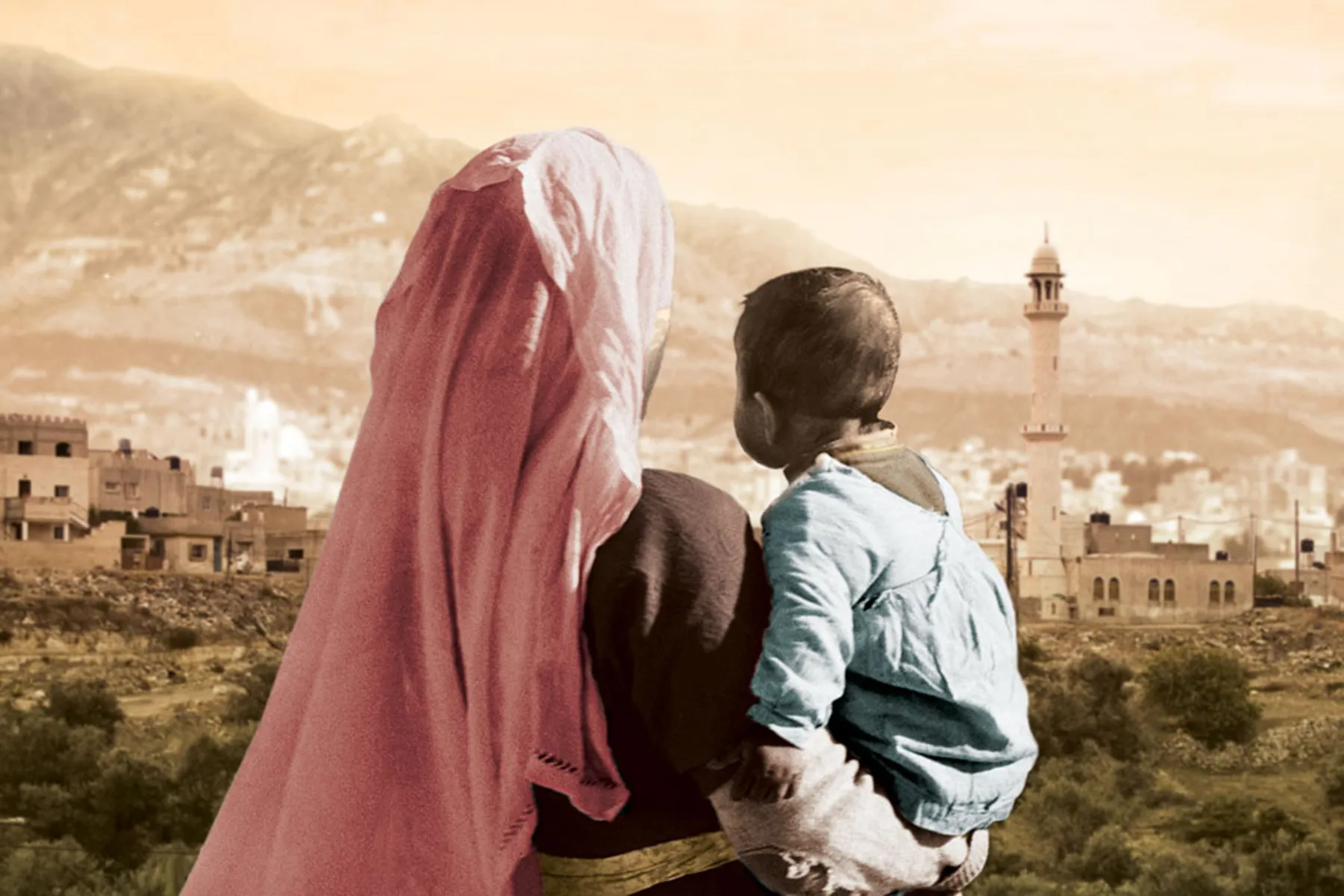
Mornings in Jenin was originally published in 2006 under the name ‘The Scar of David’. It is a historical fiction spanning over 331 pages. The story takes place in 1948 Palestine and takes us through the Nakba, the Sabra and Shatila camps, and the aftermath of it all.
Susan Abulhawa is a Palestinian-American writer who wrote the novel in response to the 2002 Israeli attack on the refugee camp in Jenin.
The story spans four generations of a Palestinian family. The protagonist of the novel, Amal, was born in a refugee camp in Jenin. Living the refugee life and being uncertain about the future, Amal lives her life one day at a time.
The novel first introduces us to Amal’s grandfather, Abul Heja, then Hasan, Amal’s father, and his two sons and a daughter (Amal). Then we get to see life in the camp through the eyes of Amal, and later on, we see her as a mother who is trying to navigate the world through the traumas of her childhood.
During the Nakba, Hasan and his wife lose their newborn son. A soldier from the Israeli army captures their son as a gift for his wife and raises him as a Jew who later serves in the army. In the afternotes, the author mentions that the entire event has been inspired by a real-life event that she read about somewhere.
Mornings in Jenin primarily follows the story of Amal, who knows nothing but Jenin and whose mother struggles with expressing emotions because of the traumas she has faced. Life in the refugee camp, the uncertainty of the future, and the presence of a mother who never really speaks are some of the things that Amal faces in her day-to-day life.
Despite the atrocities, the author has beautifully written about the bond between Amal and her father. The two spent some time together in the early hours of the morning before Hasan left for the day. Hasan instilled a love for literature in his daughter, who would later go out and about in the world for education.
“Mornings in Jenin” is a delicately written novel that contrasts the heaviness with small bits of happiness in the lives of Amal and her family. The novel is often talked about alongside The Kite Runner by Khaled Hosseini. It is said to have the capacity to do to Palestine what the Kite Runner did to Afghanistan.
The novel is about loss, grief, untreated traumas, and human suffering, but more than that, it is about how the Palestinians always rise. No matter how many times they are literally pushed to the ground, they always stand tall. In the novel, we see it over multiple generations, and then we see it in Amal’s daughter Sara. Despite being brought up an American, she fights for the land she calls home, Palestine.
“The roots of our grief coil so deeply into loss that death has come to live with us like a family member who makes you happy by avoiding you, but who is still one of the family. Our anger is a rage that Westerners cannot understand. Our sadness can make the stones weep. And the way we love is no exception.” -Susan Abulhawa, Mornings in Jenin
The Author is an editorial board member at The Companion. Please find similar content on her Youtube channel https://www.youtube.com/@AyeshaSyed.