When we talk about academic freedom and campus democracy in India, it is easy to adopt a broad, one-size-fits-all narrative: universities are under attack, and the integrity of higher education is at risk. But if we are being honest, this generalized view obscures a deeper, more unsettling truth: not all universities face the same kind of threats. The institutions with ‘Muslim’ character, in particular, have long been at the receiving end of systematic, politically motivated assaults on their autonomy. The rise of the BJP and the political changes that followed have only amplified these attacks, but the foundations of this crackdown were laid much earlier.
The Case of AMU and JMI
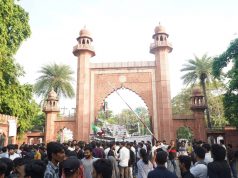
Universities with a ‘Muslim’ character, particularly Aligarh Muslim University (AMU) and Jamia Millia Islamia (JMI), have a rich legacy spanning over a century, both pre and post India’s independence. Their contributions in educating generations of Muslims cannot be undermined. However, their significance extends beyond mere ‘nation-building.’ These institutions have historically served as nurseries for producing organic Muslim leadership and thought. From pre-independence struggles to the making of the modern Indian state, any discourse on Muslims of India inevitably intersects with these universities.
Despite their contributions, the state’s engagement with these institutions has been markedly different from its approach to other educational institutions. While many universities across the country have been glorified and developed with the aim of achieving world-class recognition, AMU and JMI have been repeatedly stereotyped as hubs of Muslim extremism. Regardless of the ruling regime, these institutions have remained targets of the state’s control and surveillance.
As the only significant educational spaces with Muslim characters in India, these universities serve as key centers where Muslim students engage with their lived realities and historical subjectivities. They critically respond to the state’s systemic discrimination and marginalization of their community. Moreover, they challenge global narratives that frame Muslims through the lens of suspicion and prejudice. In these spaces, Muslim students construct their own discourse, articulate their experiences, and assert their faith alongside their identity. This assertion, however, unsettles the Indian state. The prospect of Muslim students, educated in the country’s top central universities, shaping their own narratives and resisting imposed stereotypes is met with discomfort and, consequently, repression.
If we trace the historical trajectory, it is evident that soon after independence, the Muslim character of both AMU and JMI was questioned, and debates over the ‘nationalization’ of AMU were actively pursued. No such discourse emerged around institutions like Banaras Hindu University (BHU) or other institutions. Even today, the minority status of these universities remains a subject of legal and political contestation.
These institutions have been systematically framed as hubs of extremism, providing the state with a ‘justification’ for direct intervention in their affairs. Over the years, numerous young students have been falsely implicated in terrorism-related cases, subjected to media trials, and vilified in public discourse. On multiple occasions, both universities have witnessed brutal state crackdowns, where students were physically targeted, subjected to lathi charges, arrested, and even brutally tortured.
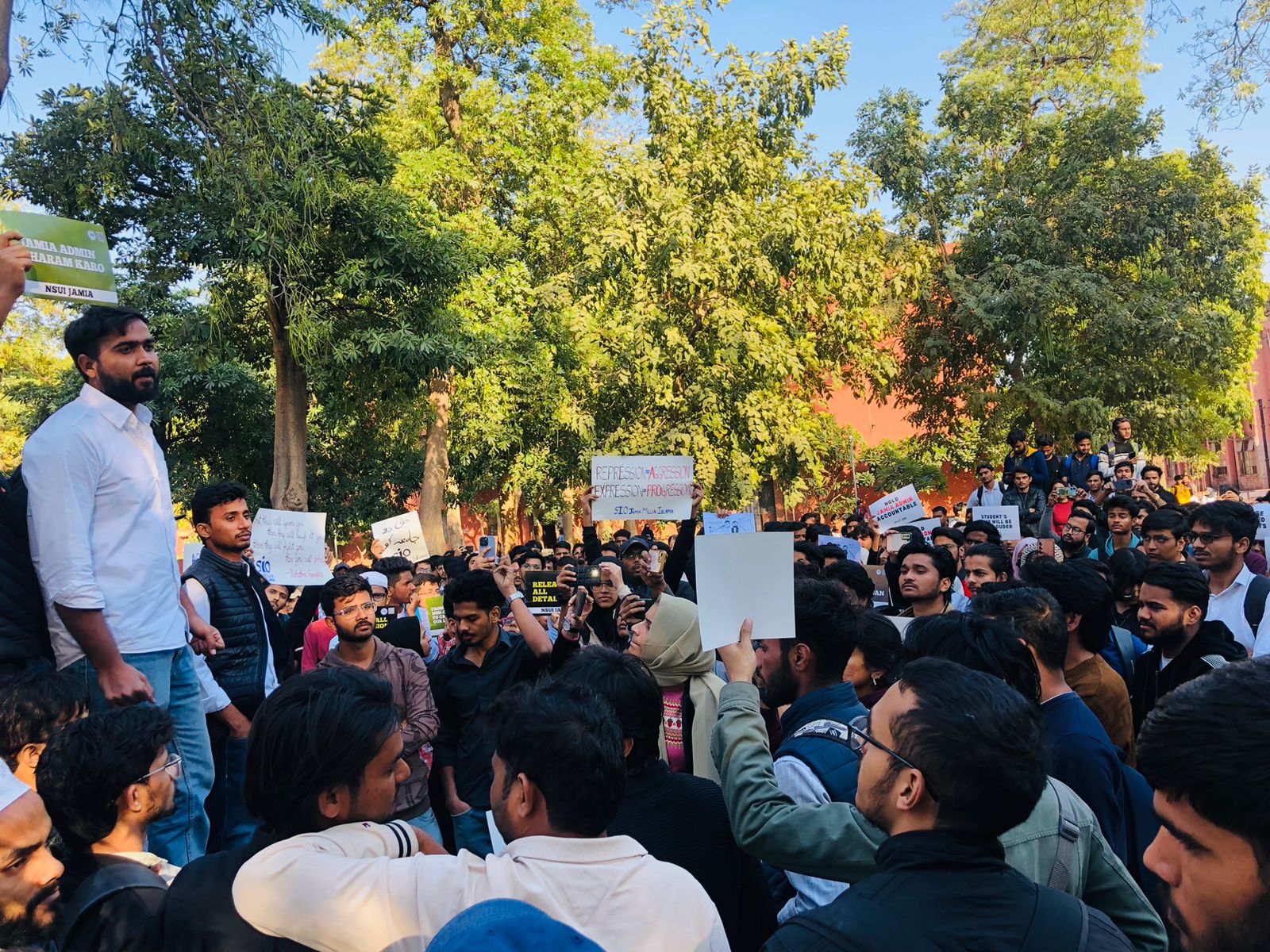
Furthermore, mainstream political organizations have been systematically excluded from student politics in these universities, while the students have been deliberately entrapped in regional politics, leading to the dilution of their potential to cultivate strong Muslim leadership. This pattern of repression has been evident across key historical moments – from the Shahadat of the Babri Masjid and the Gujarat pogrom to the banning of the SIMI, the Batla House encounter, the wrongful arrests of Muslim youth, and the forced disappearance of Najeeb Ahmad.
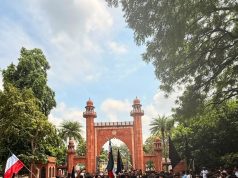
The most recent manifestation of this state aggression was the violent crackdown on both AMU and JMI during the anti-CAA protests five years ago. The anti-CAA protests brought this reality into sharp focus. These protests were not merely a temporary response from Muslim students; they marked a turning point where Muslim institutions were no longer just objects of state surveillance but became direct targets of state violence, ideological warfare, and systematic attempts to erase their identity and very existence within academic spaces.
MANUU: A Potential Muslim Space
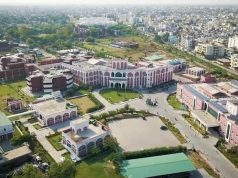
A similar pattern can be observed in the case of Maulana Azad National Urdu University (MANUU). Established in 1998, MANUU may not hold a minority status, but its distinct ‘Urdu’ character attracts thousands of students from Urdu-speaking backgrounds, the majority of whom are Muslims. The university holds significant potential – not only in educating and empowering Muslim youth but also in shaping their political consciousness.
The most recent students’ union elections in MANUU were held in 2023. However, in 2024, the administration abruptly canceled the elections after a student protest. Much like AMU, MANUU also restricts the participation of mainstream student organizations in campus politics, diverting potential youth leadership into regional conflicts rather than allowing them to engage in broader political discourse.
What could have been a transformative space for shaping Muslim youth into informed and engaged citizens has instead become a launching pad for state-sponsored propaganda. The administration has increasingly aligned itself with state narratives, frequently inviting RSS-BJP officials and extending them a red-carpet welcome, organizing programs under the guise of historical figures like Dara Shikoh to propagate a constructed image of the ‘Good Muslim’ by Sangh Parivar.
The Case Is Unique
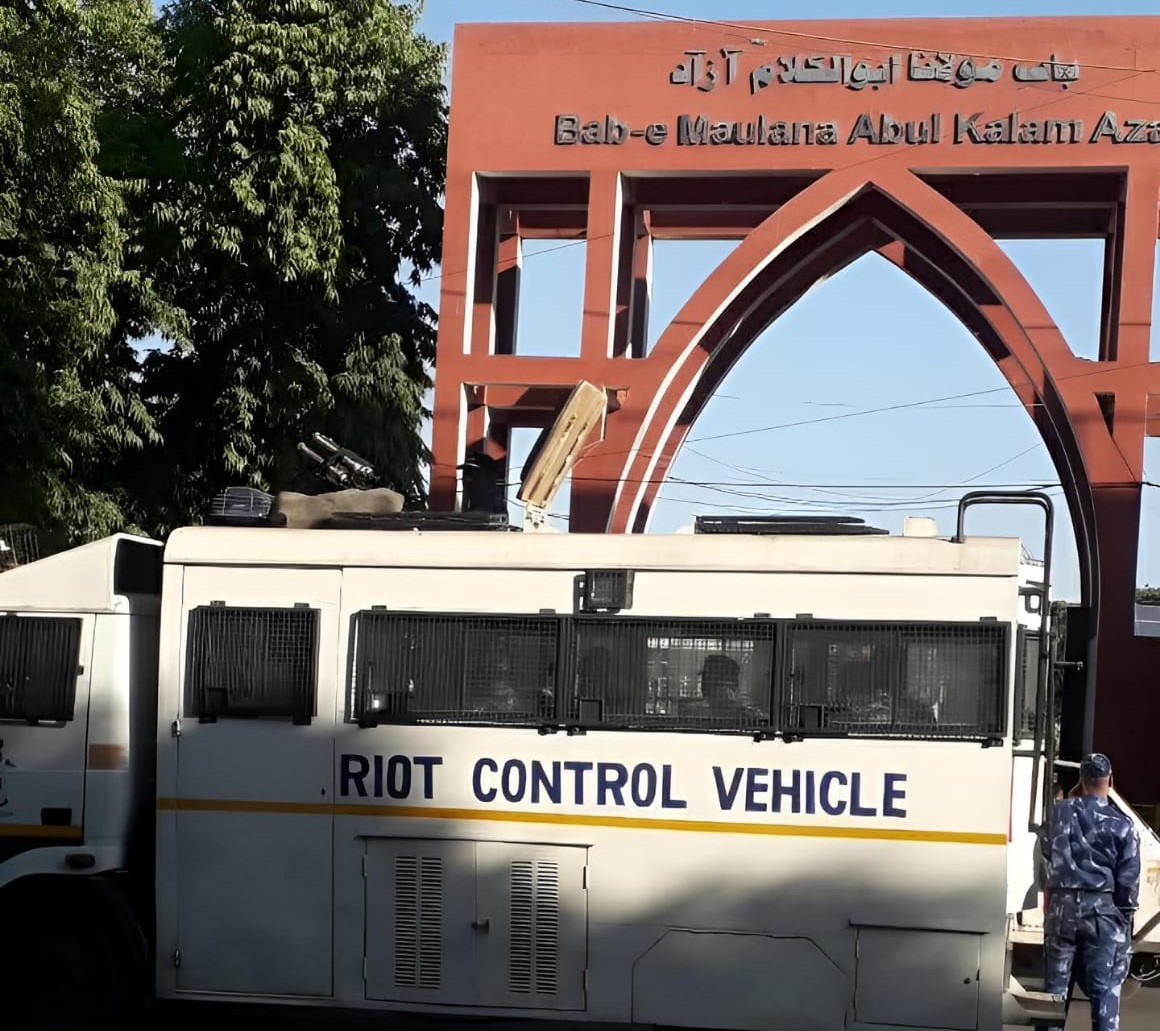
The assault on Muslim universities extends far beyond student politics. The campuses are increasingly being militarized and transformed into sites for state-sponsored political propaganda. This extends to administrative appointments, where the selection of vice-chancellors and faculty members is increasingly dictated by political allegiance rather than academic merit. As a result, the academic integrity of these universities is being deliberately eroded, making it evident that the struggle is no longer merely about academic freedom – it is a fight for the very survival of these institutions.
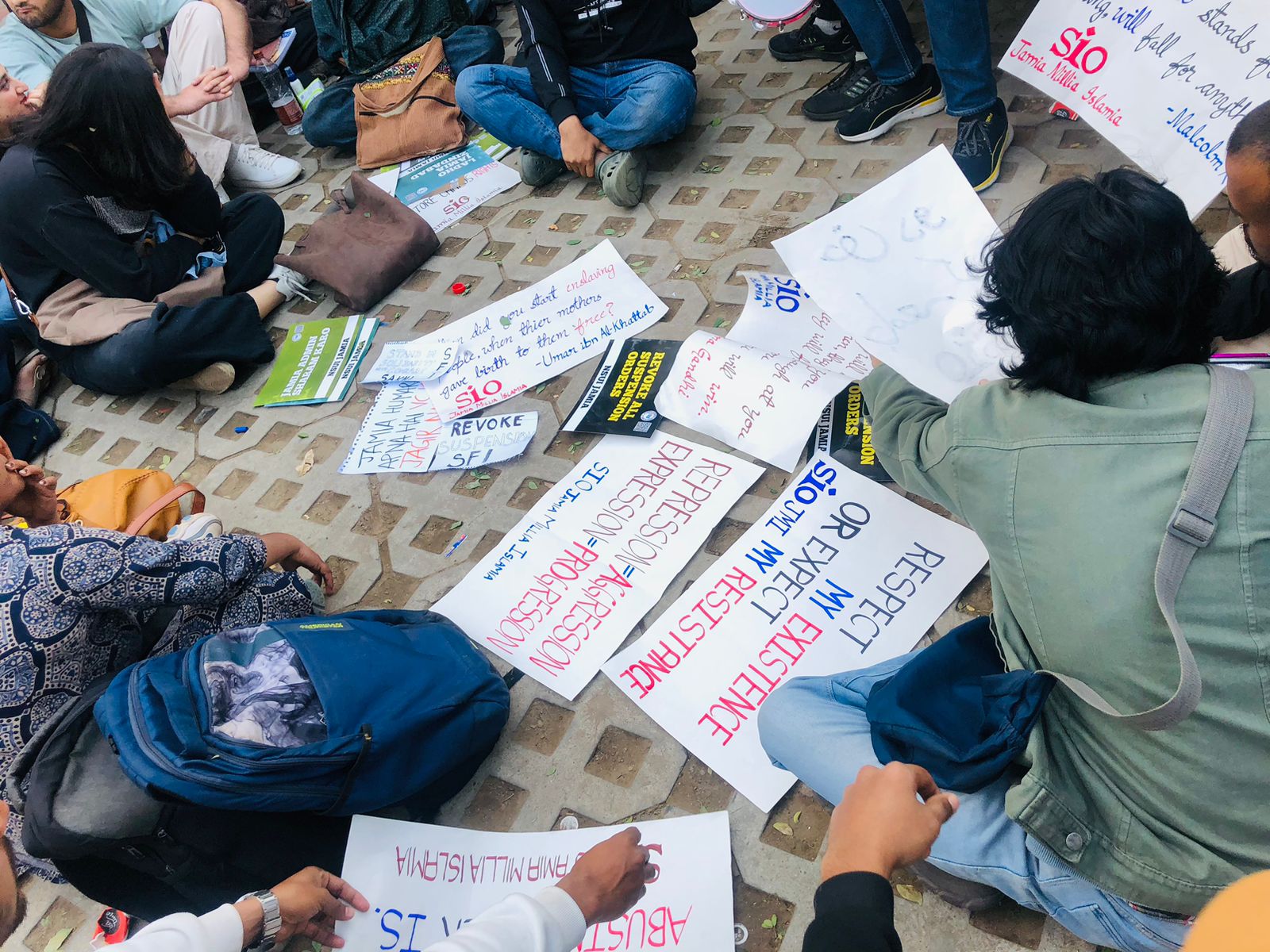
Though academic freedom is under threat nationwide, Muslim universities face a uniquely severe and systematic crackdown. A closer examination of budget allocations, faculty appointments, state intervention in autonomous bodies like Executive Councils, University Courts, and Academic Councils, and disciplinary actions on students for asserting their rights in these universities over the past decade reveals a clear pattern of institutional targeting. The struggles of these universities are compounded by an ongoing effort to integrate them into a broader majoritarian framework, erasing their distinct historical and cultural identities. Ignoring this disparity means disregarding the lived experiences of Muslim students who continue to navigate structural discrimination while asserting their faith, identity, autonomy, and democratic rights within academic spaces.
The Left Response
What is particularly problematic, however, is the generalized response from those who claim to be the foremost defenders of academic freedom and campus democracy – the Left. Time and again, we see Left-wing groups decrying state interference in educational spaces and speaking out against the political control over campuses. Yet, this vocal critique seems like a one-size-fits-all response when it comes to Muslim institutions. The left response to the state crackdown faced by universities like JMI, AMU, and MANUU is often generalized (in the case of JMI) and sometimes absent (in the case of AMU and MANUU). The struggles of Muslim students, who are fighting not just for academic freedom and campus democracy but for their very right to exist in these spaces without fear of state repression, ideological warfare, and cultural erasure, are often brushed aside. It is almost as if these struggles of Muslim students are considered secondary to the ‘broader’ fight for academic autonomy, as though Muslim institutions can be excluded from the larger narrative of educational justice.
This generalized solidarity is deeply troubling. By overlooking the specific challenges faced by Muslim universities, the Left fails to acknowledge the distinct nature of their oppression and marginalization. The flag bearers of campus democracy must recognize that institutions such as AMU, JMI, and MANUU experience state repression in ways fundamentally different from universities like JNU or HCU. The target these Muslim universities face is deeply rooted in the state’s treatment of the Muslims of India, their faith, identity, and culture over the years. Therefore it is necessary that the response to the state oppression should reflect this subjectivity and it should not be a general response like any other campus.
It is easy to stand up for academic freedom when the cause aligns with one’s political agenda, but true solidarity means acknowledging the subjectivities of the oppression faced the marginalized communities, especially those who are being silenced first and hardest. The fight for academic freedom cannot be piecemeal, selective, or politically convenient.
If we are serious about protecting academic freedom, we cannot afford to exclude these Muslim universities from the conversation. Their struggle is not just about students’ union elections – it is much about the very right to practice their faith, express their identity, and engage in the kind of critical thinking that should be the hallmark of any university. We cannot claim to defend academic freedom and turn a blind eye to the institutions where that freedom is under the most intense and targeted attack. It is high time to stand with Muslim universities, not just in principle, but in practice, by amplifying their voices and standing up against the forces that seek to silence them.