Introduction
In today’s polarized world universities play a critical role as spaces for free thought, critical inquiry, and the development of democratic values. This article sheds light on how universities nurture independent thinking, foster dialogue, and challenge societal norms, making them essential for shaping socially aware and morally grounded individuals. It dives into their historical significance, their role in resisting authoritarian pressures, and the growing challenges they face in an increasingly commercialized and conformist education system. This discussion, in such a scenario of debates on issues of academic freedom and censorship, urges students, educators, and policymakers to guard universities as spaces of intellectual and societal progress by making them bases of fairness and inclusivity in society.
The Role of Universities
The university is not something we imagine to be a lively place where young minds are free to voice their thoughts, discuss ideas, and form opinions without being burdened by issues of gender, caste, color, ethnicity, or religion. The university has much more significance than that of a school. It is the place where people come face to face and get acquainted with each other. This is the only place where young minds come and discuss each other’s viewpoints, challenge one another, and grow intellectually and emotionally. Under these circumstances, it is something to appreciate and nurture into beauty and trans-formative stuff.
The university allows for the questioning of anything and everything that needs to be questioned, and it is supposed to be a space of dissent and discourse formation. It is where ideas are born and evolve. It should therefore be allowed to continue doing so, with all its activities.
The university is a crucible of ideas, a sanctuary where the freedom to question, dissent, and innovate is not only allowed but encouraged. It is a space where the clash of perspectives is celebrated and fosters an environment that thrives on intellectual rigor and the pursuit of truth. Questioning is not an act of defiance but rather the cornerstone of understanding, a crucial tool in testing assumptions and searching for deeper meaning. It is a microcosm of a pluralistic society, where dialectics bridge conflicting ideas and synthesize them to advance. It is here that the student learns not only how to attack an argument but also to listen, to gain empathy for other perspectives, and develop the moral strength to advocate and stand by one’s beliefs open to change. Dissent is not a filtering mechanism for bad ideas; it serves as a statement of the human condition, a testament to our restless pursuit of meaning, justice, and truth.
Historical Context
The ethnographic study, The University as a Site of Resistance: Identity and Student Politics, by Gaurav J. Pathania offers a deep reflection on the subject of contemporary student activism and the trans-formative role of university spaces in nurturing dissent. Universities function as significant arenas for critical thought and dissent, thus helping to shape the social and political consciousness of students.
These spaces encourage students to question societal norms, challenge established power structures, and engage in discourse that extends beyond academic boundaries. By facilitating dialogue and debate, universities nurture students’ ability to think critically and act decisively, laying the groundwork for their active participation in social and political spheres. His work highlights, in-depth, how collective identities and networks develop through university politics and drive social movements, primarily on India’s longest-running student movement: the demand for a separate Telangana state.
In functional terms, the university becomes a node providing students with opportunities to imagine and enact resistance to cultural marginalization and structural inequalities as a social space.
Challenges of Universities
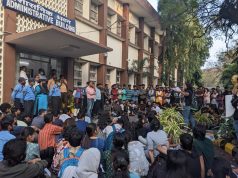
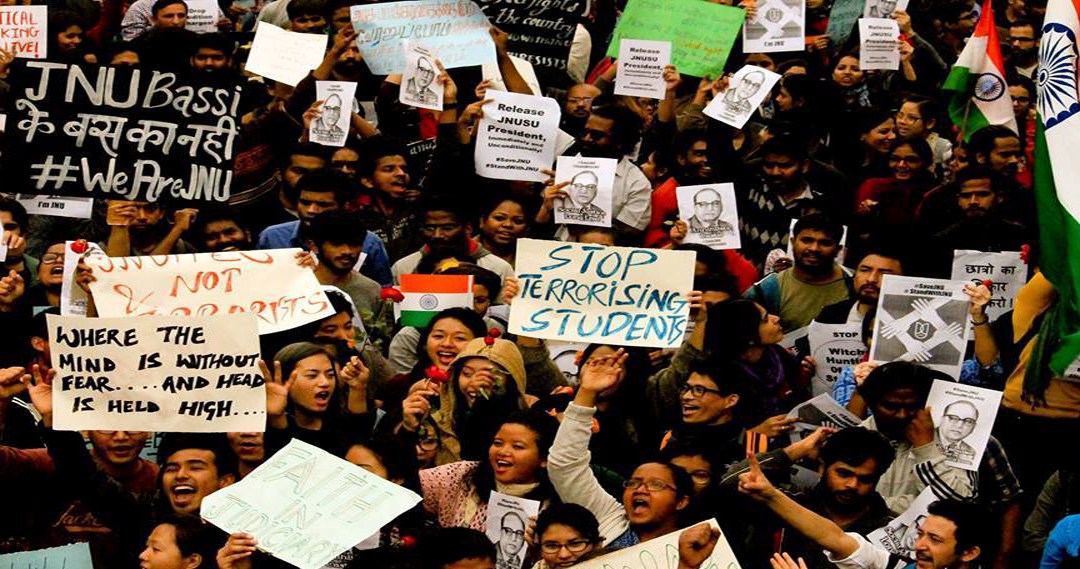
The state university in India is one of the last shared public spaces, an important arena where different voices can come together, interact, and dissent. Such a special role makes the university a key target for domination by the ruling BJP, which would like to subdue it, if need be, through violence, either directly or via extremist groups acting on its behalf. Such a bastion of free thought needs to be captured because it becomes uneasy about that university’s survival potential as always a bastion of dissent or challenge to authoritarian rule.
Anthropologist James Scott’s distinction between ‘state’ and ‘non-state’ spaces provides a useful lens through which this conflict can be understood. Scott argued that those spaces falling under the purview of the state, mapped, surveilled, and controlled, are ‘state spaces’ where authority can be imposed. Conversely, ‘non-state’ spaces-remote wildlands or territories beyond the effective reach of the state-are assumed to be troublesome, breeding grounds for dissent or rebellion. The irony of ironies, India’s heavily funded, urban public universities, firmly within the state’s geographic and financial ambit, have become ‘non-state’ spaces in a metaphorical sense. These are zones of intellectual freedom and critical thought where the state’s ideological writ does not hold. This perception of universities as resistant spaces underscores their importance in the larger struggle for democratic expression and rights.
The Way Forward
The university is far more than a site of intellectual inquiry. It is a space for collective reflection and a crucible for imagining alternative forms of democratic life, lives not rigidly defined by inherited identities such as caste, religion, or gender, which are often codified in official documents and systems of governance. It is this ability to envision and articulate new democratic possibilities that the state finds so threatening. Therefore, the attacks being made against students and staff at universities reflect an attempt to dismantle one of the few remaining bastions of resistance within this country, a haven to raise and mobilize opposition.
Under an intolerant government of opposition, a university stands as the very critical outpost of hope, reminding all what a democratic society can and should hope for. It is not only about defending the ideals of academic freedom but also safeguarding the bigger ideals of democracy and pluralism in India.
The deeper problem is the shocking ignorance of university administrators and, more broadly, India’s middle class, of what a university really is and what ‘the life of the mind’ might be. This intellectual emptiness has several forms. Increasingly, faculty members are treated as schoolchildren who must be rolled and counted to ensure their attendance, reducing the university to something like an extension of primary or high school.
It’s institutions like AMU, JNU, and Jamia, which are often branded as ‘anti-national’ centers, but venomous animosity against universities is a reason more profound than the ascendancy of virulent Hindu nationalism or intolerance for dissent.
It reflects a deeper cultural and systemic disdain for intellectualism and critical inquiry. This attitude is matched in the increasing bureaucratic mindset for educational administrators’ selections, who tend to be primarily trained as either engineers or scientists. They have barely any exposure at all to a humanistic form of education that would give a university its intellectual as well as moral space and purpose. This managerial mindset holds the values and aspirations of a rising middle-class India, which predominantly finds education to be a way of securing jobs and providing financial stability in comparison to the work of a social trans-formative process. Education comes to be framed in terms of becoming an investment to reap tangible payoffs, whether social, or material gains, or to be an employable candidate, rather than to think or become acutely and sensitively or curiously observant of the self and the condition of humans in general.
Conclusion
Universities, therefore, are universities of intellectual growth, places where one learns to question, reflect, and explore those complex things of life. They are not those manufacturing industries that produce workers for the job market but rather crucibles for nurturing minds capable of shaping societies. Such an approach toward education brings an astonishing undervaluation of critical thinking, creativity, and knowledge pursued merely for its sake.
This cultural shift seriously threatens higher education itself, in theory and tradition, the final, best source of free thinking and, in practice, a beacon of societal progress. As students entrusted with such a weighty responsibility, we must ask: What are we shaping our university spaces to be? What seeds are we sowing for tomorrow, and how do we ensure that such spaces continue to flourish as a sanctuary of curiosity—a space in which minds are awakened and where voices rise in pursuit of truths?
Universities must continue to be a place for the free and moral development of the mind, where people are prepared to challenge society and change it. These spaces have to be protected, and for that, students, educators, and policymakers must decide and work together.
To the students, the call is to participate in the discourse, to question the norms of the society, and to practice the values of diversity, democracy and dissent. Engagement in student movements, debates and intellectual pursuits is not just a right but also a duty to guarantee that these institutions continue to be the spaces for the creation and exchange of ideas.
To create an environment where curiosity is valued over conformity, where questioning is welcome, and critical thinking is applauded, educators must foster this environment. Some of the faculty members should also fight for academic freedom and should not engage in doing business as if teaching and learning are commerce. On their side, policymakers need to ensure that the universities have the liberty to manage their affairs, are not interfered ideologically, and are funded for that. Policies also need to pay attention to the holistic education system in which social sciences and humanities get equal importance, as well as scientific fields, such as STEM.
We have to fight collectively against the materialization of education and the role of the university as a site of intellectual and moral resistance and a source of the promise of a better future. We will be protecting the sanctity of our institutions but also the promise of social justice, empathy, understanding, and progress by society.We should cultivate the wind of change and the spirit of dissent in the present so that the future population will be educated and morally upright.The time to act is now!