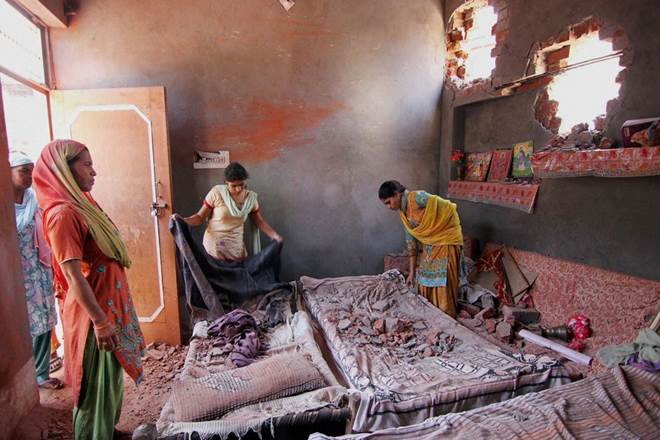
Kashmir is the world’s most densely militarized zone on the earth. I am a resident of its Poonch district. The Line of Control (LOC) that surrounds Poonch on three sides is merely 10 kilometres away. People here live under a perpetual shadow of war due to frequent cross-border tensions. Since the inception of Kashmir dispute, hundreds of lives have been lost and several thousands are on the brink of disappearance as the region is landlocked between two giant nuclear states.
When the partition of the sub-continent (1947) became a reality, it gave rise to the issue of Kashmir’s alignment with either of the two newly formed nations. Our grandparents narrate to us the incidents of partition. They were already subjected to inhumane brutality and discrimination on account of being Muslims in the Dogra state. Partition, therefore, brought forward a glimmer of hope. But their miseries, far from being over, were only multiplied. Owing to the close religious and cultural proximity to the newly formed Pakistan, the only rational choice in front of them was a merger with it according to the logic of the partition. The Poonch Rebellion (June-Oct. 1947) therefore was an active manifestation of the demands and aspirations of that generation.
However, the generation succeeding them had to face different circumstances altogether. The land and the families were fragmented by a narrow domestic wall, “Azad Kashmir” as our grandparents called it, was formed but It was nevertheless our parents’ generation that lived in a continuous presence of military and cross-border shelling which was a direct consequence of the first two wars (1965 & 1971) fought between the two nations. The state apparatus didn’t work on the coercive front only. To understand the worldview of this generation one needs to take into consideration the Gramscian account of how hegemony works. The military presence became like a common sense, our parents didn’t know anything better. The Insurgency of the 1990’s shook the status quo. My mother herself lost two of her close family members, a sister and a cousin. This was also the time of a generational shift.
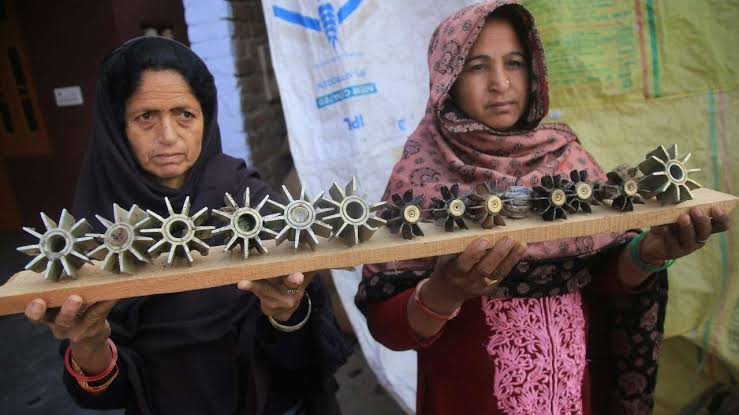
Now it was our fate to bear the burden of a continuous cycle of repression. This third generation opened its eyes in the 90’s but apart from blurred reminiscences doesn’t remember much of that decade though our parents narrate those horror nights as we grew up. It saw its childhood during a comparatively calm phase of the initial years of the century. However, its understandings and sensibilities were informed and reformed by the Amarnath land row of 2008, an issue related to land was a problem of all. The hegemonic apparatus that had created a wedge between the valley (other parts of Kashmir) and Poonch wasn’t able to stop people from understanding that land wasn’t just a valley specific issue. It was everyone’s issue and hence it reinforced the lost solidarities. 2010 and 2016 unrests were yet another building block in our understanding. The 2014 and 2019 Lok Sabha elections which saw Jammu voting purely on communal lines brought back the fears of our grandfathers’ generation. This generation also had the privilege of moving around and seeing other places both in India and around the world. It helped in creating new sensibilities. What was normalised earlier was problematised now. Peace is an impossibility in the shadow of war. The ‘Surgical strike’ and the ‘Balakot fiasco’ may have been celebrated in mainland India but it was us who had our hearts in our mouths, waiting for mortars and rockets to hit us. The deep silence of the night was consistently punctuated by the random bursts of gunfire across the borders thus exacerbating the traumatic and psychological impacts on the civilians keeping apart the physical hostilities of life and property.
To think about development in this scenario is whimsical, to say the least. The post- August 2019 events (after revocation of the region’s special status) have crystallized this belief and the newly brought in Domicile law has strengthened it further ultimately forming an ‘Israeli model of Kashmir’. The current ongoing Covid-19 pandemic too failed to develop empathy as cross border escalations are only exacerbating than getting calm. Not even a week could pass without recording the aforementioned incidents. The day I am completing this article is itself the fourth consecutive day of heavy cross border shelling. Therefore, this third generation of Poonchis (natives of Poonch) since the partition understands that the only viable way forward is to settle this dispute once and for all. Any solution that doesn’t have the natives on board is not a solution at all. Therefore, the solution to this dispute which is prescribed under multiple UN Resolutions and other International organizations is the only way forward wherein the people of Kashmir are given the opportunity to decide their fate once and for all.