

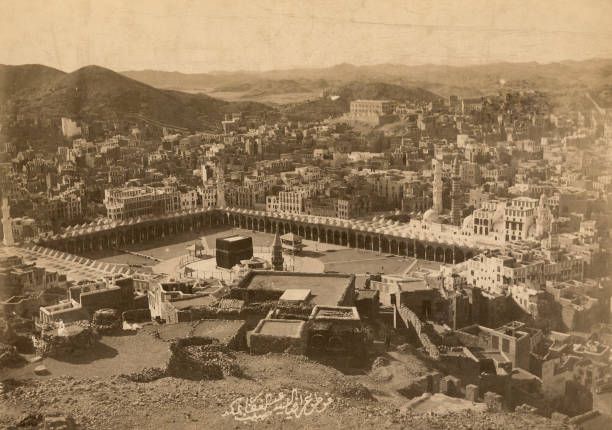
As we witness the sacred days of Eid al-Adha, our hearts are once again drawn to the timeless legacy of sacrifice, tawakkul, and unwavering submission. At the center of this legacy stands Hazrat Ibrahim (A.S.), the one whom Allah (SWT) Himself honored in the Qur’an with the noble title Khaleel-Allah, the Friend of Allah:
“And whose way of life could be better than that of one who submits his whole being to Allah, does good, and follows exclusively the way of Ibrahim, whom Allah took as a friend.” (Surah An-Nisa, Ayah 125)
Surely, Ibrahim (A.S.) faced trials and challenges unlike any other human being. These were not mere personal struggles, but divine tests designed to establish a legacy that would guide generations to come. One of the most profound legacies, commemorated by Muslims across the world every year, is Eid al-Adha.
agar bakhshe zahe qismat, na bakhshe to shikāyat kyā
sar-e-taslīm ḳham hai jo mizāj-e-yār meñ ā.e
It is the responsibility of every Muslim to understand the mission of the Qur’an. And to truly comprehend this mission, one must understand the mission and Seerah of Ibrahim (A.S.).
The Early Life of Ibrahim (A.S) and the Trials He Faced in Spreading Islam
Compared to the environment we live in today, the circumstances in which Ibrahim (A.S.) lived were completely different. He was born into a society where every form of shirk (polytheism) was widespread. A theocratic monarchy or Divine Kingship, where the king claimed divinity, existed. Namrood (Nimrod), the tyrant king of the time, declared himself divine and imposed severe punishments on anyone who disobeyed his rule.
In an era filled with every form of shirk, Ibrahim (A.S.), a young and courageous man, walked in the light of Allah (SWT) and moved forward with the mission to spread the Deen of Allah (SWT).
“Behold, I have turned my face in exclusive devotion to the One who originated the heavens and the earth, and I am certainly not one of those who associate others with Allah in His divinity.” (Surah Al-An’aam, Ayah 79)
Ibrahim (A.S.), a man of sound reason and a pure heart, opened his eyes in a purely polytheistic environment. Yet, through deep reflection and divine guidance, he came to recognize the Truth, rejecting all worldly gods and submitting himself completely to the one true Lord of the universe: Allah (SWT).
Prophet Ibrahim (A.S.) faced numerous trials. It is easy to claim that one is on the right path, but remaining steadfast upon it, while enduring pain, rejection, and hardship, is far more difficult. Yet, despite all the suffering, he chose to remain firm on his Deen and held fast to the truth of La ilaha illallah.
The First trial – ‘Father and Son, Truth and Lies’
One of the earliest and most painful trials that Ibrahim (A.S.) faced came from within his own family: rejection by his father. He tried to convince his father to embrace the Deen of Allah (SWT) and stay away from polytheism. Despite speaking with gentleness, wisdom, and utmost respect, he was met with rejection. Yet Ibrahim (A.S.) responded with grace and compassion, saying:
“Peace be upon you. I shall seek pardon for you from my Lord.” (Surah Maryam, Ayah 47)
After this, he quietly withdrew.
This moment illuminates a profound truth that no matter how much we care, we cannot force guidance upon anyone, not even our closest blood relatives. Hidayah (guidance) comes only from Allah. The pain Ibrahim (A.S.) must have felt in the face of such harsh rejection from his own father is unimaginable. Yet he remained patient, steadfast, and chose the best words and the most beautiful approach.
Allama Iqbal expressed this reality eloquently in one of his couplets:
Phool ki patti se kat sakta hai heere ka jigar
Mard-e-nadaan par kalam-e-narm-o-naazuk be-asar
The King’s Court
The next trial that Ibrahim (A.S.) faced was his summoning to the royal court of the tyrant king of his time, Namrood. There, he engaged in a profound debate, which the Qur’an itself records:
“Have you not considered the case of the person who had an argument with Abraham, as to ‘Whom Abraham acknowledged as his Lord?’ The dispute arose because Allah had given him the kingship (which had made him arrogant). When Abraham said, “My Lord is He Who gives life and causes death,” he answered, “I give life and cause death.” Then Abraham said, “Well, Allah brings the sun from the east: just bring it from the west.” At this, the disbeliever was confounded: (yet he did not believe), for Allah does not show guidance to unjust people.” (Surah Al-Baqarah, Ayah 258)
Though it was clear from Ibrahim (A.S.)’s first statement that only Allah could rightfully be acknowledged as Lord, Namrood arrogantly responded with a shallow and unreasonable argument. However, Ibrahim (A.S.)’s second statement, calling him to reverse the sun’s course, left no room for debate. Namrood knew well that the sun and the moon were governed by the same Sovereign that Ibrahim (A.S.) worshipped.
To accept the truth of Ibrahim’s argument would mean surrendering his own claim to absolute power. But the devil within him could not allow that. Thus, Namrood was left stunned, unable to move from the darkness of arrogance to the light of truth. Had he taken Allah as his guide instead of his ego, the path of righteousness would have been opened to him through Ibrahim’s (A.S.) da’wah.
According to the Talmud, Ibrahim (A.S.) was imprisoned by the king’s orders. He remained in confinement for ten days, after which Namrood ordered him to be burned alive. This marked the moment of one of the most iconic trials in history. Yet Ibrahim (A.S.), a true believer, placed complete trust in Allah (SWT). With no fear of being consumed by the flames, he knew that the only true Protector, Allah, would shield him.
Bekhatar kood pada aatish-e-Namrood mein ishq,
Aql hai mehv-e-tamasha-e-lab-e-baam abhi
~ Allama Iqbal
And just as he was thrown into the fire, Allah’s help descended. He commanded:
“We said: “O fire, become coolness and safety for Ibrahim.” (Surah Al-Anbiya, Ayah 69)
The fire, intended to destroy him, became a miracle of protection by the will and command of Allah (SWT).
The Migration of Ibrahim (A.S.)
Hua jab aatish-e-namuna-e-baagh-e-Jannat ka,
Mila paigham paighambar ko ab Babil se hijrat ka.
Ke ye bhi khidmat-e-tabligh ka ik paak ḥīla hai,
Safar kehte hain jis ko kaamrāni ka wasīla hai.
After surviving the fire, Ibrahim (A.S.) left behind his father, his people, and his homeland. He began a blessed journey alongside his wife Sarah (A.S.) and his nephew, Prophet Lut (A.S.). Their path took them first to the city of Ur, then to Haran, and eventually to the sacred land of Palestine.
This migration occurred after the miraculous event of the fire. From among the crowd, only Prophet Lut (A.S.) stepped forward to believe in and follow Ibrahim (A.S.). This moment marked the beginning of a spiritual journey that would shape the foundations of monotheism for generations.
“Then Lut believed in him, and Ibrahim said, ‘I shall migrate towards my Lord: He is the All-Mighty, the All-Wise.’” (Surah Al-Ankabut, Ayah 26)
Following his migration to Palestine, Ibrahim (A.S.) also traveled to Egypt. Along every step of his journey, he called people toward the worship of Allah, invited them to the truth, and assisted the poor and oppressed. His mission never ceased.
Soon after this phase of his life, Allah (SWT) granted Ibrahim (A.S.) a righteous son, Ismail (A.S.), through his second wife, Hazrat Hajrah (A.S.), who was from Babylon.
The Test of Tawakkul (Trust in Allah)
Allah (SWT) tested Ibrahim (A.S.) with yet another profound trial. He commanded him to leave his wife, Hajrah (A.S.), and his only son, Ismail (A.S.), in the barren desert valley of Hijaz. This was not merely a moment of physical separation, it was a moment of pure tawakkul, a test of unwavering faith and submission from both Ibrahim (A.S.) and Hajrah (A.S.).
As Prophet Ibrahim (A.S.) began to leave them behind, Hajrah (A.S.) asked him:
“O Ibrahim! Where are you going, leaving us in this valley where there is no one, nor is there anything else around (a barren land)?” She repeatedly asked him, but he did not turn to respond. She then asked him: “Did Allah command you to do so?” He said: “Yes.” After that, she said, “Then He will not leave us (to be lost).” (Sahih Al-Bukhari)
This moment is a testament to Hajrah’s (A.S.) unwavering faith. Once she realized that it was Allah’s command, her heart remained firm. She knew that the One who had placed them in such a situation would not abandon them without purpose or wisdom. She believed that if Allah brought them to it, He would also guide them through it.
Ibrahim (A.S.) obeyed Allah’s command and continued on his way. As he left, he turned his face toward the site of the future Ka’aba, where his beloved family now dwelled, and raised his hands in heartfelt prayer:
“Our Lord! I have made some of my offspring settle in a barren valley near Your Sacred House! Our Lord! I did so that they may establish Prayer. So make the hearts of people affectionately inclined to them, and provide them with fruits for their sustenance that they may give thanks.” (Surah Ibrahim, Ayah 37)
Allah accepted this sincere du’a of His Prophet. As a result, people from all over Arabia, at the time of the Qur’an’s revelation, would come for Hajj and Umrah. And today, people from every corner of the world make that same journey. Despite the valley being barren and lifeless, Allah has provided abundant food and fruits throughout the year, sustaining millions, proof of His mercy, and the enduring blessing upon the tawakkul of Ibrahim (A.S.) and Hajrah (A.S.).
The Sacrifice
Prophet Ibrahim (A.S.) was tested with countless trials throughout his life, each one more intense than the last. These were trials that would seem unbearable for any human being. Among the most heart-wrenching was the divine command to sacrifice his son, the very son he had long prayed for, and for whose birth he had exercised immense sabr (patience).
Just when the child, Ismail (A.S.), had reached an age where a father begins to enjoy his company, play with him, and build a deep emotional bond, Ibrahim (A.S.) was commanded to offer him in sacrifice.
“When the boy reached the age to work with him, (one day) Ibrahim said to him, “My son! I have dreamt that I am sacrificing you. Now tell me what you think of it.” He said, “My dear father, do as you are being commanded. You will find me, if Allah so wills, of the patient.” (Surah As-Saaffaat, Ayah 102)
“And We called out: “O Ibrahim! You have indeed fulfilled your vision. Thus do we reward the righteous. This was indeed a manifest trial.” (Surah As-Saaffaat, Ayah 104-106)
This means that the purpose of the command was not to actually slaughter his son, but to test whether Ibrahim (A.S.) placed anything, no matter how beloved, above Allah (SWT).
Allah (SWT) does not test the righteous simply to cause them hardship. Rather, these trials are meant to reveal the depth of their faith, to bring forth their virtues, and to elevate them to higher ranks. After enduring the trial, they are delivered safely, honored by Allah. Thus, Ibrahim’s (A.S.) readiness to sacrifice his son was sufficient to earn him the exalted rank of Khaleel-Allah—the Friend of Allah.
This command is also beautifully expressed in poetic form:
Bashaarat khwaab me paayi ke uth himmat ka samaan kar,
Pay-e-khushnoodi-e-Maula isi bete ko qurbaan kar.
Khaaleel-Allah uṭhe khwaab se, dil ko yaqeen aaya,
Ke aakhir imtihaan bande ka Maalik ne hai farmaya.
This incident not only reflects the unparalleled love and obedience that Ibrahim (A.S.) had for Allah (SWT), but also the remarkable submission of his son, Ismail (A.S.), who was equally willing to fulfill Allah’s command. This is the legacy of sacrifice and devotion that Muslims around the world commemorate each year during Eid al-Adha.
The Legacy of Ibrahim(A.S.)
Ibrahim (A.S.), Khaleel-Allah, was a man who bore trial after trial with unwavering faith and submission. As a young man, he stood up against his own father and an entire community steeped in shirk. He was thrown into a blazing fire by a tyrant king simply because he believed in Tawheed—the oneness of Allah. He was the one who had to leave his family alone in the barren desert and walk away. And when his beloved son reached an age where a father begins to enjoy his companionship, he had a dream that he was commanded to sacrifice him. Ibrahim (A.S.) faced trial after trial, each more intense than the last, yet he fulfilled them all with steadfast devotion.
As the Qur’an bears witness:
“Recall to mind that when his Lord put Ibrahim to test in certain things and he fulfilled all of them.” (Surah Al-Baqarah, Ayah 124)
From the moment the truth was revealed to him until his final breath, his life was a continuous story of sacrifice, sincerity, and submission to the will of Allah. There is no object of human attachment or worldly comfort that Ibrahim (A.S.) did not give up for the sake of truth. Likewise, there is no danger that naturally frightens human beings that he did not face courageously for the sake of Allah.
So, what is the legacy of Ibrahim (A.S.), the legacy that we are asked to inherit and preserve for generations to come? It is Islam, a legacy built upon clarity, conviction, courage, and reason.
As Allah (SWT) declared:
“Strive in the cause of Allah in a manner worthy of that striving. He has chosen you(for His task), and He has not laid upon you any hardship in religion. Keep to the faith of your father Ibrahim.” (Surah Al-Hajj, Ayah 78)
Further in this Ayah, Allah says, “Allah named you Muslims.” What does the word Muslim mean? It means one who accepts, one who submits completely to his Lord. And if we study the Seerah of Ibrahim (A.S.), we will find that he was the one who submitted himself entirely to his Lord.
If Allah can make jumping into fire easy, if He can make leaving one’s family in a barren desert easy, if He can make a young man stand not only against his father but against an entire community, if He can make Prophet Ibrahim (A.S.) confront Namrood and challenge him directly, then He can make any task easy, or at least bearable, no matter how difficult or impossible it may seem.
Prophet Ibrahim (A.S.) taught us one of the most essential truths of our faith: Islam must be chosen with conviction. It cannot be inherited, nor followed blindly.
On the path of Allah (SWT), there may come a time when you find yourself alone. Sometimes, you become both the traveler and the caravan. Even your closest ones might abandon you. But we must remember: hardships are temporary, while Jannah is eternal.
Like our father Ibrahim (A.S.), who trusted Allah (SWT) completely, endured immense trials, and made great sacrifices for the sake of truth, if we stand against falsehood and uphold justice, Allah’s help will surely come. And when it does, He will bless us with companions who will walk with us, friends united in the journey towards His Deen.


Wonderfully penned. Your writing is so clear and I loved how you conveyed it.