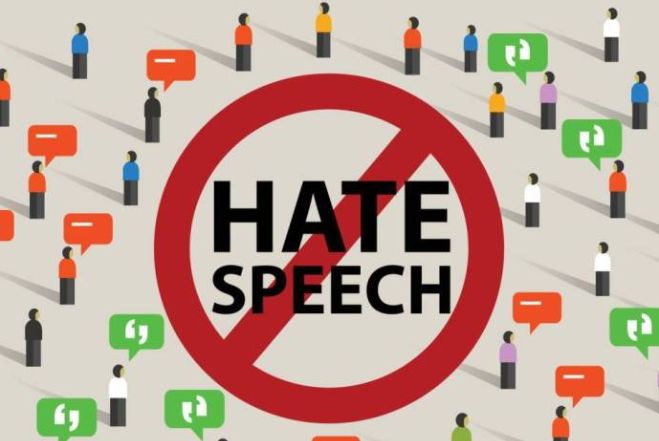
With immense power social media has given us one of the debates that has increasingly emerged is around the question of where to draw the line between freedom of speech and hate speech. Several trolls pages, memes and hateful posts targeting a certain community catering to a certain audience have been quite phenomenal on social media platforms.
There have been a lot of cases where people have been arrested for “derogatory” or “hateful” remarks on someone but at the same time people have been arrested for asserting their rights on certain things like arrest of a tribal professor against beef ban on a Facebook post which he made two years ago.
It is interesting to see that the same people who would advocate for freedom of speech will justify the arrests or penalties for hate speech. The condition is the matter aligns with their ideologies and beliefs. The question then arises who gets to decide what is hate speech or not?
The Section 66 A of IT Act was scrapped by Supreme Court in a landmark judgement as an attack on freedom of speech. However, even today the act haunts free speech. In January 2019 four years after the judgement, in a petition filed by the People’s Union for Civil Liberties (PUCL), a notice was issued to the central government to take measures to stop use of Section 66A of IT Act. With continuous changes in development processes of how we receive date and communicate it has become increasingly difficult to monitor or look into what kind of information is being sent. The never ending problem of fake news is one such example. However, in this case it is the dilemma of the grey area between black and white of hate speech and free speech. The Acts for hate speech were incorporated during colonial period with gaining momentum through the “Rangila Rasul” episode. After the controversy, the law was amended with inclusion of hurting religious sentiments. However, although hate speech includes hurting of every sentiments, most of the cases registered against hate speech were for “hurting” religious sentiments or “offensive” language and posts against political leaders. The question of free speech thus becomes central towards assertion of control of the establishment, between communities and also a question of ‘us’ vs ‘them’.
The ‘us’ depends on the context which in most cases is religious sections and communities. The point here is to think about if hate speech is being only targeted towards social media today?The kind of language that has been used in the general elections, the kind of statements that have been made by top political leaders and constantly the kind of debates that have emerged in public spaces. Will that come under jurisdiction or will the influential be ever held accountable?
The conversation regarding the debate has just started as modern means of communication have complicated and formed a complex structure of public spheres. The answer is to look into how social media platforms see the debate, how the establishment and the influential see this and how we as a society view the debate. We need to analyse the ways which laws made are used and to look into what actually goes around us.