

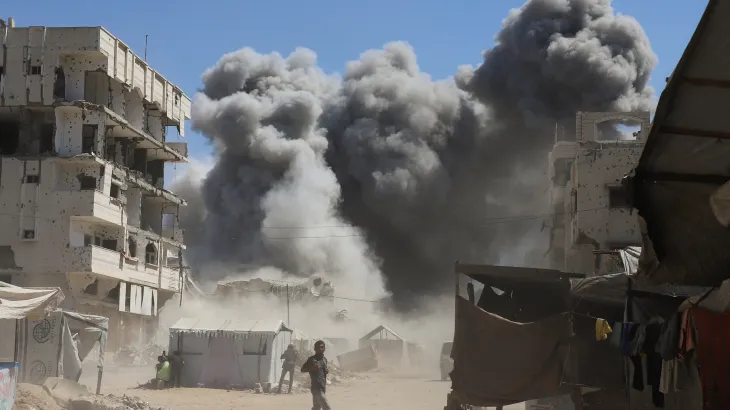
In a world already convulsing with conflict and geopolitical tension, the recent Israeli attack on Doha has shattered yet another boundary, the one between warzones and neutral ground, between strategic targeting and symbolic provocation (Al Jazeera 2025a). Doha has long been perceived as a diplomatic crossroads with a history of acting as a key hub of dialogue and negotiation, it now finds itself thrust onto the frontline of a conflict (Reuters 2025). The mediation, led by Qatar with the backing of the U.S and Egypt, was the result of careful, persistent efforts all of which were ultimately undermined by a single act (BBC, 2025).
The strike has sent tremors far beyond the immediate blast radius, raising critical questions about the expanding scope of modern warfare, (Times of India, 2025), the erosion of international norms, (United Nations, 1945), and the future of ceasefire efforts (Guardian, 2025). As condemnation and justification echo across global capitals, one fact remains indisputable: a precedent has been set, and its implications may redefine the architecture of regional diplomacy for years to come. (ABC News, 2025)
The Escalation
On September 9, 2025, an unprecedented rupture in diplomacy occurred over the skies of Doha (AP News, 2025). Israeli fighter jets struck a residential compound in Leqtaifiya, famously known as the Hamas Political Bureau’s headquarters where Hamas leaders had gathered to assess a U.S. proposed ceasefire (Al Jazeera 2025b). The assault, involving around 15 aircrafts and ten bombs, inflicted heavy structural damage and claimed six lives including the son of senior Hamas figure Khalil al‑Hayya, his office director, three bodyguards, and a Qatari security officer. (Press TV, 2025). However, the senior Hamas leaders reportedly survived. (The Times, 2025)
Diplomacy Shattered in a Flash
The timing could not have been more incendiary. The strike disrupted ceasefire negotiations, igniting global condemnation and diplomatic outrage (Al Jazeera, 2025c). Qatar called the strike a “lâche attaque israélienne” – a cowardly Israeli attack and a violation of its sovereignty (Al Jazeera, 2025d). The United Nations secretary-general António Guterres also denounced the attack, calling it a “flagrant violation of Qatar’s territorial integrity” (UN Charter, 1945). Prime minister Sheikh Mohammed bin Abdulrahman al-Thani declared it as “100% treacherous” and rightly called it an act of state terrorism (Qatar Ministry of Foreign Affairs, 2025a). Germany, Saudi Arabia, the UAE, the UK, and others swiftly rallied in condemnation. (Anadolu Agency, 2025a).
US backing
On his Truth Social platform, President Trump called the strike detrimental to both Israeli and American strategic interests (Times of India, 2025). However, there was no remorse regarding the attack in itself but rather the US President felt “very badly about the location of the attack”, suggesting that the issue laid more in the optics and logistics of the attack rather than the morality and legality of the action (ABC News, 2025). He also spoke with the Emir and Prime Minister of Qatar, thanking them “for their support and friendship to our Country” and assuring that “such a thing will not happen again on their soil.” (Guardian, 2025)
In a follow up statement, the US president revealed he spoke with Netanyahu after the attack, who “wants to make Peace”, and added that the incident could serve as an “opportunity for PEACE” (BBC, 2025). This statement is the epitome of irony or rather a further play on Israel’s victim card as Qatar is the fifth nation to be attacked by Israel in the last 24 hours, after a drone strike on a Gaza aid flotilla in Tunisia (Al Jazeera, 2025a). Employing violence and assassination even during moments of negotiation begs the question of whether Israel truly wants a ceasefire (Press TV, 2025)
Meanwhile, the United States has publicly denied any involvement in the strike, distancing itself from the operation while quietly supporting Israel’s right to “defend itself” and calling the attack a ‘worthy goal” (ABC News, 2025). Israeli officials have also claimed the operation was carried out independently, without U.S. coordination (Al Jazeera, 2025c), yet critics argue that such actions are rarely taken without at least tacit American approval (Times of India, 2025). This dual narrative of public denial coupled with private alignment has become a familiar pattern in the U.S Israel relationship, one that undermines international calls for accountability and de escalation (Guardian, 2025).
Qatar: Another tool in America’s toolbox?
Qatar’s role in this unfolding crisis is particularly complex. Doha has funneled hundreds of millions of dollars into both Gaza and U.S, led development efforts, positioning itself as a diplomatic bridge between Washington and the Palestinian regions (Eprints Glasgow, 2024). However, given the apparent U.S. foreknowledge of the strike and Qatar’s close financial and strategic ties to the West, questions are emerging about whether Qatar is truly a neutral actor or merely another extension of American influence in the region (Al Jazeera, 2025d). With Qatar hosting U.S military bases and acting as a key conduit for negotiations between Hamas and Israel, its impartiality is increasingly being scrutinized (AP News, 2025). Can a country so deeply embedded in U.S strategic calculations genuinely serve as a fair negotiator for peace (Anadolu Agency, 2025b)?
As Aeschylus, the ancient Greek tragedian said, “The first casualty of war is truth”. What are the discussions and alliances going on behind the scenes? What is the percentage of truth that the media depicts (The Times, 2025)?
Mediator or a tool? Some of these answers may arise depending on how Qatar chooses to respond (Qatar Ministry of Foreign Affairs, 2025b).
The Broader Stakes
The implications of this strike extend far beyond the charred remnants of the compound. At stake is the credibility of diplomacy itself because if tentative ceasefire overtures can be met with sudden violence, why would any party believe that dialogue would be honored (Al Jazeera, 2025c)? It erodes the sanctity of neutral soil, making future negotiations harder, riskier and less trustworthy, and not just in the Middle East, but globally (BBC, 2025).
The strike has shaken the confidence of regional logistics – airlines may face reroutes, higher insurance and delays (AP News, 2025). The Hamad port’s role in the gulf supply chains means any instability could divert flows to the UAE and KSA (Times of India, 2025). The trust factor has also taken a hit. Global shippers prize the gulf for stability, a strike indents that image and can pause merchant expansion into Qatar (Guardian, 2025).
The attack also risks legal scrutiny of the international criminal court as the strike violated The United Nations charter (article 2(4)) which prohibits the use of force against another state except in self defense or with UN Security council approval (United Nations, 1945)l. Further, the possible breaches of the Rome Statute, under which deliberately targeting civilian or neutral infrastructure in a non-war zone could amount to a war crime should be investigated (United Nations, 1999).
UN Security council emergency meeting
At the UN Security Council’s emergency meeting in response to the Israeli strike in Doha, Council members issued a strong, unified response condemning the strike, expressing “deep regret” over civilian deaths, and affirming support for Qatar’s sovereignty and territorial integrity (Reuters, 2025). The United States strongly defended Israel’s desire for peace, with U.S. representatives insisting that it is “inappropriate” to question Israel’s commitment to returning hostages or pursuing a peaceful outcome (ABC News, 2025). Meanwhile Israel’s U.N. Ambassador Danny Danon declared that they will act against the leaders of terror wherever they are hiding, “there is no immunity for terrorists” (The Guardian, 2025). Qatari prime minister questioned the priorities of Israel, but stated that their mediation efforts will continue despite the outrageous attack. (Qatar Ministry of Foreign Affairs, 2025a)
Is staying silent at a time like this really the wisest decision? The Algerian U.N. Ambassador Amar Bendjama expressed the same sentiments saying “Silence in the international community, and of this very Security Council, fuels chaos. This very council remains constrained, unable even to name the aggressor, to qualify aggression as a violation of international law” (Al Jazeera, 2025c).
Conclusion: When Diplomacy Burns
The Israelis ‘precise’ strike on Doha has done more than shatter glass and concrete, it has ruptured the fragile illusion that diplomacy can remain insulated from war (Press TV, 2025). It has turned a city known for negotiation into a new arena of confrontation, dragging neutral soil into the theatre of conflict (Al Jazeera, 2025d). The repercussions will not be confined to Gaza or Qatar, they will ripple outward (Anadolu Agency, 2025a).
In a world where missiles now precede words, and diplomacy is targeted before it can take root, we must ask ourselves : what kind of future are we building when dialogue itself becomes a casualty (The Guardian, 2025)? When is enough, enough (Times of India, 2025)?
Because if embassies become battlegrounds and peacemakers become targets, then the last bomb won’t just silence an enemy, it may silence hope and truth itself (BBC, 2025).
References
- ABC News. (2025). [Coverage on U.S. and Israel statements regarding Doha strike].
- Al Jazeera. (2025a). [Initial report on Israeli strike and aid flotilla in Tunisia].
- Al Jazeera. (2025b). [Report on strike in Leqtaifiya targeting Hamas leaders].
- Al Jazeera. (2025c). [Coverage of ceasefire negotiations and UN Security Council response].
- Al Jazeera. (2025d). [Qatar’s official condemnation and sovereignty violation statement].
- Anadolu Agency. (2025a). [International reactions including Saudi Arabia, UAE, Germany, UK].
- Anadolu Agency. (2025b). [Analysis on Qatar’s mediation and neutrality questioned].
- AP News. (2025). [Strike on Doha, mediation efforts, and U.S. involvement].
- BBC. (2025). [Impact of the strike on ceasefire negotiations and U.S.-Israel relations].
- Eprints Glasgow. (2024). [Qatar’s financial and diplomatic role between Washington and Gaza].
- Guardian. (2025). [Global diplomatic fallout and impact on supply chains].
- Press TV. (2025). [Casualties reported, including son of Khalil al-Hayya].
- Qatar Ministry of Foreign Affairs. (2025a). [Prime Minister’s condemnation of Israeli attack].
- Qatar Ministry of Foreign Affairs. (2025b). [Statements on continuing mediation despite strike].
- Reuters. (2025). [Global reactions and UN Security Council emergency meeting coverage].
- The Times. (2025). [Survival of Hamas leaders, questions about truth in media].
- Times of India. (2025). [Analysis on expansion of warfare scope and U.S. position].
- United Nations. (1945). Charter of the United Nations. Article 2(4).
- United Nations. (1999). Rome Statute of the International Criminal Court.