

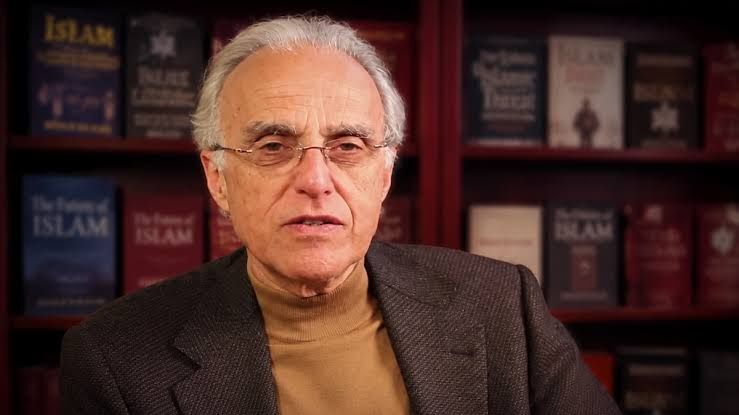
Professor Esposito was the academician and public intellectual who built bridges in an era of creating walls, fostered dialogue in an age of clash of civilizations, and worked for “overcoming Orientalism”
“John Esposito, pioneering scholar of Islam in the US, dies aged 86” (Al Jazeera)”; “John Esposito, would-be Catholic priest turned renowned scholar of Islam, dies aged 86” (Middle East Eye); “John Esposito, Who Challenged Negative Views of Muslims, Dies at 86” (The New York Times); and “John Esposito, who let a billion Muslims speak for themselves, dies at 86” (Muslim Network TV). These were headings, like dozens of others, of some obituaries published in media outlets and academic platforms in memory of Professor John L. Esposito, who died on 15th July 2026 at the age of 86.
The (current) Malaysian Prime Minister, Anwar Ibrahim, in a post on X (Twitter) and Facebook, described him as a scholar who had “built the intellectual foundations for a deeper understanding of Islam in the West” and called him “a true friend to the Islamic world”. Sami al-Arian (a Palestinian-American academic who directs CIGA at Istanbul Sabhattin Zaim University) described Esposito as “one of the greatest scholars and humanitarians of our time”, who “built bridges in an age of walls”.
Born in Brooklyn, New York (USA), in 1940 and raised as a Catholic, John Louis Esposito received higher degrees in Religious studies and pursued his PhD under Palestinian-American Islamic scholar Ismail Raji al-Faruqi at Temple University.
He spent nearly two decades (1972-1992) teaching world religions at the College of Holy Cross (Massachusetts), chairing its Department of Religious Studies, before he was “hired” by Georgetown University (GU), where he would spend the rest of his career. At GU, he served as the Professor of Religion and International Affairs and of Islamic Studies at the Edmund A. Walsh School of Foreign Services and Founding Director of the Prince Alwaleed bin Talal Center for Muslim-Christian Understanding (ACMCU; founded in 1993, it was earlier named CMCU)—“not merely an academic accomplishment. It embodied his central conviction: that knowledge must become encounter, and encounter must become ethical responsibility.” An “institution builder”, under his able guidance and academic direction, the centre grew into one of the world’s foremost institutions for interfaith dialogue, and he later launched the Bridge Initiative on Protecting Pluralism and Ending Islamophobia, a research project dedicated to “document and combat Islamophobia globally”.
My Encounter with, and Analysis of, Esposito’s Scholarship
My first encounter with the scholarship of Prof. Esposito was between 2006 and 2007, during my Master’s in Islamic Studies at Kashmir University (KU; Jammu & Kashmir). It was through his edited volume, Voices of Resurgent Islam (1983), with its compelling essays and insightful introduction, that I felt the depth and urgency of his work.
Though I had been, like other classmates, referring to his Oxford History of Islam (1999) and Oxford Encyclopaedia of Modern Islamic World (4 vols., 1999) since our first semester, my real engagement began in my PhD at Aligarh Muslim University (AMU). Reading his Islam and Democracy (1996; co-authored with John O. Voll) and his other writings on Islamic democratic thought (in the form of research articles, book chapters or other forms) became key reference points for my own research and were central to my thinking and continue to shape the way I approach this theme even today. I was so impressed by its language, style, and precision of its argumentation that I tried to emulate and imitate his writing style in some of my writings on Islam-democracy discourse.
Thereafter, I read and reviewed a number of his (co-authored/ edited) books, published in post-9/11 context, including What Everyone Needs to Know about Islam (2nd ed., 2011), The Future of Islam (2013), The Oxford Handbook of Islam and Politics (2013), Key Islamic Political Thinkers (2018), and Islam: The Straight Path (1st ed., 1988; 5th ed., 2016): the last one is considered one of his best-selling; most suggested/ recommended readings in the basic courses on Islam in the Western academia; has been translated in numerous languages of the East and West; and has achieved the status of a seminal and widely adopted textbook. Written in an accessible and effective pedagogical style, the work offers a comprehensive overview of Islamic faith, history, and contemporary developments in which Esposito has (to speak in general terms) adopted a “sympathetic” and contextualized approach to present Islam from both insider and scholarly perspectives without acceding to polemics or apologetics. Leila Fawaz (Tufts University) describes it as “the answer to every teacher’s prayer,” for it offers “an informed and balanced” introduction to Islam and things Islamic. I did a deeper analysis of this book, along with a few other introductory works on Islam through “Framing the Sirah” (published in the Islamic Studies journal, 64, 4, Winter 2025).
His What Everyone Needs to Know about Islam (1st ed., 2002) was published as a result of the questions bombarded at Esposito in the aftermath of the events of 9/11. So he wrote this book, in Q&A format, so that it would provide answers to questions raised by everyone who wanted to know about Islam and Muslims: from faith and basic beliefs to contemporary challenges and issues, including terrorism, homosexuality, Islamophobia, secularism, and other hotly debated issues and topics. In my understanding, this is a must read for everyone interested in Islam.
Esposito’s Scholarly Output and his Image as a Public Intellectual
Besides the above-mentioned works, Esposito has authored and edited numerous works (books, encyclopaedias) on Islam, Islam and politics, Islamic movements/resurgence and political Islam, Islamophobia, Islam and gender, etc. His academic output was staggering (he has about 55 works to his credit). The titles of his authored, co-authored and edited books “convey a sense of his intellectual itinerary”: Voices of Resurgent Islam, The Islamic Threat: Myth or Reality?, The Oxford History of Islam, Makers of Contemporary Islam, Unholy War: Terror in the Name of Islam, What Everyone Needs to Know about Islam/ Shariah Law, The Oxford Dictionary of Islam, Who Speaks for Islam?: What a Billion Muslims Really Think, The Future of Islam, Religion and Violence, Islam and Democracy after the Arab Spring, and Islamophobia and the Challenge of Pluralism in the 21st Century. He also served as editor-in-chief of a number of encyclopaedias and other works. Esposito’s writings have been translated into more than 40 languages.
One of his remarkable honors and achievements is that Esposito is the only scholar to have been elected President of both the Middle East Studies Association (MESA) of North America and the American Academy of Religion (AAR) and Vice Chair of the Center for the Study of Islam & Democracy’s (CSID) Board of Directors. He has been a member of the World Economic Forum’s Council of 100 Leaders and the E. C. European Network of Experts on De-Radicalisation, a Senior Scientist for The Gallup Center for Muslim Studies, and an ambassador for the UN Alliance of Civilizations. He has served as a consultant to the U. S. Department of State and other government agencies, European and Asian governments, corporations, universities and media worldwide. To mention it precisely, Esposito “advised governments, addressed universities, consulted policy makers, edited encyclopaedias, and wrote more than fifty books translated into dozens of languages.”
A distinguished and renowned American scholar of Islamic studies, Esposito is recognized globally for his expertise in the academic study of Islam, especially within Western contexts. His career has earned him numerous honors, including the AAR’s Martin E. Marty Award for the Public Understanding of Religion, Pakistan’s Quaid-i-Azzam Award for Outstanding Contributions in Islamic Studies, GU’s Outstanding Teacher Award as well as Career Research Achievement Award.
Obituaries, Not Just Eulogies or Mourning: A Recognition of Esposito’s Scholarship, Friendship, Mentorship, Public Engagement, and Much More
An Italian-American Catholic (who wanted to become a Catholic priest), “Esposito began [to study] with curiosity. He proceeded with rigor. He ended, more often than not, with friendship. That is why the Muslim world mourns him not as a foreign specialist who wrote about Islam, but as a friend who stood with Muslims without romanticising them, spoke of justice without seeking applause, and crossed boundaries that lesser minds treated as walls.” Fellow scholars and global leaders hailed “Esposito as a giant, both inside academia and outside of it.”
Anwar Ibrahim, the (current) Malaysian Prime Minister, who had known Esposito since 1970s, in a social media post described him as a scholar who had built the intellectual foundations for a deeper western understanding of Islam and called him “a true friend of the Islamic world”. “Esposito built bridges where others were content to build civilizational barriers”, said Ibrahim, who is himself a major Muslim intellectual of the present times, and had five-decades-long friendship with Esposito.
Sami al-Arian (a Palestinian-American academic who directs CIGA at Istanbul Sabhattin Zaim University) described Esposito as “one of the greatest scholars and humanitarians of our time,” adding that Esposito “built bridges in an age of walls.”
Nader Hashemi (current Director of ACMCU, GU) in his piece, “John Esposito transformed how the West understood Islam” (Al-Jazeera (“in dated 17th July, 2026), described Esposito a “towering intellectual” who not only “uniquely shaped the modern study of Islam and Muslim societies during the late 20th and early 21st century,” but “challenged Orientalist misrepresentations of Islam and Muslims in an era of deep polarisation.” “His scholarship created room for understanding,” Hashemi further states, “in lieu of prejudice, and his intellectual insights allowed a younger generation of scholars to build on and expand upon his pioneering research.” Paying a glowing tribute to his predecessor, Hashemi, among others, mentioned that Esposito believed that Western representations of the Islamic world were distorted not only by Orientalism and Islamophobia but by a pervasive secularism that trivialized the role of religion more generally. He, thus, “interpreted the politics of the Muslim world not from a Western normative framework but rather from the Muslim world’s own experience.” For this (and other similar standpoints), Esposito was not without his critics. This was also acknowledged by Danny Postel, in his piece “The Islamic Studies Scholar John Esposito Cast a Long Shadow” (New Lines Magazine, July 17, 2026), adding that “Esposito made it his mission to sympathetically explain Islam and the Islamic world to his fellow Americans, and to challenge rampant Islamophobia in the western world” in contrast to Bernard Lewis’ claim to explain “the roots of Muslim rage” and “what went wrong” in the Muslim world, Samuel Huntington’s “clash of civilizations”, and of Martin Kramer’s contention that “‘Esposito’s Islam’ was a sugar-coated version that downplayed Muslim radicalization and the threat it posed to the West.”
“Professor John Esposito was,” in the opinion of Hisham A. Hellyer (a senior associate fellow at the Royal United Services Institute for Defence and Security, London), “above all, an institution builder. Not only through centres, programs, and scholarship, but most of all, through people.” For Hellyer, he will be remembered most for “the community he nurtured, and the generosity with which he connected people to one another.” Junaid S. Ahmad (Director of the Center for Study of Islam and Decolonization, Pakistan) in his tribute on “The Legacy of Professor John Esposito” (Muslim Matters, July 16, 2026), described him as the scholar who “refused to turn Islam into an enemy,” a genuine public intellectual who “understood that scholarship is not an ornamental profession but a moral vocation,” and an expert of ‘Islamophobia studies’ who “did not simply describe prejudice against Muslims. He disrupted the machinery that produced it.” For Muslims/ Muslim world, he was a “Western scholar who had spent decades explaining Islam without condescension, Islamic politics without hysteria, and Muslim grievances without treating Muslims themselves as guilty until proven moderate.” With reference to Esposito’s Voices of Resurgent Islam and Makers of Contemporary Islam, Ahmad writes that through these books “Esposito introduced Western audiences to a vast intellectual world they had scarcely been told existed” and he “engaged figures such as Hasan al-Turabi, Rachid Ghannouchi, Hasan Hanafi, and Khurshid Ahmad when much of the West preferred to demonize them.” Believing that understanding does not mean endorsement, he read, questioned, challenged, and encountered them as “thinking human beings” and recognized that “scholar-activists could not be comprehended through intelligence briefings, hostile newspaper profiles, or inherited Orientalist categories.” In short, he “built an intellectual infrastructure for seeing Muslims as historical actors rather than permanent suspects.”
His colleagues and students, who are well-established scholars in their own right, also wrote glowing tributes for Esposito. Reminding his friendship of over forty years, Prof. Emad El-Din Shahin (HBKU, Qatar) described him as: “John leaves behind a longstanding legacy of brilliant scholarship, decades of remarkable service, and most of all, thousands of loving friends across the World.” For Prof. Imtiyaz Yusuf (ISTAC-IIUM, Malaysia), Esposito was “a dear student of Professor Ismail al-Faruqi” who “dedicated himself to keep alive” the legacy of his mentor; and for Prof. Muqtedar Khan, (University of Delaware USA), Esposito was the “most consequential scholar of Islam in the modern academy” whose “scholarship helped debunk many myths inherited from Orientalism and challenged colonial, imperial, and geopolitical distortions about Islam and the Muslim world”. Similarly, Prof.(s) Jonathan Brown, Nader Hashemi, Farid Hafez, and other associates of the GU and elsewhere also wrote academic tributes to him through social media and academic platforms.
A number of obituaries and opinion pieces in Esposito’s honor were also published from India. K. M. Seethi, in “Beyond the Clash: John L. Esposito and a Lifetime Case for a Pluralist Islam” (The Wire, July 20, 2026), attempted to narrate, contextualize, and present his thoughts on pluralistic dimensions of Islam; Maktoob Media (July 16, 2026) described him as a renowned scholar whose work “transformed the study of Islam, interfaith relations, and Muslim-West relations”; in the New Age Islam (July 21, 2026), his death was described as “the end of an era for modern Islamic Studies,” for he was the “scholar who reshaped our understanding of Islam”; Radiance Weekly (July 16, 2026) wrote about him as: “Esposito earned global recognition for his research, teaching and writing on Islam, Muslim and Western relations, and interfaith dialogue”; and Vartha Bharti (July 17, 2026) described Esposito as “one of the most respected non-Muslim scholars of Islam” whose “early academic training shaped his lifelong approach of studying Islam from the perspective of its own traditions rather than through external assumptions.”
It was not just individuals (academicians, political leaders, policy analysts) who paid glowing tributes to Esposito—as an academician, a public intellectual, a friend and mentor, an institution builder, and above all a great human being—but numerous organizations and academic bodies also published obituaries in recognition of his scholarship, legacy, and impact on individuals and institutions (both from the West and the Global South).
The GU, in their official obituary, wrote that “John did not apply for a position at Georgetown, Georgetown recruited him.” Academically, Esposito was “a leading global scholar of the study of religion and international affairs, focusing on Islam and Muslim societies.” Esposito’s scholarship “created room for understanding in lieu of prejudice, and his intellectual insights and generosity left a lasting imprint on generations of students and colleagues.”
Mourning the demise of Esposito, the International Institute of Islamic Thought (IIIT, USA) in their obituary, “Remembering Professor John L. Esposito (1940-2026)”, described him as “one of the world’s most distinguished scholars of Islam and lifelong advocate for interfaith understanding, academic excellence, and meaningful dialogue between civilizations.” Through his centre and his scholarly works, he “consistently challenged misconceptions and fostered informed, respectful dialogue.”
The International Institute of Advanced Islamic Studies (IAIS, Malaysia) described Esposito as a “lifelong advocate of Christian-Muslim understanding”, who “challenged misconceptions about Islam and helped foster greater dialogue, mutual respect, and appreciation across civilizations.”
The Islamic Foundation (London) also mourned the passing of Prof. Esposito, who dedicated, for more than five decades, “his academic life to promoting a deeper and balanced understanding of Islam, challenging misconceptions, and encouraging constructive engagement between Muslims and the wider world.” Prof. Esposito will be remembered, and fairly so, “not only as an outstanding scholar but also as a sincere friend of the Muslim community”.
Nihad Awad, National Executive director of the Council on American-Islamic Relations (CAIR, New Jersey, USA) said: “Professor Esposito devoted his life to advancing an accurate understanding of Islam and Muslims at a time when misinformation and prejudice too often dominated public discourse. … He was not only an extraordinary academic, but also a compassionate friend and a trusted voice who consistently stood for religious freedom, interfaith cooperation, and the dignity of all people.”
His lifelong commitment to objective scholarship, interfaith dialogue, and the pursuit of justice and mutual understanding has left an enduring legacy that will continue to inspire future generations. As Junaid S. Ahmad aptly puts it: “John Esposito built bridges in an age that rewarded walls.” Mustafa Akyol had similar sentiments: Esposito was a towering scholar who “taught and studied Islam with rigor and respect, and built bridges of understanding between the West and the Muslim world.” Tamara Sonn, in 2022 through Oxford University Press, edited a volume of essays in honor of Esposito, “Overcoming Orientalism”—a well-deserved and fair tribute to the intellectual legacy of one of the most influential, highly respected, and ‘sympathetic’ scholars of Islam/ Islamic Studies.