

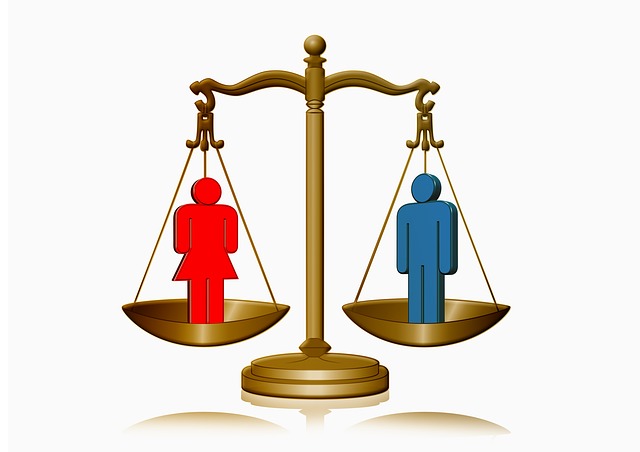
‘Couldn’t there be, before the question, a more ancient, profound, and radical movement that is not questioning, but is rather an affirmation’ is what Derrida would like to ask about the question and then what comes before question.
The question ‘ARE MEN AND WOMEN “EQUAL”‘ is a problematic premise because of two questions. One, who is asking this question and second, who is speaking in this question. Which means that one who is asking is not actually speaking for it, someone else is defining what to be asked, therefore, more important investigation begins by questioning “How” of this very question. How this question came into existence, which certainly means that we are dealing with the history of the question and what gave birth to this question.
Who grants ‘equality’ who exercise it and who assess it? Asking this question about equality of two subjects is to force voluntarily yourself into someone else’s premise that is forcing you to ask this question. Then one who is asking is not freely asking but asking on someone’s behalf. The question is not speaker’s question, the question is history’s question well constructed through power.
Therefore what comes before this question of equality because equality is dependent on definition outside its reach, is the question of Freedom or Being Free or Free Being? Men and women as two different biological entities are free or not. If not, then what stops them, what restricts them. The question of freedom is much more basic and instrumental than mapping the equality.
The question of sexual repression or restriction of freedom for any particular sex for Foucault is linked with how we speak about that sex or to say how the question of sex is ‘put into discourse’ which means the question of ‘How’ is more a historico-theoretical and historico-political question. Western countries and thinker in last few centuries have tried to look into discourse from a critical point of view, not only taking positions on sex but reinventing the definition of the gender and imagination of sex. Like in Butler’s view the gender is not about body about the performance and then the performativity determines someone’s sex or gender ‘There is no gender identity behind the expressions of gender; … identity is performatively constituted by the very “expressions” that are said to be its results.’ Identity of the body is no more then related to essence of the body but to performance thinks Butler.
Foucault also takes this task of relationship of power and sex through out centuries in West and tries to see the discourse produced through certain relation and the reason for silence over sex. For him ‘The central issue, then (at least in the first instance), is not to determine whether one says yes or no to sex, whether one formulates prohibitions or permissions, whether one asserts its importance or denies its effects, or whether one refines the words one uses to designate it; but to account for the fact that it is spoken about, to discover who does the speaking, the positions and viewpoints from which they speak.’
The discourse of the religious text and religious practice is two different thing but the appropriation of the text happened by certain practice well controlled by certain institution.
This in turn makes the question more political and thus Butler maintains that ‘Gender is the repeated stylization of the body, a set of repeated acts within a highly rigid regulatory frame that congeal over time to produce the appearance of substance, of a natural sort of being. A political genealogy of gender ontologies, if it is appearance of gender into its constitutive acts and locate and account for those acts within the compulsory frames set by the various forces that police the social appearance of gender.’
Which implies that gender is not mere a process for her but a particular kind of process, which means that certain desired outcome is expected from this process.
The process through which we understand our being and other’s being, is much more important if a position is to be taken. What are the social, political and cultural processes around us, which forces us to realize what we are and what ‘other’ is?
The understanding of these processes is critical to recognize the relationship in terms of daily practice and specifically in terms of power. The realization of ‘other’ as something particular or specific is result of no ‘natural’ understanding but an understanding built in history and inherited by generations through norms, practices in the unconscious being and so are the roles we assign or assume to be assigned to our ‘other’.
If I restrict myself to certain gender practice in certain part of the world (Indian sub continent for now) and I maintain to deconstruct specific practice granted by religion then we have to look into history of those institution which has granted power or process in that geographical location. In terms of Religion and practices sanctioned by religion the question becomes complex due to the hermeneutic; the diversity of interpretation and domination of certain kind. The task of problematization in this regard will be to see that how particular view or practice becomes more overwhelming and how it remains unquestioned or unchallenged. How these practices existed in our own unconsciousness before our own existence?
The discourse of the religious text and religious practice is two different thing but the appropriation of the text happened by certain practice well controlled by certain institution.
The mainstream practice of religion is dominated by certain interpretation and interpretation of text and practice is dominated by a particular sex. If the interpretation itself is not free then the question follows it does not exist. We shall perhaps look critically into the history of these construct or normative practice and see whether those positions actually existed in history at the ‘beginning’ or not, how then it got established and remain unchallenged.
Reaction imported from other location will in my view never resolve the tension neither it will open space for conversation to see the history or historicize the practices. A ‘sexual revolution’ for the west can be a hegemonic advancement for the east. Femen’s bare breast can be a symbolic bravery but does it really address the question of freedom or is the question of freedom mere question of ‘naked bodies’. Objectification is not a process in isolation or outside history’s premise, not only a single factor functions to determine what should be the object’s presence, a movement in counter-objectification may end up in another objectification. Pornography objectifies and anti pornography can also objectifies giving birth to ‘negative-pornography’.
This is also important to note that any religious action is not always pure religious action rather there is always a conversation and negotiation going on between religion and the local culture. Lot of politics occurring from religious domain is not purely religious rather outcome of those negotiations. This is also interesting to note that through these negotiations the boundaries are revisited and forms are reimagined. Hijab or scarf or burqa takes new form or acquire new meaning through cultural negotiation. Therefore this is very important to always question the history of practice and process and see what kind of negotiation has given birth to certain “religious” action or “religious” practice. The violence sometime is failure of those negotiation or hegemony of negotiation on other.
The will to assert and to express and to speak is fundamental for any sex to advance the tension remains in identifying those practices sanctioned by institution, which evades all kinds of question, and to challenge those construct. Which implies questioning every kind of text available as poulain de la Barre said:
Everything that men have written about
Women should be viewed with suspicion
Because they are both and judge and party.
One of the most primitive of all institution is family and to see how this institution is formed and forge relation with other institution like religious or social. What is desired from a family? What is the objective existence of family? Understanding of a family is singular or it holds multi-dimensionality? The family fixes a role, which comes the idea of the family, how it will be challenged?
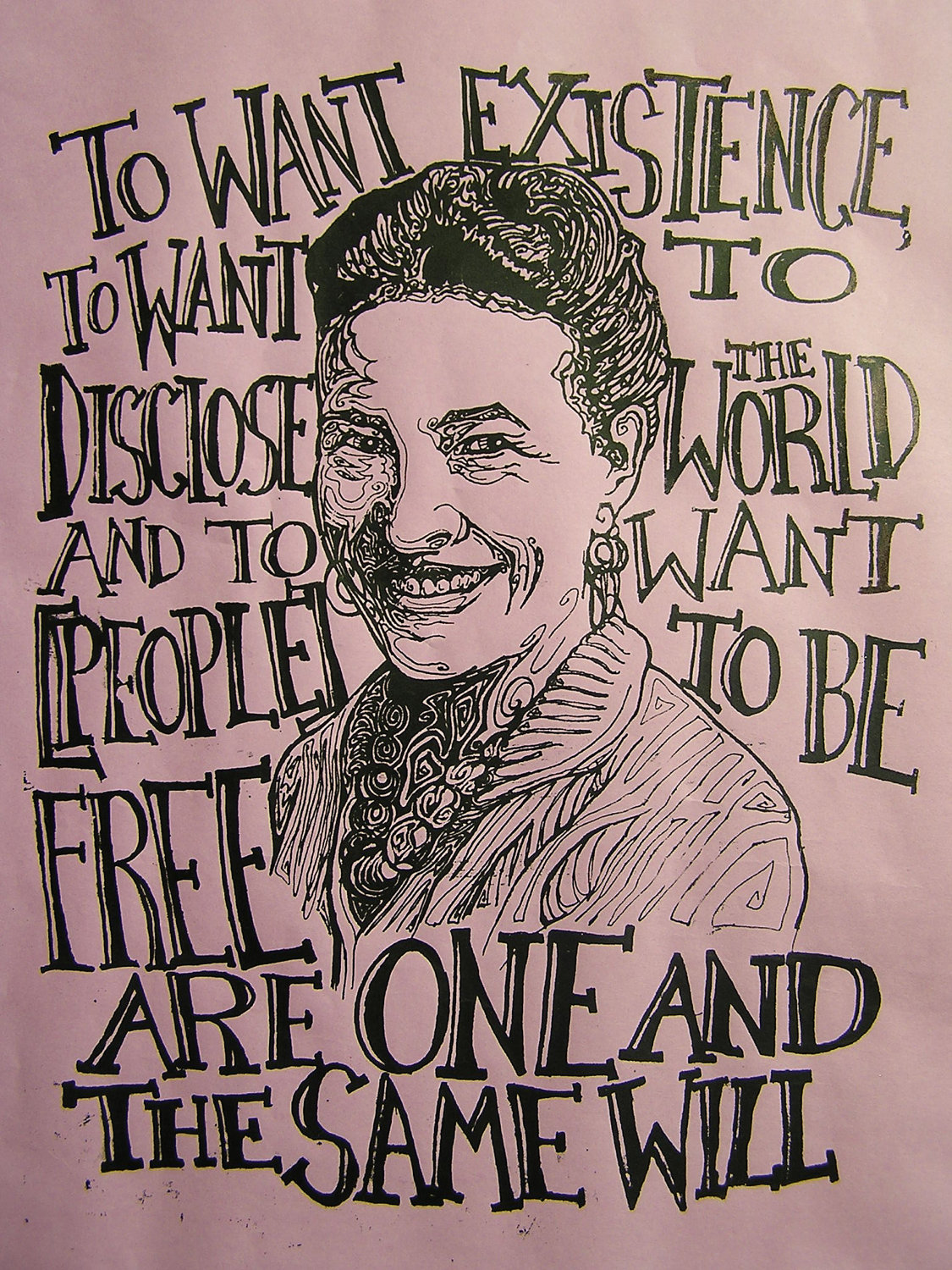
Simon de Beavoir concludes her magnum opus ‘the second sex’ in these exact words: This could be better said. Within the given world, it is up to man to make the reign of freedom triumph; to carry off this supreme victory, men and women must, among other things and above and beyond their natural differentiations, unequivocally affirm their brotherhood.’
Difference exists and it will be there but will it challenge the binary in a way that both sex feel liberated and emancipated.
Without going into interpretation I would like to end by quoting a verse of Quran:
And do not wish for that by which Allah has made some of you exceed others. For men is a share of what they have earned, and for women is a share of what they have earned. And ask Allah of his bounty. Indeed Allah is ever, of all things, Knowing.