

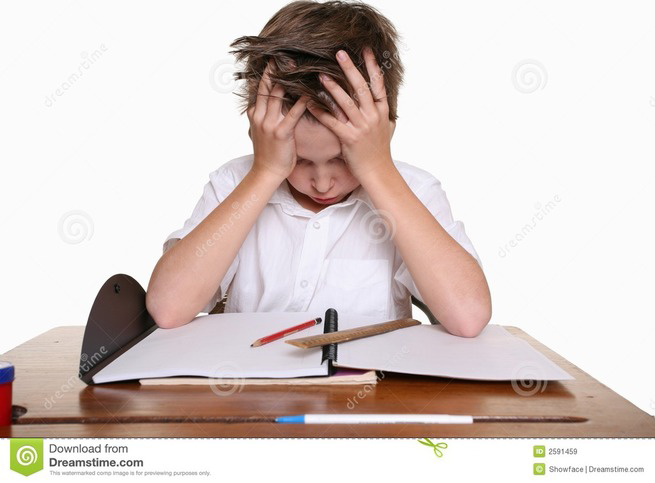
When I first read P.G Wodehouse’s short story, The Prize Poem, way back in high school it didn’t have much of an impression on me. It was one of those matters that teachers make you contemplate whether you like it or not, and though I saw it simply as part of a very boring syllabus, I still think of it in scraps and parts. The story revolved around three school boys who resort to dishonesty to evade a poetry competition imposed upon them by their headmaster, who later, out of concern, liberates his students from the trauma. I wouldn’t blame my teacher for my nonchalance towards literature, then despite her very verbose but vacuous explanation. It seemed quite strange, rather insincere for someone who stood for a military styled discipline to talk about how compulsion nurtured evil in students. That lesson, the first of its kind in my life of a scholar, however, does not come as a welcome blast from the yesteryear. My reminiscence of school days provides a string of chilling memories that sends down a frisson.
While in a foreign school, I spent half the time day dreaming, imagining some of the most creative things, and the other half playing hopscotch on the playground like most of us did without any apparition of rules haunting us, students wore whatever uniform they could get their hands on, even if it were a different shade of color. There was definitely no say-so over which shoes to wear or how to wear one’s hair, and parents didn’t mind letting their children wear their favorite jackets or sweaters or maybe even a necklace or a ring. Tests barely existed, though exams were important, school hours were just enough and that, we all believed, made the whole institute a happier place, and also perhaps my only good memory in school. While other countries rack their minds over the many theories of learning and how to execute them in schools for a better learning experience, in India the problem of education is a very peculiar one. It is a jumble of corruption, dishonesty and not to forget our skewed idea of education and the job of an educator as well. The harrowingly stagnating robotic system is so flagrantly unreasonable that it amazes me rather than repels. We needn’t do book length studies to understand education and its flaws, our own experience of education will enlighten us.
We assume that the more the students spend time buried in books, the better for them and even if some make the process innovative, it is still being buried in books. Self-discipline is lost in oblivion and so is the effort to create a fun learning environment to make students latch onto their books on their own
As the academic year reaches an end, newspapers are vibrant with tacky advertisements of the many schools, most being cases of overkill who assume that marketing gimmicks have no shelf-life. Every time I pass by a school I see swarms of children dressed up in the same manner from head to toe without any distinction. The same shade of blue, the same brand of shoes and wearing their hair in the same manner ‘reeks of sameness’. Though the purpose of this strict uniformity mill in my brain, I realize that this sorely missing individuality is what we indeed look forward to assess a student’s status of the discipline and unreserved obedience to rules. Students had better follow them or be reprimanded for just another not-allowed colored watch or hair band. While I wonder at our narrow thought of how a different color can slot students into sincere and insincere, the glaring reality of our distorted notion of discipline haunts me. And I would rather not delve into the numerous rules regarding school uniform policies due to economy of space. As I see them enter their classes, they walk in a file with no chance of talking. I presume it is so the kindergarten students don’t lose their way but hilariously even the high school-ers are made to do the same every day after a much not-so-needed assembly. Looking out of the window is definitely a taboo as is just turning around during class and a wag of a finger or a smoldering look even if without any reason is enough to make students carry out orders to the letter. I remember scribbling with crayons in my math book and not being scolded for that and despite my curiosity, I would rather not check school notebooks of today lest I see a flash of red on every page even if there was no scribble in it. But it’s just not the uniforms we rule. Every word is supposed to be written in cursive, apparently, it is the only right way of writing. I am glad I never bothered to change something so innately bound to me though I lost a few marks in the process. If these instances existed in local schools, I could attribute all of this to a low standard of education, or neglect or poorly trained staff and so on, but the fact that this happens in some of the best in the cities, leaves me in a tizzy. Tests are our pet entertainment and if given a chance we would have not one but three every day. A grueling scheme of marking is necessary to keep up an apparent good quality education and so are the many parent-teacher meets and if these were said to be for the well-being of a student, then we are talking tongue-in-cheek. We assume that the more the students spend time buried in books, the better for them and even if some make the process innovative, it is still being buried in books. Self-discipline is lost in oblivion and so is the effort to create a fun learning environment to make students latch onto their books on their own. And if you think there are schools that roll-out extracurricular activities to supposedly lighten the weight of studies, you are not even close to reality, because they are purposely forced upon students which sap their enthusiasm rather than boost it. Consequences of such cruelty often result in students developing contumacious behaviour who tend to cock a snook at squeamish teachers but they are easily branded as hard-to-deal-with students.
The first three years of a child are the most important for their physical and emotional development and yet, I see parents most exulted to get their toddlers admitted into schools as soon as possible. It is surprising to see how most parents and students go through this ordeal without a litany of complaints. A discussion on this theme may allow us to blame it on the teachers who in turn blame it on the system, but neither of the accusation is justified. That our educational system is a deplorable one is a tangible fact, so is our distorted notion of the job of a teacher. The major problem, as we see it, does not lie in our system of education but more so in those whose hands it is in. I may sound like I am projecting, but Herbert’s work ‘Teacher as Parent’ tells a lot about today’s classrooms. It appears that, they are boring places where teachers come to teach only for a paycheck. I don’t chide students to appear in classes for the sake of attendance, after all, we are responsible for drilling the importance of something as petty as that into their heads. Though Herbert attributes three different roles to a teacher, our view of the so-called job does not come with praises from on high. The last time I heard someone wish to be a teacher, instead of being egged on, eyebrows were raised as to why someone would want a gig that requires a Herculean task to be done every day for a relatively lesser earning. Herbert believes that the duties of a teacher are similar to that of a parent but some so readily associate a stick to a teacher that I can’t help but wonder if that is how they dealt with their own children. This insensitivity somehow stems from our hackneyed materialistic goal of education which has tacitly stripped us of the human element required to be purposeful educators. Our educators seem to be the least knowledgeable in terms of child psychology, ultimately looking upon us as things to be programmed. Pritam Kabe, a researcher from Georgetown University, found that the dismal state of our education is mostly due to unmotivated teachers and if we were to change that, then we would have to make the profession more respectful. Since money and a cushy job is the drive, leading by example is very rarely seen. Not to forget the deeply rooted sadistic idea of meting out of punishment and reward for possibly every thing. What the student has to say is the least of our concern and since teachers do not evolve in air, some unabashedly bring with them a scent of racism too. Encouragement is perhaps just for those with a high IQ and talent, while the stoic and timid are left abandoned. It is human nature to be enamored by a smile, especially one received from a teacher, but my further education in the same supposedly good school also taught me Hamlet’s ‘One can smile and smile and still be a villain.’
There is no dearth of dedicated teachers today, who only teach but what we need are teachers dedicated to the interests of the students. Teaching is not just about making students understand lessons or raising their grades even if it is done in the most likeable way. It is a lot more from a student’s perspective.
In all of this mess of our vested interests, the students are shoved aside and so is their very existence. It is forgotten that they are highly perceptive, innocent, fragile beings of pristine purity. They are like wet cement as Dr. Haim Ginott describes them; anything we say or do leaves an indelible mark on them. They feel the import of our words much more than we do ourselves. It is forgotten that they are in a continuous learning process, and lessons is just one of the modes of adding to their knowledge. Peter Gray, a research bio-psychologist hashes out ways to relieve students of stock mannerism and banal ways of learning. He believes more hours of unsupervised playing helps develop a creative mind while ‘creativity is driven out in schooling which centers not around a child’s questions but on questions by an imposed curriculum that already have decided answers.’ It is their right to play, run along, and have fun without any demur. The most important skills, he says, that are required to live healthy productive lives are learnt and practiced through play. He mentions Einstein who found his classroom stifling and how he came up with the idea of relativity while ‘imagining himself chasing a sunbeam and catching up with it.’
It is unnerving to see how out of the entire school life, one is not even close to pointing out a single teacher that may have quickened his heart and galvanized his life. There is no dearth of dedicated teachers today, who only teach but what we need are teachers dedicated to the interests of the students. Teaching is not just about making students understand lessons or raising their grades even if it is done in the most likeable way. It is a lot more from a student’s perspective. If you notice they are instantly beguiled by anyone who approaches them amicably, and talks to them in their language and entertains them no matter how stupid an idea and who recognises their strengths and frailties and gives them an encouraging pat every now and then.
Impartiality and transparency are two crucial requirements of a successful student-teacher relationship founded on trust and empathy. In the absence of these, it is as if we are only tending to the needs of automatons, who know how to read letters and count numbers but as Dalai Lama said, ‘If we are prevented from using our creative potential we are deprived of one of the basic characteristics of a human being’ inevitably marring our way to happiness. It is a path we are all willy-nilly drifting towards, annihilating the very moral fibre of our society.
References:
Herbert E. Hoefer, 1978. Teacher as Parent, Diocesan Press, Madras.
Pritam Kabe, 2011. Basic Education in India – Lack of Teacher Accountability, NOT Technology, is the Real Issue, Need to Make “Teaching” A Valuable Profession in India!, Basic Education in India – A Quick Summary of Thoughts. (online) pritamkabe.wordpress.com
Peter Gray, 2014. ‘Give childhood back to children: if we want our offspring to have happy, productive and moral lives, we must allow more time for play, not less’, The INDEPENDENT 12 January. (online) http://www.independent.co.uk