

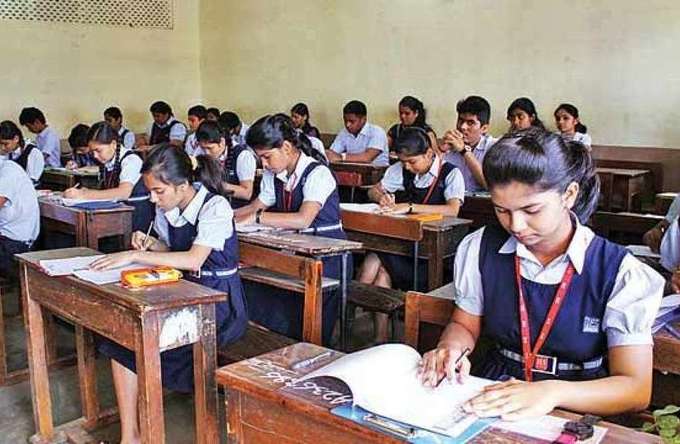
We have always heard complaints from teachers about students being frequently absent or dropping out from school after a certain class, but now we commonly hear from the parents and the public about teachers not showing up in classes, attending classrooms irregularly or haphazardly, and also certain government schools having no teachers at all or few of them managing the entire school.
Isn’t that strange?
Since the schools are going to start, parents have begun to arrange the school fee, books, bags, and other academic needs of their child. We notice an unwritten law in the society that a child born to a very poor family joins the local government school, whereas the middle class and another well off families admit their child into internationals or other private institutions having CBSE and ICSE curriculum. This dichotomy not only reinforces inequality in the society but at times creates a sort of untouchability between haves and have-nots.
For many years now the state education system is being privatized. Nobody had spoken when the government, the self-proclaimed protector of public interest, shut down thousands of governments schools, stating that it was for the good will of the people. How could that even be a positive thing for society?
We hear a common complaint from the public, legislature, and educational activists, that teachers of the government schools aren’t present in the class. In such a case, how can we expect the parents to send their children to these schools? When questioned, nobody is able to get the answer, not even SDMC (school development committee members) of schools. But I say that the answer is straightforward- our government is deploying government teachers on other non-teaching activities.
Section 27 of RTE ACT 2009, states that the government teachers can be utilized for electoral purposes, to conduct decennial population census, disaster relief works, etc. It is shocking to know that teachers are forced to do more than 20 other noneducational tasks. Who decided that the government school teachers only should perform these duties ? When it’s well known that there is a shortage in the number of teachers, how can the government force them to do these works? Can’t they appoint somebody else?
Block educational officers and others occasionally visit these government schools to do nothing but scare the students and teachers by scrutinizing the registers, files, documents, etc which may be entirely irrelevant for students individual or educational development.
Government teachers have to do tasks relating to mid-day meal program including providing milk, medical tablets, and other basic provisions to students. They are also relegated to other office works such as school funds. It has been brought to notice in many court judgments that non-teaching staffs including clerks aren’t assigned these works by the schools heads, and when they are assigned, they do not do them. Other non academic activities like maintenance of the school’s cleanliness, toilets, and drinking water also fall on the teachers’ head. The work of distributing books, bags, bicycles, uniforms and other basic things and also going to banks or government offices located in the far away cities to submit school records falls on the teachers’ head. All these loads of non-academic activities take them away from classroom responsibilities and badly affect the teaching profession. The worst affected are students, and particularly those poor students who cant even afford private coaching unlike others.
RTE Act stipulates for 45 hours of teaching work, i.e. at least teachers need to spend time with students in classroom interaction for 7 hours over six days in a week. However, given the lists of non-academic activities in which they are engaged, this hardly gets fulfilled.
It would be beneficial for both the teachers and students if the government omits some of the duties of the teachers from section 27 of RTE ACT 2009, after all they aren’t robots who can manage this heap of additional work along with their teaching.
We, as a society, should demand the government to relive the teachers from these works, which would help them to focus on their prime academic duty. Every parent of this century should unitedly ask the government not to force the teachers to perform these non-academic activities, but teach the students in the class room. Parents need to be extra vigilant and try ensuring that the government of the day does not assign these tasks to the teachers.
Last but not the least, the teachers also need to realize that their prime duty is to teach the students, who present themselves in the classrooms with tidy uniforms, waiting to learn something new each day, carrying big dreams in their little twinkling eyes, which they know well that only studying could help them pursue them. The teachers should realize their importance and also remind the higher authority that their work is to teach the students and not to roam around fulfilling the demands of the government.