

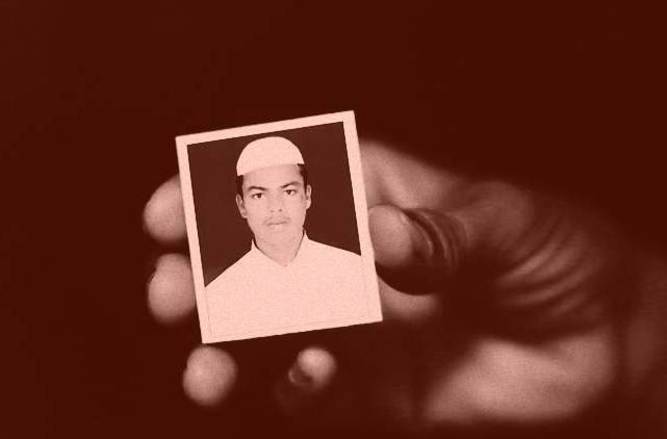
A year after the brutal murder of Junaid Khan, we are again about to celebrate Eid with full vigor. What we have lost in the past year was an assurance from the state government to protect the lives of Muslims, who survive under mounting fear and insecurity from the Hindutwa mobs and its machineries. It is a time for introspection and retrospection of the last year, which must be done by the government as well the larger public, who are all partakers in making of the heinous collective conscience. What is the track record of the ruling NDA regime in reining of the Hindutva mobs and in assuring a safe environment for Muslims? At what extent the larger society could safeguard the fundamental rights and existence of Muslims in this country under the Sangh regime? How much are they complicit in the crimes of Hindutva mobs and Islamophobic propaganda wielded by the so-called Secular Liberals? It is high time to rethink the perceived conscience of every individual while preparing for an ‘anti-fascist alliance’ in the coming elections.
Junaid, a 15-year-old Hafiz (memorizer of Quran) was -on his way back home in Khandawali of Haryana from Delhi after shopping for Eid- assaulted and viciously lynched in a running train. The incident happened in an ordinary situation of everyday life, in a general compartment of a suburban train and it was not a pre-planned assault, where the mob who beat and murdered Junaid was his fellow passengers. But what is striking here is that even these ‘ordinary people’ can behave like Hindutva goons instantly, and they could murder an innocent Muslim boy in present times. Here we lose our mutual belief and trust as neighbors, colleagues, and co-passengers at every walk of life and everyone looks so strange and alien to each other. Sharing a seat in the train is common, but what is uncommon is the formation of a mob right away, whose defining feature become anti-Muslimness and every individual behaved there with a collective will of Hindutva. Arguments made a way from seat to beef, topi, kurta, beard and so on.
The primary question of ‘a seat’ metamorphosed into the question of Muslimness as well as the individual’s (Junaid) body and his collective self (Muslim community). Here Junaid is no more an individual body, but he encompasses the whole spectrum of Muslim existence in India and beyond, whose general and immediate characteristics are ‘beef-eaters,’ ‘terrorists,’ ‘anti-nationals,’ ‘Pakistanis’ etc. It is also evident in the current discourse of crimes/terrorism, if the ‘accused’ is bearing a Muslim name and body, he will be judged not on the committed crime, but his identity would be prosecuted, and the entire collective self must condemn or apologize every supposed-to-be-done crime. In a similar way, we can analyze the existence of Sikhs in India, who as an ‘entire Sikh community’ is carrying the age-long ‘complicity’ in the murder of Mrs. Indira Gandhi, where the accused’s names are Satwant Singh and Beant Singh. But this complicity doesn’t work in the murder of Mr. Gandhi, where the ‘entire Hindus’ ought not to carry the crime committed by Nathuram Godse. Hence, the question of minorities in India must be analyzed on the pretext of their ideological cosmoses, political self and bodily representation, rather than through the liberal binaries of secular/communal and humanist/identity political self, whereas the liberal secular humanist self-behaves like nothing but a prototype of Hindutva in India.
We have witnessed many meaningful protest programs during this year. Junaid has awakened the conscience of people, especially of Muslims, to question the prevailing conditions of hatred and intolerance. People from diverse prospects showed their dissonance and dissent over the exasperating Sangh Parivar violence through Hindutva mobs and the support of state machinery. Immediate responses came from the Muslim public platforms on the day of Eid to offer namaz by wearing black bands as a token of protest. Funeral prayers (Namaz-e-Janza) were offered at mosques as well as public places across India. Some of the marvelous events occurred in Kerala, where in an unprecedented move, Jifri Muthukoya Thangal (President, Samastha Kerala Jam’iyyathul Ulama) announced to offer Namaz-e-Janaza for martyr Junaid at mosques. Muslim youth of Kerala blurring organizational barriers conducted many protest gatherings including Calicut and Malappuram while offering Namaz-e-Janaza at beaches, roadsides, and marketplaces. These efforts have opened a debate over the political manifestation of Islamic rituals in the anti-fascist struggle. On the one hand, these efforts received much criticism from the point of view of jurisprudence and statuesque, but on the other hand, it has made way for the assertion of Muslim identity in resisting the opponent, be it Sangh Parivar fascists or the bygone Colonial empires. These religiously-motivated ways of protest made much confusion among the secular liberals, who sought the Muslims to keep away their Muslimness and to be ‘just humans’ in the struggle against fascists. The Muslim youth countered these assumptions by performing their own religious practices in the public sphere and declared their presence itself is resistance in the face of mounting Hindutva atrocities.
Also read Terror In The Name of Cow: Muslim Genocide And Beyond
In another gesture of support, many Muslim organizations and political parties visited the family and offered legal and political support to punish the assaulters. Indian Union Muslim League (IUML) leaders visited Junaid’s home and invited his brother to Kerala to address a public conference. Students Islamic Organization (SIO) offered every help to set up an institution for girls titled “Shaheed Junaid Madrasa’, as Junaid’s mother Saira Bano wishes. Brinda Karat (Polit Bureau Member, CPIM) visited home on next day and offered financial help. Filmmaker Saba Dewan called for citizen’s protest marches under the campaign ‘Not In My Name’ seeking to ‘reclaim the constitution’ and ‘resist the onslaught.’ These silent marches held at around 15 places across India and abroad, questioned the brazen silence and inaction of the Government. Writer Ramanunni donated the prize money of Sahitya Academy Award to Junaid’s family as a gesture of penance. In his statement, Ramanunni says that “Junaid was branded as anti-national and murdered brutally solely because he is a Muslim and his appearance was different.” We have seen diverse manifestations of protest and dissent against the ruling regime and the Sangh Parivar propaganda aiming at the insecurity and fear-psychosis in the minds of Muslims.
While we trace the progress of investigation -as usual, it goes at a snail’s pace-, no punishment has been granted to the culprits yet. The police had arrested six accused namely Naresh Kumar, Ramesh Kumar, Rameshwar Dass, Pradeep Kumar, Chander Parkash and Gaurav Sharma in a month, but later on, five persons except Naresh got bail. Meanwhile, Junaid’s family submitted a plea for transferring the case to CBI, but the division bench of Punjab and Haryana High Court dismissed the appeal on Tuesday. As latest, in its order, the High Court states that the dispute was regarding over the seat sharing and abuses in the name of castes and nothing more. The court also made the observation on 17 April 2018, while granting bail to Rameshwar Dass, that “the assault was never made in the beginning, but the same was made when the other boys (Junaid’s brother and others) entered the train.” Here slowly the case transmutes into an accusation of a crime to the victim’s side, and later on, the culprits would get a chance to get acquitted without trail and penalization.
This sequence of events is usual in the cases related with Muslims as victims, in which the whole blame would be on his side, where he is guilty by default. Otherwise, he needs to prove his innocence before the police and the court. In most of the cases of ‘Beef allegations,’ the murdered/injured victims are the primary culprits in the eyes of system and society, and the case of murder would be prosecuted only after the clarification on the type of meat, as happened in the brutal murder of Muhammad Akhlaq in Dadri. Throughout the last year, we have witnessed many more murders of Muslims on the pretext of eating/carrying/slaughtering/trading cows. Alas, even two days before Eid, we are unfortunate to see the dead bodies of Murtaza Ansari and Charku Ansari of Godda district in Jharkhand. We could witness some alleviation from the side of the system in the lynching case of Alimuddin Ansari of Ramgarh in Jharkhand, in which 11 including a local BJP leader were convicted and handed life sentences for murder in the name of Gauraksha. At this time, Muslims in India urgently required an assurance from the state to stop such cold-blooded incidents in the future, while the larger society needs to be vigilant and careful about the every-day existence and survival of Muslims. The fight for justice and safety goes on with a strong hope in the divine disposal in this world or the next.