

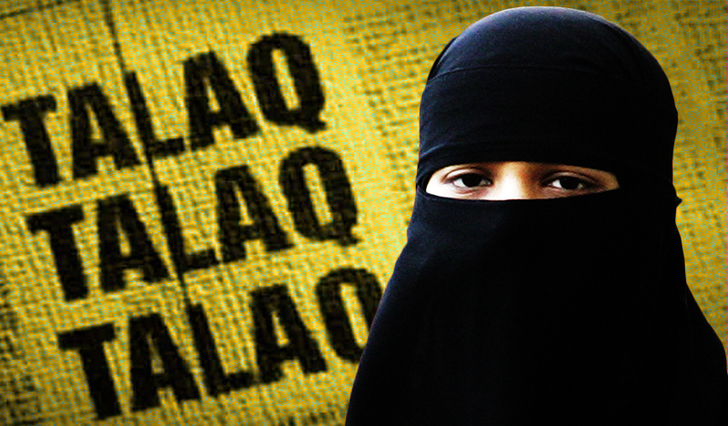
Once again by the recent Triple Talaq verdict the Indian Supreme Court has attempted to reassure itself as the ultimate hope of the vulnerable Muslim women who have the ‘status’ of most oppressed subjects under a religion in Indian society[1]. At least it is significant, at this moment, to unpack the language of Indian judiciary used in its responses to Muslim women’s claim for justice before bragging about the ‘savior’. There are a number of judgments in which Supreme Court of India expressed concerns about the protection of rights of Muslim woman from discrimination and directed guidelines to avoid the arbitrary practices of religious mandates. Extending the protection of The Muslim Woman Protection Act in Danial Latifi case[2], invalidating a Talaqnama sent in reply to a claim for maintenance in Shamim Ara Case[3] upholding the right to maintenance in a number of other judgments Supreme Court expressed its justice concerns towards Muslim woman. But rather than that in those cases in which judiciary expressed its concerns over Muslim women whenever anybody raised the claim for Muslim women’s justice there are various factors that influenced the judiciary than mere justice concerns. An anlaysis of these judicial discourses in the context of respective socio political scenarios brings out whose interests were played a role. These contextual analyses do not permit to think it as a mere failure on the part of the judiciary rather they were playing part of the state to construct Muslim women into their framework.
Reiterating the Majoritarian Communal Rhetoric
In the background of most of these cases there were always Hindu groups challenging the “privileges” given to religious minorities and calling for their immediate end through the promulgation of a uniform civil code and they have no real concern for gender justice. Secular feminists from a gender perspective, challenge the inequity of religious personal laws.[4] Although both of these groups have different ends their means and campaigns were the same. Moreover Hindu Right wing could make use of the gender equality campaign of the feminist to attain their agenda. But there are certain judicial expressions made in even most celebrated progressive judgments which make clear a fact that judiciary was not free from the ties of majoritarian communal and cultural hangover which turn it blind towards the cultural differences.These decisions undermine both the judiciary’s independence and its commitment to the civil liberties of majority and minority communities.
The communal thinking in these decisions has taken several forms. First, courts have fueled communal sentiment by holding certain religious practices of minorities “un-Indian,” and thus unconstitutional. These courts define the Indian identity in monolithic terms or in terms of the culture of the Hindu majority, and, therefore, implicitly grant less than full rights and recognition to persons of “un- Indian” (i.e., non-Hindu) communities.[5] In addition, they reinforce stereotypical notions of membership in majority and minority communities and destroy awareness of the multiple identities Indians have as political, social and religious actors. Second, some courts have adjudicated claims implicating the relationship between secular law and religious law in favor of secular law, not out of concern for minorities or gender justice but in the interest of national integration.
In Md. Ahmed Khan v. Shah Bano Begum[6], the issue before the court was a simple one, the right of a divorced Muslim woman to claim maintenance from her husband under a secular legal provision, section 125 of CrPC which entitled the Magistrate’s court to order a sum not exceeding 500 as a maintenance in order to prevent destitution of wife. But by the time it reached the Supreme Court, the issue became entangled in the binaries of the community identity and legal provisions of a secular state. While rejecting the argument of the AIMPLB and upholding the Muslim woman’s right to post divorce maintenance, the controversial judgment delivered by Y. V Chandrachud, C.J speaking for full bench comprising of the five judges commented on Islam, the Quran and Muslim Personal Law and called for a UCC.
Though the call for a uniform civil code clearly was made in the context of concern for justice for women, the Court’s desire for national integration also prompted its call for a uniform civil code. The decision also implied that a uniform code would require that minority groups forego “disparate loyalties” to their religion. In this manner, the language of its decision undermined the Court’s concern with both the supremacy of secular law and justice for women.The unwarranted comments of the court evoked a communal backlash. Relenting to the pressure the government introduced the Muslim women Protection of rights on Divorce Bill which sought to exclude divorced Muslim woman from the purview section 125 CrPC. The worst consequences of this whole human cry after this communally vitiated judgment was that Shah Bano had to make a public declaration renouncing her claim, strengthening the popular misconception that Islam subverts the economic rights of woman.[7]
It was possible for the apex court to take recourse to bring justice for Muslim woman. Two significant decisions of the Supreme Court, delivered by Justice Krishna Iyer in 1979 and 1980, had already placed divorced Muslim woman’s right to maintenance on a secure footing without arousing a political controversy.[8] These decisions had examined the rights of Muslim woman from a humanitarian perspective of the right to survival and basic dignity. In Bai Tahira he emphasizes that under section 127, Cr PC, any amounts paid to a divorced woman under the personal law of the parties will be taken into consideration, while settling the maintenance. If such amounts are sufficient to maintain the woman, no further maintenance need be granted to her. But if they are insufficient, then maintenance has to be granted to safeguard the woman from destitution. He makes no comments upon Muslim personal law in general. His emphasis throughout is on the need to curb what he refers to as “masculine injustice” and to help “a woman in distress.”[9]
Matrimonial Property Distribution: Modes of Further Subordination
In Danial Latifi v. Union of India[10], the Supreme Court was tasked with interpreting the Muslim Women (Protection on the Rights on Divorce) Act of 1986. The court held that the Act which limited maintenance for women after divorce would be unconstitutional if not interpreted to grant fair provision and maintenance. This was truly a very appreciable judgment which interpreted the Muslim Woman Protection Act in a positive manner in order to secure the rights of Muslim woman which otherwise would have gone against her interest. At the same time there are certain expressions used in the judgment which in no ways differ from the patriarchal notions. This shows actually when the courts tried to be progressive and feminist while writing judgments; actually they became more entangled with the patriarchal societal notions inherent within the psyche of the state mechanisms.
If we read in depth the expressions used in Shah Bano and Danial Latifi judgment texts we may find those problematic. There the Secular judiciary tries to put an end to the injustice Muslim women suffered in obtaining her rightful maintenance according to the Islamic law. However, the ratio which they provide (consciously or unconsciously) for granting that claim which is available even otherwise, actually fortifies the gender norms that constitute inequality of women. In this way Court applies standards of what it means to be a “good wife and sacrificing mother” so as to reinforce the roles of economic dependence through rewarding a ‘good Muslim wife’ with alimony.[11]Ratna Kapur and Brenda Crossman, in their book Subversive Sites assert that secular courts goes further beyond rewarding behavior, judges are able to “mediate the legal code they administer” through invoking shared cultural assumptions regarding the “nature of sexuality and the act of procreation.”[12]
Justice Rajendra Babu describes Shahbano case in Danial latifi judgment as follows:
The important feature of the case was that the wife had managed the matrimonial home for more than 40 years and had borne and reared 5 children…The husband, a successful Advocate with an approximate income of Rs 5000 per month provided Rs 200 per month to the divorced wife, who had shared his life for over half a century and mother his five children and was in desperate need of money to survive.
Therefore these expressions used by judiciary are the typical example of the societal notions about women’s roles and identity embedded in the law. Here the secular court rewards Shah Bano for fulfilling her obligations as perfect reproductive and child rearing agent facilitated by economic support from their husbands.
It can be seen from this analysis, in an attempt to read the whole engagement of Muslim woman with the judiciary on the focal point of Muslim woman v. Muslim Community, violence faced by Muslim woman at different levels of her identity has been clothed. Although the sharpen words of the judiciary and furious public debate on Muslim law has provided insights to Muslim community about the inadequacies in them and the need of reforms, a contextual analysis of the judgments in which the Supreme Court expressed its concern about Muslim woman has various other aspects and interests also to be noted. That is certain expressions used by the Apex Court while declaring its ultimate justice concerns for Muslim woman were actually blind to the Muslim women’s own experience as member of a minority religious community living under a majoritarian state.
There are various questions of violence and concerns of justice which judiciary should have taken care of instead of going for various unwanted comments and criticism of religion and loyalty of minority communities in India. One of the prime concerns is of the justice of Muslim women who have been raped and sexually assaulted in the communal violence at the intersection of their identity as a woman and a Muslim. Despite the expressed concerns of the judiciary which was under scrutiny in this work, the absence of any concerns on rape in communal riot until the recent Muzafarnagar case points towards the unhappiness of the state to document the plight of woman of a particular community at the hands of state and supportive machinery while state is in a constant mission to civilize that community raising the issue of status of the women within it. Another factor which judiciary did not take into account in any of their judgments which called for UCC was the historical conditions of fear and insecurity under which Muslim minority lived their life in India. This was a failure of judiciary to ensure UCC to be free from all majoritarian community concerns thereby to secure the trust of the minority. A few cases judicial worry about Muslim woman’s equality and justice clothing the discrimination and violations faced by women in other communities actually create doubts in the bonafide intentions of such judicial concerns on Muslim woman. The triple talaq discourse itself is a glaring example for this because its origin was on the face of injustice to a Hindu woman and by the very hands of the Indian judiciary!!
References
[1] See DevanikSaha, “Will The Uniform Civil Code Save The Indian Muslim Woman?” Newslaundry, Jan. 20, 2017. Also see NidaKirmani, “Deconstructing and reconstructing ‘Muslim women’ through women’s narratives” 19 J. of Gender Studies 47-62 (2009).
[2]Daniel Latifi v. Union of India (2001 (7) SCC 740)
[3]See ShamimAra v State Of U.P (2002) 7 SCC 513 2.
[4] See Rajeswari Sunder RajanThe Scandal of the State: Women, Law, and Citizenship in Postcolonial India 149-50 ( Duke University Press, US, 2003).
[5] See Sara Ahamad, “Judicial Complicity with Communal Violence in India” 17 Nw. J. Int’l L. & Bus. 320 (1996-1997).
[6]1985 SCR (3) 844
[7] See Flavia Agnes, Family Law Volume 1: Family Laws and Constitutional Claims 157 (OUP, New Delhi, 2012).
[8] See BaiTahira v. Ali HussainFissalliChothia1979 AIR 362 and Fazlunbi v. K. KhaderValiAIR 1980 SC 1730.
[9] See Fazlunbi v. K. KhaderVali AIR 1980 SC 1730.
[10]2001 AIR 3958
[11] See Aziza Ahmed, “Dual Subordination: Muslim Sexuality in Secular and Religious Legal Discourse in India” 4 Muslim World Journal of Human Rights (2007).
[12] See RatnaKapur and Brenda Crossman, Subversive Sites: Feminist Engagements with Law in India 87 (Sage Publications, New Delhi, 1996).