

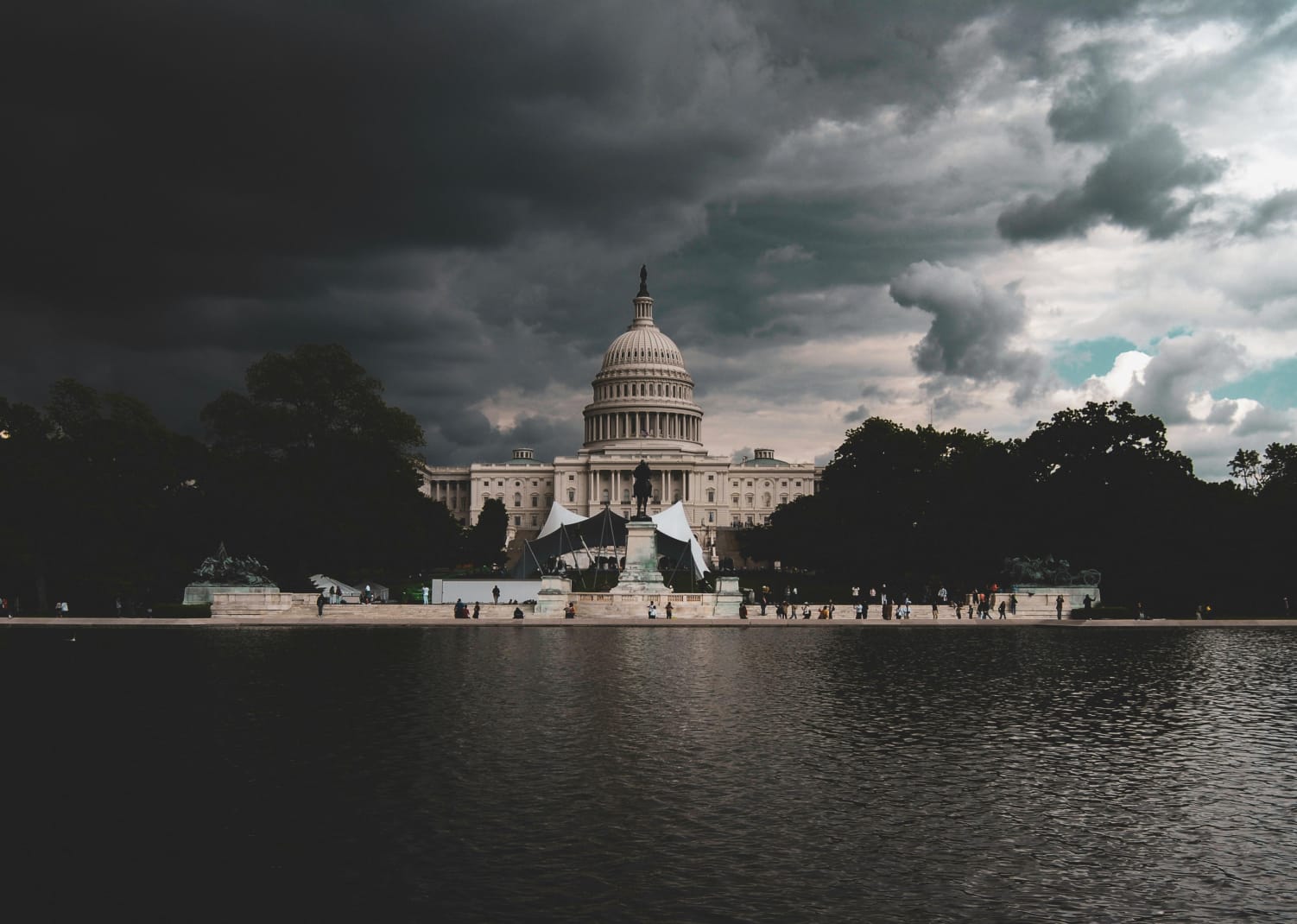
“We do need Greenland, absolutely. We need it for defense.”
— U.S. President Donald Trump, speaking aboard Air Force One, January 4, 2026.
The statement was not an isolated remark. At the World Economic Forum in Davos, Trump went further: “It’s the United States alone that can protect this giant mass of land… that’s the reason I’m seeking immediate negotiations” to acquire Greenland. In the Western Hemisphere, his rhetoric took an even more direct turn. Following U.S. actions in Venezuela, Trump openly linked American involvement to resource access, stating that the United States needed “access to the oil and other resources” of the country as part of its reconstruction. Elsewhere, his broader posture signalled a revival of assertive hemispheric control—what analysts have described as an updated “Monroe Doctrine on steroids”—with warnings directed at countries like Mexico, Cuba, and others regarding U.S. intervention if strategic interests demanded it. Even symbolic gestures reflected this expansionist mindset: maps shared publicly depicting Greenland and Venezuela within an expanded American sphere, alongside threats of tariffs against allies unwilling to comply with U.S. demands.
Taken together, such statements and actions signal a clear departure from the traditional language of liberal internationalism. They reflect a worldview where geography, resources, and power calculations take precedence over the long-articulated ideals of free markets, sovereignty, and rules-based order. This shift is not incidental—it marks a deeper transformation in the global ideological landscape. The modern international order was forged in the aftermath of World War II, when two competing ideologies, capitalism and communism, divided the world into rival camps. The United States and the Soviet Union did not merely compete for influence; they advanced fundamentally different visions of governance, economics, and human progress. For nearly half a century, this ideological contest defined global politics.
The collapse of the Soviet Union in the early 1990s appeared to settle the question decisively. Communism receded, and capitalism, paired with liberal democracy, emerged triumphant. The United States became the lone superpower, promoting a rules-based international order grounded in democracy, human rights, free markets, and international law. This model was presented not merely as dominant, but as universal. Yet today, that certainty has eroded.
Recent global developments, from the war in Ukraine to the upheaval in the Middle East following October 7, 2023, have exposed inconsistencies in how these values are applied. The language of human rights and international law is often invoked selectively, subordinated to strategic interests. The perception that “might makes right” is once again shaping global affairs is no longer confined to critics—it is increasingly visible in policy actions themselves. This was not always expressed so bluntly. In the early 2000s, U.S. interventions were still framed within an ideological vocabulary. President George W. Bush, in justifying the Iraq War, repeatedly invoked the spread of democracy and freedom, declaring in 2003 that “the liberty we prize is not America’s gift to the world, it is God’s gift to humanity.” The invasion of Iraq was presented as part of a broader mission to liberate oppressed peoples and uphold global security. Similarly, the doctrine of “preemptive action” was couched in the language of defending freedom and preventing tyranny. Yet the outcomes of these interventions, and the subsequent questioning of their premises, began to erode the credibility of such claims. Over time, the gap between stated ideals and perceived realities widened. What marks the present moment as distinct is not merely inconsistency, but candor. The ideological justifications that once accompanied the exercise of power are increasingly absent. Instead, strategic and material interests are articulated more openly. Statements attributed to Donald Trump regarding Venezuela, linking U.S. actions to securing oil and strategic advantage, stand in stark contrast to the earlier emphasis on democracy promotion. Where previous administrations framed intervention as a moral imperative, the emerging rhetoric reflects a transactional calculus.
This convergence of contradictions points to something more profound than policy divergence. It signals the emergence of an ideological vacuum.
For decades, the global order rested on the assumption that liberal democratic capitalism had no viable alternative. Today, that assumption is under strain. No single framework commands universal legitimacy. Instead, the world is entering a phase of fragmentation. China advances a model of state-controlled capitalism. Russia emphasizes sovereignty and civilizational identity. Western democracies face internal polarization and declining external credibility.
Amid this fragmentation, one pattern stands out: a shared resistance among major powers toward transnational ideological movements that challenge the existing order. Political expressions rooted in Islam, in particular, are frequently treated as a common concern across otherwise competing powers. This convergence suggests that such movements are perceived not merely as regional phenomena, but as carriers of an alternative ideological potential.
This brings us to a critical question: what kind of system can fill the current vacuum?
Historically, Islam has functioned as more than a religion; it has been a comprehensive civilizational framework. It has shaped governance, law, economic systems, and social organization across vast regions. From the early Islamic polities to later empires, principles of justice, accountability, and welfare were institutionalized. Trade networks flourished, knowledge advanced, and societies were organized around a coherent moral and legal order.
What distinguishes Islam in this context is not only its integration of the ethical and the practical, but also the robustness of its political philosophy. At its core lies a clear distinction between sovereignty and execution. Sovereignty, in the Islamic framework, is attributed solely to the Divine—placing ultimate authority beyond the reach of shifting political interests, popular impulses, or individual ambition. Execution, however, is entrusted to human beings, who are responsible for implementing these principles within society. This separation creates a structural stability that many modern systems struggle to achieve. In systems where sovereignty rests with the people, a ruling elite, or a dominant party, laws and principles can be reshaped according to changing preferences, pressures, or power dynamics. In contrast, the Islamic framework anchors its foundational principles in a fixed moral and legal source, ensuring continuity and consistency. Human agency operates within this framework—not to redefine its core tenets, but to apply them with justice, accountability, and contextual understanding.
In this sense, Islam seeks to align power with responsibility and governance with accountability, while safeguarding its foundational principles from erosion. It does not separate economics from morality, nor governance from ethical restraint. By embedding limits on authority and grounding law in a higher, unchanging source, it presents itself as a system designed to balance permanence with application—offering a model that aspires to remain principled even as circumstances evolve.
In a world where dominant systems increasingly appear transactional and inconsistent, this principled approach holds renewed relevance. The crises facing the global order today, inequality, instability, and erosion of trust, are not merely structural; they are deeply moral. They stem from a disconnect between the exercise of power and the principles meant to guide it. Islam’s historical track record demonstrates its capacity to address such challenges in a structured and principled manner. It has provided mechanisms for social justice, economic balance, and governance rooted in accountability. These are not abstract ideals, but historically practiced systems. This does not imply a simplistic return to the past, nor does it overlook the complexities of the modern world. Any framework aspiring to global relevance must engage with contemporary realities— technological transformation, interconnected economies, and the like. It is here that the concept of ijtihad becomes central. Often understood as independent juristic reasoning, ijtihad provides a structured method through which foundational divine principles are interpreted and applied to new and evolving circumstances. Rather than allowing the core framework to be altered by transient pressures, ijtihad enables scholars to derive contextually relevant rulings while remaining anchored to the original sources. This mechanism is what lends the Islamic system a sense of continuity without rigidity. It allows adaptation without dilution, ensuring that the system remains responsive to modern challenges while preserving its ethical and legal foundations. In this balance between permanence and adaptability lies a claim to timelessness—where principles endure, yet their application evolves to meet the needs of changing societies.
However, the enduring nature of Islamic principles and their historical ability to shape societies across diverse contexts position Islam as a serious contender in the search for a new ideological direction. The world today stands at a crossroads. The old ideological certainties have weakened, yet no new consensus has emerged. The vacuum is real—and history suggests it will not remain unfilled.