

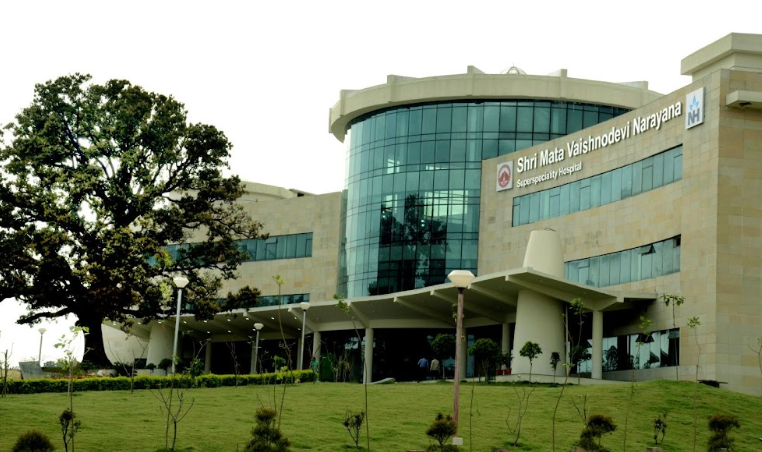
It is impossible to interpret the recent controversy surrounding the Shri Mata Vaishno Devi Institute of Medical Excellence (SMVDIME) in Jammu and Kashmir as a simple administrative disagreement or a technical regulatory compliance issue. The occurrence is less of an isolated incident and more of a symptom of a larger social and political transition taking place in modern India when closely investigated, since it displays a confluence of verifiable facts and a wider ideological pattern.
It received a Letter of Permission to admit 50 MBBS students for the 2025–2026 academic year from the National Medical Commission (NMC) in September 2025 following a mandatory inspection. The NMC evaluated academic resources, hospital facilities, infrastructure, and faculty strength. The Jammu and Kashmir Board of Professional Entrance Examinations (JKBOPEE) used NEET-UG to administer admissions under the Open Merit category. There was no religious quota or minority status involved, and no regulatory organization or authority objected at the time.
Only after the final merit list showed that 42–44 of the 50 chosen students were Muslims did the uproar start. This result, which was simply based on performance on a nationally standardized test, caused public outrage about the student’s religious identification rather than fraud or malpractice. Following a protest by right-wing groups against a Muslim-majority student body at a college connected to a Hindu shrine, the focus shifted from administrative concern to ideological mobilization. The groups demanded religious reservation or exclusion, both of which were unconstitutional within the institution’s legal structure.
Outcome, produced entirely by performance in a nationally standardised examination, triggered public agitation centred not on malpractice or academic standards, but on religious identity. Right-wing groups protested the presence of a Muslim-majority batch in a college associated with a Hindu shrine, demanding religion-based reservation or exclusion demands without constitutional basis.
When these demands failed, the agitation escalated towards seeking the closure of the college itself. In January 2026, the NMC withdrew permission for the MBBS course, citing infrastructural deficiencies. The sequence of approval, merit-based admissions, protests following disclosure of students’ identities, and subsequent withdrawal forms a closed narrative one that now invites deeper analysis of merit, equality, and institutional vulnerability in contemporary India.
The protest changed from opposing admissions to demanding the closure of the medical college itself since these demands were not supported by the law. This move is important because it implies that the institution supporting merit becomes the target when merit-based outcomes clash with particular societal expectations. The timing and circumstances of this intervention raise questions about the susceptibility of educational institutions to ideological pressure, even while regulatory organizations have the power to check and revoke authorization. The incident also reveals a more profound paradox: Muslims are frequently depicted as underachievers, but when they achieve success via hard work, it is greeted with distrust and hostility.
In this context, the SMVDIME admissions challenged a well-known stereotype. Muslim students who passed NEET-UG and obtained seats under Open Merit without reservations were viewed not as a sign of social mobility but as an exception that required rectification. Public demonstrations increasingly emphasized the “suitability” of Muslim presence at a college associated with a Hindu shrine, shifting the focus from academic standards to a communal challenge regarding educational achievement. As demands for religion-based quotas were deemed unconstitutional, the protests intensified to demands for closing the college, highlighting a focus on demographic results over the integrity of the institution.
This conflict is systemic rather than coincidental. The SMVDIME incident goes from being a local topic to a national issue because of this framework, which makes Muslim presence at places of excellence increasingly problematic.
From Prejudice to Propaganda: How Islamophobia Becomes a Public Narrative
The response to the SMVDIME admissions should be understood within a wider context that has normalized distrust towards Muslim identity in India. The anger did not emerge in a vacuum but mirrored a common trend in which Muslims are depicted as both lacking in education and posing political risks. Prevalent political discourse has historically perpetuated these stereotypes, casting Muslims as caricatures of economic and social inadequacy. Expressions such as “Abdul puncture wala,” prevalent in political discourse, serve not merely as casual insults but as ideological instruments that depict Muslims as burdens instead of assets, even though official statistics indicate consistent progress in Muslim educational involvement.
The SMVDIME case demonstrates that Islamophobia functions not only as individual bias but also as systematic propaganda. It depends on reiteration, emotional engagement, and symbolic focus on institutions. When a narrative gains momentum, regulatory mechanisms, even if functioning within legal limits, may be viewed as tools for ideological endorsement.
What renders this advancement especially alarming is its dampening impact. When Muslim students observe that even legitimate achievements can provoke hostility and institutional breakdown, the implication is not one of inclusion, but rather of belonging under certain conditions. In this regard, the debate is not merely about who can study medicine, but about who can have aspirations without fear.
Political reactions to the NMC’s choice add more complexity to the narrative. Leaders involved in the protests publicly regarded the revocation of permission as a symbolic triumph. Messages expressing gratitude to the Union Health Minister were released, presenting the decision not as a technical adjustment but as a confirmation of ideology. These responses are unusual for standard regulatory actions and highlight the political implications of the incident.
None of this undermines the NMC’s legal power or the significance of upholding medical education standards. However, it underscores a crucial difference: authority wielded in a tense political context needs to endure greater examination, particularly when its outcomes affect students’ experiences and the reputation of the institution.
Constitutionality, Legality, and the Ethics of Exclusion
Apart from regulatory matters, the SMVDIME dispute brings forth significant constitutional and ethical issues. Calls for religion-based quotas or the exclusion of Muslim students are not only divisive but also legally indefensible. SMVDIME is a publicly funded medical college overseen by a statutory board, not classified as a minority or religious institution, and its admissions are governed by Articles 14 and 15 of the Constitution, ensuring equality before the law and forbidding discrimination based on religion. Any effort to allocate seats for one specific religious group would thus constitute a clear breach of the constitution.
The moral implications go beyond just legality. Medical training rests on the principles of competence, compassion, and equality, and when students are undermined due to their religious identity instead of their skills, the ethical basis of the profession is compromised. This reveals a greater paradox: Muslims are frequently depicted as lacking in education, yet when they excel in competitive tests, their achievements are viewed with skepticism. This pattern of denigration succeeded by delegitimisation indicates a systemic bias that transcends personal prejudice.
From a constitutional standpoint, the most concerning element of the SMVDIME incident is the precedent it could potentially set. If outcomes based on merit can be effectively undermined by ongoing ideological pressure, then constitutional guarantees are no longer absolute but rather conditional. Equality before the law starts to rely not on rights but rather on narratives and numbers.
The students affected by the withdrawal of permission are not merely collateral damage in an administrative process. They are citizens whose lawful achievements have been rendered uncertain by forces they neither created nor controlled. In a democracy governed by constitutional supremacy, this should provoke serious reflection.
Beyond One College, What the SMVDIME Episode Reveals
In the end, the dispute surrounding the Shri Mata Vaishno Devi Institute of Medical Excellence goes well beyond the destiny of a single medical school or a group of fifty pupils. It reveals an unsettling confluence of ideologies, institutional weakness, and the tenuous place of merit in a public realm that is becoming more and more divided.
The immediate consequences were profound: human faculty members were left in limbo, while students who passed one of the nation’s most difficult exams were sent home with unclear academic futures. A functioning medical college in an area already experiencing a physician shortage was paralyzed not because of established illegality but rather because of disputed regulatory conclusions. The sequence from approval in September 2025 to merit-based admissions, protests over students’ religious identities, and regulatory withdrawal in January 2026 highlights how communal narratives can shape regulatory outcomes. From a structural perspective, the episode shows how institutions can become susceptible to ideological pressure even when procedures are followed.
The episode’s most disturbing message is aimed at Muslim youth: they are classified as being illiterate, but when they succeed due to hard work, their achievements are met with mistrust and criticism, making aspiration itself dangerous. The fallout of the SMVDIME controversy goes well beyond one medical college. Jammu and Kashmir Chief Minister Omar Abdullah publicly questioned the celebrations that followed the National Medical Commission’s decision, asking, “What is this happiness about?” He added pointedly, “If destroying children’s futures gives you happiness, then burst firecrackers,” underscoring how an administrative action was received as a communal victory rather than a regulatory correction.
Abdullah also demanded accountability, asking why a Letter of Permission was granted in September 2025 if deficiencies existed at all, and questioned who should be held responsible for the damage caused to students’ careers. Notably, he remarked that “people elsewhere in the country fight to get a medical college, here a struggle was launched to shut down one,” highlighting the inversion of public priorities.
Reports of celebrations by protest groups, including the distribution of sweets, further deepened concerns that the issue had shifted from infrastructure to ideology. Political leaders across parties echoed this unease. Budhal MLA Javed Iqbal Choudhary warned, “When merit becomes unacceptable, the country must seriously introspect about the direction it is moving in.” Others asked what Jammu achieved by losing a premier medical institution named after Mata Vaishno Devi.
The SMVDIME case alone does not demonstrate institutionalized discrimination. However, it demonstrates how quickly Islamophobia can transition from speech to action, from public demonstrations to choices that impact lives. It highlights the critical requirement for regulatory openness, institutional autonomy, and a renewed dedication to constitutional principles that safeguard merit against ideological influence.
In the end, the most pressing question is not about one college or one inspection report. It is about the kind of society India is becoming: one where success is celebrated regardless of identity, or one where identity determines the legitimacy of success itself.