INTRODUCTION
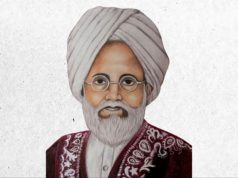
Ahmad al-Faruqi al-Sirhindi, widely known as Imam Rabbani or Mujaddid Alf-e Sani, was a distinguished Islamic scholar, born in 1564 in Sirhind, Punjab, India. Renowned for his profound contributions to the revival and strengthening of Islam during the 17th century, he earned the title Mujaddid—the reviver of faith. From a young age, Imam Rabbani exhibited remarkable intellectual aptitude and a deep passion for religious and spiritual studies, delving into the mysteries of Islamic spirituality. Throughout his life, he authored numerous works on theology, Sufism, philosophy, ethics, and Islamic jurisprudence, leaving an indelible mark on Islamic thought. His efforts to defend beliefs, reform deviant practices, and revive Sufism resonated across generations. Imam Rabbani’s emphasis on adhering to the teachings of the Quran and Sunnah while preserving Islamic spirituality safeguarded the faith’s essence in a pluralistic society. Building on his deep spiritual and intellectual foundation, he addressed the socio-political challenges of his time. Amid efforts to amalgamate diverse religious practices under Emperor Akbar’s Din-i-Ilahi, and the threat to distinct Islamic principles, Imam Rabbani led the struggle against religious syncretism and cultural compromise. His enduring legacy inspires Muslims, particularly in India, where his contributions remain highly relevant in addressing contemporary socio-religious challenges.
Guardian of Islamic Tradition and Reviver of Sufism
Imam Rabbani strongly believed in following traditional beliefs and obeying the Sharia law in every sphere of life. He criticized the practices that were based on beliefs, not in line with Islam. All he wanted to do was to uphold the teachings of the Messenger of Allah ﷺ and hand it over to the next generation without losing its values and essence. It’s important to note that Imam wasn’t a critic of Sufism. He was an exemplary Sufi, his deep engagement with Sufism began under his mentor, Khwaja Baqi Billah, a prominent Naqshbandi Sufi master. Imam Rabbani played a significant role in the revival of Tasawwuf, he countered the trends in Sufism that emphasized ecstatic experiences or practices that appeared to neglect Sharia, and he placed Sharia as the foundation of all spiritual pursuits. He argued that true spirituality arises from strict adherence to the commandments of Islam and that any mystical experience must align with the teachings of the Quran and Sunnah. Imam Rabbani was also critical of certain aspects of Sufism that he believed swerved from the teaching of Islam or led to syncretism with other religious or philosophical beliefs. His opposition was primarily directed towards those Sufis, who, in their view, compromised the beliefs and practices of Islam. Imam emphasized the significance of clinging to the teaching of the Messenger of Allah ﷺ and the scholarly tradition.
A Beacon of Resistance and Revival in Turbulent Times
The Durbar Hall of Emperor Jahangir was vibrant with anticipation as the emperor, seated on his jewel-encrusted throne, awaited a summoned reformer. At the appointed hour, a slender dervish entered with measured steps, drawing the court’s rapt attention. Reaching the throne, he refrained from performing the customary obeisance of prostrating and kissing the floor before the emperor.
The Vizier commanded, “Bow before Emperor Jahangir!” but the dervish firmly replied, “This head, which bows only to Almighty God, will never bow to a mortal.” The dervish was none other than Imam Rabbani, who arose at a time when the Islamic faith in India was facing considerable challenges. The prevailing syncretism and the growing influence of Mughal rulers, particularly under Emperor Akbar’s Din-i-Ilahi (Religion of God), which sought to amalgamate elements from various religions, including Islam, Hinduism, Zoroastrianism, and Christianity, into a singular belief system, led to practices that deviated from the true essence of Islam. It was during this turbulent period that Imam Rabbani’s teachings became crucial in reviving the true spirit of Islam. With unparalleled boldness, Imam Rabbani took a firm stance against the emperor’s attempts to promote religious innovation and syncretism. His refusal to bow before the emperor, an act of defiance against the deification, symbolized his commitment to Islamic principles. Rather than succumbing to political pressure, Imam Rabbani chose imprisonment over compromising his beliefs.
He became a beacon of resistance to the heretical ideas of his time, advocating for a return to the purity of the Quran and Sunnah. Imam Rabbani’s movement, focused on restoring traditional Islamic beliefs and practices, sparked a religious renaissance in India, purging Islam of alien influences and heretical innovations. His courage and unwavering commitment to the truth have left an enduring legacy, influencing generations of Muslims to preserve the authentic teachings of Islam.
Imam Rabbani’s Call for Reform: Addressing Syncretism
The prevailing syncretism (the blending or merging of different religious, cultural, or philosophical beliefs into a new system) among Muslims in India, deeply rooted in centuries of cultural exchange, has led to a blurring of religious boundaries, often to the point where practices that deviate from the Quran and Sunnah are considered fundamental. This syncretism, influenced by ideas such as “Majmaul Bahrain” (The Confluence of Two Oceans) by Dara Shikoh and “Sirr-e-Akbar” (The Great Mystery), a Persian translation of the Upanishads, which sought to align them with Quranic monotheism, reflects a historical amalgamation of Islamic and local beliefs, with figures across time contributing to this hybridization. Modern-day Sufism, in particular, has played a pivotal role in this blending, with rituals performed at Dargahs and Mazars—often borrowing elements from non-Islamic traditions. While the inclusive nature of Sufism originally sought to bridge gaps, this unchecked syncretism has diluted the core tenets of Islam, turning practices alien to the faith into widely accepted norms. Imam Rabbani’s call for reform remains crucial today. His critique of syncretism emphasized a return to the pure teachings of the Quran and Sunnah, urging a restoration of Islamic practices that remain free from external influences. In this era, it is vital to critically examine these practices and restore the authentic spirit of Islam through a positive reform that reclaims its original essence.
The Enduring Role in Shaping Islamic Identity and Unity in Modern India
Imam Rabbani’s teachings emphasize the importance of preserving Islamic identity while engaging with the multicultural fabric of societies, particularly in diverse contexts like India. In contemporary India, where Muslims are often confronted with challenges related to identity, integration, and representation, the guidance of Imam Rabbani offers significant relevance. His focus on spiritual development, unity, and justice provides a comprehensive framework for Muslims to navigate the socio-religious complexities of modern life, all while staying true to Islamic principles.
As syncretism becomes more prevalent in India, Imam Rabbani’s teachings serve as a reminder for Muslims to maintain the integrity of their faith and theological boundaries. His teachings stress the importance of adhering to the Quran, Sunnah, and the scholarly consensus, thus ensuring that cultural influences do not compromise the core tenets of Islam. Imam Rabbani’s advocacy for unity within the Muslim community is essential in overcoming sectarianism, divisions, and internal conflicts. His call for solidarity remains crucial in fostering a sense of collective identity among Indian Muslims, helping them to navigate contemporary challenges without losing sight of their religious values.
Intellectual Legacy: A Guiding Framework for Education, Justice, and Ethical Leadership
Imam Rabbani’s approach to spirituality provides a balanced and comprehensive framework for Indian Muslims, guiding them toward inner purification and outward adherence to Islamic principles. He emphasized the importance of justice, moral integrity, and ethical leadership, urging Muslims to advocate for justice, equality, and moral governance in society. His teachings offer a profound roadmap for navigating the socio-political complexities of contemporary life while remaining committed to the true spirit of Islam. Imam Rabbani’s emphasis on ethics and spirituality serves as a beacon for Muslims to uphold these values in their daily lives, thus contributing to the betterment of society.
Imam Rabbani’s Maktubat (Letters), a profound collection of his spiritual and theological correspondence, became a cornerstone for Islamic education in India and beyond. These letters offered a systematic exposition of his ideas, blending the rigor of Sharia (Islamic law) with the spiritual depth of Tasawwuf (Sufism). Maktubat has profoundly influenced madrassas and Islamic scholars and laid the foundation for a holistic approach to Islamic education, emphasizing the dynamic relationship between faith and practice. By promoting the integration of ethical conduct and spirituality within the framework of Islamic jurisprudence, his writings encouraged Muslims to address not only theological understanding but also moral and spiritual development. Imam Rabbani’s example of living harmoniously within a pluralistic society, while remaining steadfast in his religious convictions, provides a model for Indian Muslims.
Allama Iqbal’s Reverence for Imam Rabbani: A Timeless Tribute to the Mujaddid of the Second Millennium
The enduring legacy of Imam Rabbani profoundly influenced later thinkers, including Allama Iqbal, who deeply revered his life and teachings. During a visit to Sheikh Ahmad Sirhindi’s sacred resting place, Iqbal expressed profound respect and a deep spiritual connection to the legacy of Imam Rabbani. Standing before the grave, Iqbal was moved by the sanctity of the soil—the earth beneath the heavens glowing with celestial light, embodying the grandeur of a soul attuned to divine mysteries and eternal truths. Iqbal reflected on the humble dust of the tomb, exalted in its essence, as even the stars seemed to bow before its sublimity. Beneath this soil rested a man of immense spiritual depth and resolve, whose fervent spirit defied tyranny and ignited a flame of freedom and righteousness. Recognizing Sirhindi as the vigilant custodian of faith during a turbulent era, Iqbal admired his efforts to safeguard the spiritual and cultural heritage of Indian Muslims.
Allama Iqbal regarded Imam Rabbani as a towering figure whose spiritual and intellectual legacy profoundly influenced his philosophy of Islamic revival. For Iqbal, Imam Rabbani was not merely a reformer of his time but a timeless guide addressing the enduring challenges faced by the Muslims. The essence of Rabbani’s teachings—centered on the revival of Tawhid (the oneness of God), unwavering adherence to Sharia, and the harmonious blend of spiritual depth with practical action—resonated deeply with Iqbal’s vision of selfhood and empowerment. Imam Rabbani’s emphasis on balancing inner spirituality with outward adherence to Islamic principles significantly shaped Iqbal’s philosophical thoughts. Inspired by Rabbani’s teachings, Iqbal envisioned rejuvenating Muslim identity through a dynamic interplay between spiritual elevation and active engagement in worldly affairs. This synthesis is vividly reflected in Iqbal’s poetry and philosophical writings, where he calls for awakening the inner self as a foundation for collective strength and revival.
Furthermore, Imam Rabbani’s rejection of syncretism and insistence on preserving the purity of Islamic teachings influenced Iqbal’s critique of passive traditionalism and cultural compromises. Iqbal admired how Rabbani resisted external influences diluting Islamic values, urging Muslims to reclaim their spiritual and intellectual sovereignty. Rabbani’s reformist mission, which strengthened the spiritual and intellectual foundations of the Muslim community, offered Iqbal a model of resilience against forces threatening Islamic identity. Iqbal was particularly inspired by Rabbani’s ability to balance strict adherence to Sharia with profound Sufi spirituality, harmonizing outward practices with inner devotion. To Iqbal, this harmony was essential for revitalizing Muslim identity and countering modern challenges. Rabbani’s timeless call for renewal and resistance became a cornerstone of Iqbal’s philosophical framework, inspiring his vision of an empowered, spiritually awakened, and socially engaged Muslim community.
Wahdat ash-Shuhood: A Refined Perspective on Divine Unity
Imam Ahmad Sirhindi’s profound inquiries into the nature of existence and divine unity opened new dimensions for exploring metaphysical and theological questions, leaving a lasting imprint on Islamic thought. Central to his legacy is the doctrine of Wahdat ash-Shuhood (Unity of Witnessing), which he presented as a refined perspective on the oneness of Allah, distinct from the earlier concept of Wahdat al-Wujud (Unity of Being) introduced by Sheikh-e-Akbar Ibn Arabi.
Wahdat al-Wujud, a cornerstone of Ibn Arabi’s philosophy, suggests that all existence is essentially a manifestation of the divine essence. According to this view, the Creator and the created world are not entirely separate but interconnected, with creation being an expression or unfolding of Allah’s presence. While this concept highlights the omnipresence of Allah and the inherent sacredness of existence, Imam Rabbani critiqued it for its potential to blur the distinction between Allah and His creation. Misinterpretations of Wahdat al-Wujud could lead to pantheism, the belief that everything is God, which risks compromising the core Islamic belief in Allah’s absolute transcendence.
In contrast, Wahdat ash-Shuhood focuses on how humans perceive divine unity. It asserts that the unity we experience in existence is not a unity of essence but a unity of witnessing. This means that while Allah and His creation remain fundamentally distinct, a believer achieves spiritual realization by perceiving all of existence as a reflection of Allah’s sovereign will and power. The “oneness” lies in the observer’s heightened awareness that every event, action, and existence is under Allah’s ultimate control, without merging Allah into His creation.
Imam Rabbani argued that this perspective preserves Allah’s transcendence and emphasizes His unique and incomparable nature while fostering a deep spiritual awareness. Wahdat ash-Shuhood invites to see beyond the multiplicity of the world and recognize the singular divine authority governing everything, encouraging submission, humility, and devotion to Allah.
Through this approach, Imam Rabbani not only safeguarded the core tenets of Tawhid (the oneness of Allah) but also provided a spiritually enriching framework for understanding Allah’s presence in the world. His contributions to Sufism and Islamic philosophy continue to inspire and guide seekers of truth, establishing his place among the most impactful scholars in Islamic history.
CONCLUSION
The death of Imam Rabbani in 1624 marked the end of his earthly presence, but his intellectual and spiritual legacy remains a guiding light for contemporary Muslims. His teachings provide a practical framework for navigating the complex interplay of faith, modernity, and cultural diversity in India’s pluralistic society. By adhering to his principles, Indian Muslims can address current theological and socio-religious challenges while preserving their identity. Imam Rabbani emphasized the purity of Islamic practices, spiritual growth, and respectful coexistence. To embody these values today, Indian Muslims should prioritize holistic education that combines religious teachings with modern knowledge. This approach can equip them to engage with contemporary issues such as secularism, globalization, and interfaith dynamics with wisdom rooted in Islamic principles. Additionally, fostering spiritual refinement through regular engagement with the Qur’an, Hadith, and balanced Sufi practices can strengthen personal ethics and communal harmony. Imam Rabbani’s insistence on adhering to the Qur’an and Sunnah while engaging thoughtfully with cultural contexts is a model for balancing tradition with adaptation.
In a culturally diverse nation like India, promoting interfaith dialogue and mutual understanding is essential. Muslims should actively participate in community-building initiatives, demonstrating through actions the Islamic principles of justice, compassion, and equality. By championing these strategies, contemporary Indian Muslims can address theological complexities, counter misinterpretations of Islam, and contribute positively to society. Imam Rabbani’s legacy offers a timeless blueprint for balancing Islamic values with cultural diversity, ensuring resilience and relevance in the modern world.
References
- Imam Ahmad al-Faruqi al-Sirhindi (1564-1624): Life and Contributions Published in The Islamic Quarterly, Vol. 45, No. 3, London: Islamic Cultural Centre,2001.
- Preserving Faith in a Pluralistic Society: Lessons from Imam Rabbani Article in The Muslim World Journal, Vol. 68, Leiden: Brill, 1988, pp. 123-142.
- Revivalism and Reform in South Asia: Imam Rabbani’s Legacy Edited by: A.R. Alvi, Journal of Islamic Studies, Oxford University Press, 1999.
- Islamic Intellectual Heritage in Mughal India Author: Seyyed Hossein Nasr, Islamic Studies, International Islamic University, 1983.
- Mujaddid Alf-e Sani and the Revival of Islam Author: Zafarul-Islam Khan, Islamic Heritage Studies, New Delhi: Al-Nasir Publications,2003.
- Letters of Ahmad Sirhindi: The Maktubat al-Rabbani Translated by G.N. Jalbani, Institute of Islamic Studies, 1971.
- Iqbal’s Poetry and the Spiritual Legacy of the Naqshbandi Order Published in The Journal of Islamic Thought and Civilization, Vol. 12, No. 1, Faisalabad: University of Faisalabad, 2012, pp. 89-110.
- Revival and Reform in Islam: From Sirhindi to Iqbal Author: A.H. Dani, Islamic Heritage and Renaissance, National Institute of Historical and Cultural Research,1990