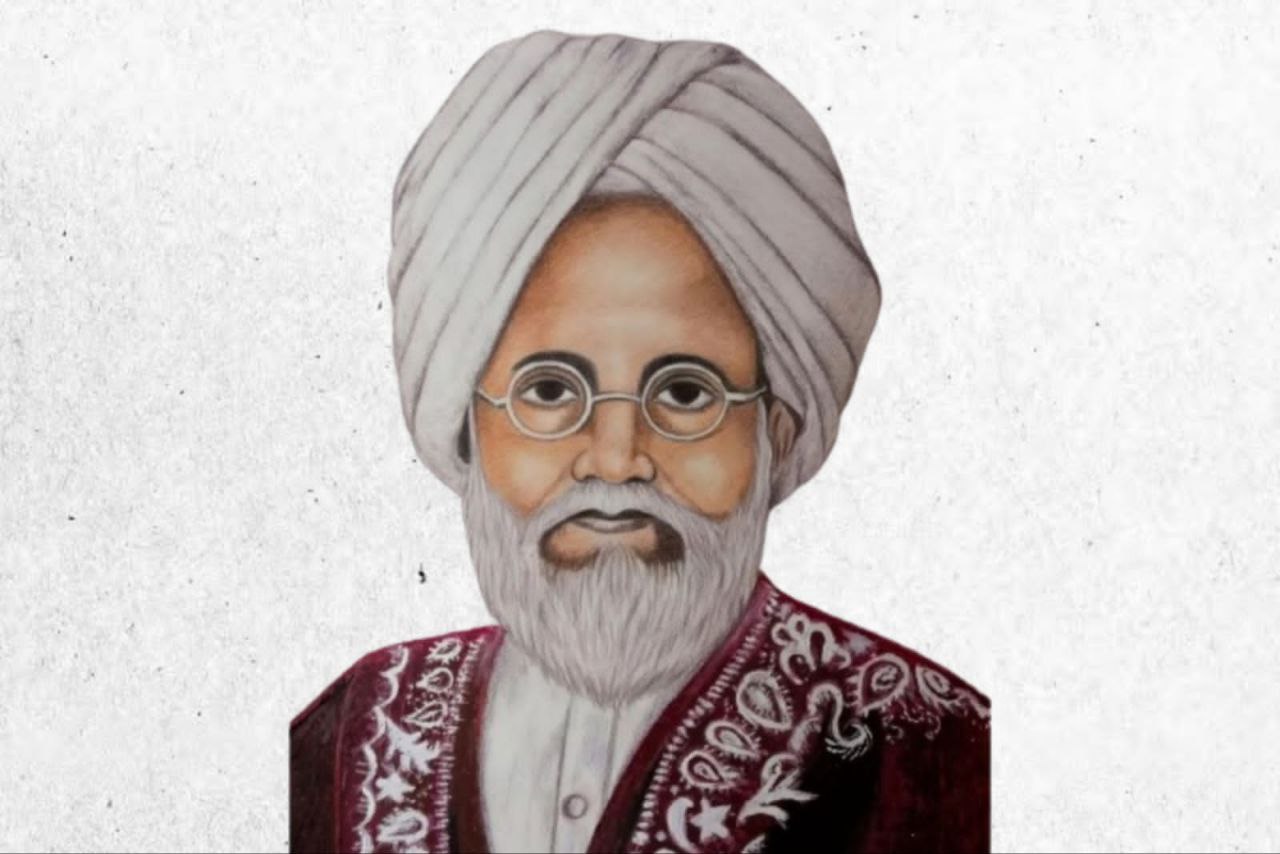
History never forgets those who create it. Allama Shibli Nomani was one such person who not only created history but also meticulously documented it. Shibli had a multifaceted personality; he was a professor, biographer, and philosopher. Many other characteristics could be used to describe him, and the list would be inexhaustible.
Shibli was born in Bindawal, a village in the Azamgarh district, in 1857. He grew up in an educated, religious family. His father had a leaning towards Sufism, which influenced the names he chose for his sons. Shibli was named after a famous Sufi (d. 344 AH). Unlike his brothers, who were educated in the modern education system, Shibli’s father wanted him to become an Alim-e-Deen. Consequently, Shibli was sent to a madrasa where he learned elementary subjects.
Under the patronage of Maulana Farooq Chiryakoti, Shibli excelled in Persian and Arabic. He had a passion for dialectics since his student days. After winning a debate on Hanafism versus Wahhabism, his revered teacher, Maulana Farooq Chiryakoti, honored him with the title “Nomani” in homage to Imam Abu Hanifa. Since then, he has become popularly known as Shibli Nomani.
After completing his elementary education, Shibli traveled to other cities to study literature, philosophy, and principles of jurisprudence. He once appeared for a legal examination and secured his position after an initial failure. Shibli practiced as a lawyer for some time but soon left the profession to pursue other interests.
Shibli In Aligarh
Shibli went to Aligarh at the invitation of Sir Syed Ahmed Khan, the founder of Mohammedan Anglo-Oriental College (which became Aligarh Muslim University in 1920). During his time there, Shibli advanced his art of historiography. He engaged continuously with students through Dars-e-Quran, imparting Quranic wisdom. Within a few months, he learned French and was introduced to modern principles of research and historiography.
Despite their collaboration, Shibli and Sir Syed had differing views on the West and the British government. Sir Syed was a modern thinker in the attire of religion, while Shibli was a religious scholar with a rational approach. Their academic differences grew over time, especially regarding Sir Syed’s attitude towards the British government. After Sir Syed’s death, Shibli left Aligarh and moved to Hyderabad.
A few years later, Shibli returned to Darul Uloom Nadwatul Ulama in Lucknow, where he played a crucial role in modernizing the curriculum. Influenced by Sir Syed’s companionship, Shibli introduced practical subjects and framed a new syllabus for the institution. He also became a member of the Madaris Reformation Committee established by Riyasat-E-Hyderabad.
In 1913, due to some clashes, Shibli left Darul Uloom and returned to Azamgarh, where he established Darul Musannifeen. In his later years, he focused on developing Darul Musannifeen and framing the syllabus of Madrasa Tul Islah (Saraimeer, Azamgarh) with Maulana Hamiduddin Farahi.
Shibli’s Seminal works
Allama Shibli Nomani authored many books, making it challenging to discuss them all. Instead, we will explore three major aspects of his writings: historiography, biography, and Ilmul Kalam.
A. Shibli as a Historiographer
Allama Shibli’s approach to writing history was not merely about recording events; his method was analytical and critical. In the preface of “Al-Farooq,” Shibli critiques the Muslim tradition of historiography, pointing out that while historians like Ibn Athir, Sama’ani, Al-Dhahabi, Abū al-Fidāʾ, Al-Nuwayri, and Al-Suyuti are popular, they contributed little to the art of historiography. He lamented that later historians often simply repackaged the works of their predecessors with minor variations, resulting in a loss of original works’ unique qualities.
However, Shibli acknowledged the significant contributions of Ibn Khaldun, praising him as a source of pride for Muslims. Shibli’s journey into historiography began in Aligarh, where he studied Western historians and was introduced to modern principles of historiography. He believed that understanding a particular historical event required considering the entire societal context, including religious, political, social, and economic influences. Shibli argued that neglecting any aspect of society would lead to incomplete conclusions, as all elements are interconnected.
Shibli’s awareness of both ancient and modern principles of historiography made him a prominent researcher and historian. Despite this, some have criticized Shibli and questioned the use of the term “researcher” (Muhaqqiq) for him. However, Professor Altaf Ahmed Azmi defends Shibli, stating that his seminal work “Al-Farooq” is sufficient evidence of his research capabilities. Azmi notes that while Shibli may sometimes have reached inaccurate conclusions due to academic preoccupations or his hasty nature and poetic temperament, his contributions to historiography remain significant. (See Tasaaneef e Shibli Per Ek Tahqeeqi Nazar)
B. Shibli as a biographer
Shibli Nomani wrote many biographies, among which “Seeratun Nabi” and “Al-Farooq” are globally renowned. Other notable works include “Al-Noman,” “Al-Ghazali,” and “Swanih-e-Maulana Rūm.” Similar to historiography, the art of biography is complex. Biographers often choose subjects they admire, which can hinder objective criticism of their heroes.
Shibli commented on this tendency, stating that contemporary biographers often fail to write critically, despite their claims of objectivity. However, Professor Altaf Ahmed Azmi critiqued Shibli based on Shibli’s own principles. Azmi pointed out that in “Al-Noman,” Shibli did not mention a single mistake of Imam Abu Hanifa, instead exaggerating his piety and righteousness. This critique suggests that even Shibli was not entirely free from the bias he identified in others. (See Tasaaneef e Shibli Per Ek Tahqeeqi Nazar)
C. Shibli as a Dialectician
Shibli Nomani’s work extended beyond historiography and biography into the realms of philosophy and dialectics. He authored two significant books in this field: “Al-Kalam” and “Ilm Al-Kalam.” Shibli’s teacher, Maulana Farooq Chiryakoti, taught him philosophy and logic (mantiq), but Shibli’s focus on these subjects deepened after his stay in Aligarh. Following the death of Sir Syed Ahmed Khan, Shibli moved to Hyderabad, where he concentrated on writing about the new Ilm al-Kalam, setting the groundwork for this field.
Shibli recognized the need for a new Ilm al-Kalam to counter modern Western philosophy. While Sir Syed Ahmed Khan influenced him, Shibli did not entirely share Sir Syed’s emphasis on reason (aql). Despite his cautious approach to using reason in his writings and speeches, orthodox clergy issued fatwas of kufr against him, labeling him a Mu’tazilite. Shibli aimed to break the chains that restricted intellectual freedom in Muslim society. However, this effort backfired, and even a century later, the Muslim mind struggled to escape such constraints.
Conclusion
Shibli Nomani was a multifaceted personality who wrote extensively on history, politics, philosophy, education, literature, and more. He was not just an academic figure but also a man on a mission. Beyond authoring books and treatises, he established institutions, prepared curricula, and created a roadmap to foster a tradition of reading and writing. Darul Musannifeen stands as a testament to his efforts. This beacon of knowledge and wisdom, however, was extinguished in 1914.