

Every philosopher or reformer who has influenced the world came from a privileged family or a prosperous civilisation. Prophet Muhammad was, in this regard, unique. He was born among the Bedouin tribes of Arabia, in a region ignored by all the great empires and civilisations. His only advantage was that he lived in the full light of recorded history. Born to Abdullah and Aamena, Prophet Muhammad (peace be upon him) was orphaned at the age of 4 years. Thereafter he lived with his grandfather Abdul Mutallib, who was a highly respected tribal leader in Mecca, a first among equals. The only matter of pride for the Prophet was a respectable lineage and a noble character. He was the most trustworthy person in Mecca, even among his adversaries. When all the great civilisations had sunk into the Dark Ages, he gave the humanity a universal message that raised a golden civilisation of scientific discoveries, technological inventions, medical and philosophical revolutions, multicultural coexistence and marvellous arts.
M N Roy, the founder of Communist Party of India, writes in his essay, Historical Role of Islam, “the phenomenal success of Islam was primarily due to its revolutionary significance and its ability to lead the masses out of the hopeless situation created by the decay of antique civilizations, not only of Greece and Rome but of Persia and China, and of India”. The Qur’an aptly points it out, “It is Him (God), Who has raised among the illiterates a Messenger from them, who recites unto them His revelations and purifies them, and teaches them the Scripture and wisdom; before which they had clearly gone astray.” (The Friday, 62:2)
The Old Testament perhaps prophesised Muhammad’s above-mentioned trait of reciting revelations, “And the Lord said unto me [Moses], They have well spoken that which they have spoken. I will raise them up a Prophet from among their brethren, like unto thee, and will put my words in his mouth; and he shall speak unto them all that I shall command him.” – Holy Bible, Deuteronomy 18:17-18; KJV
The word ‘Islam’ basically means instituting peace, acceptance and submission to God. The Qur’an says, “O people! Verily, We (God) have created you in male and female, and have cast you in communities and tribes, so that you may recognise each-other. Indeed, the noblest of you in the sight of God are those who restrain themselves. Verily, God is All-Knower, All-Aware.” (The Shacks, 49:13) The Prophet (pbuh) spoke for a universal equality, liberty and fraternity. At his Farewell Sermon he announced, “Indeed, your Lord is One, your father is one. An Arab is not superior to a non-Arab, nor is a non-Arab superior to an Arab. A White is not superior to a Black nor a Black superior to a White; except by righteousness.”
Islam, as a system of life, has five cornerstones: the Testimony of faith, the daily five times prayers (Salaah, Namaaz), fasting in the month of Ramadan, obligatory charity (Zakah) and Hajj pilgrimage to Mecca. Jihad also has an important place in Islam, which basically means utmost struggle and striving. The Greater Jihad (Jihad ul Akbar) is to make oneself free of vice and submissive to Allah the Almighty. The Prophet (peace be upon him) once also said that the greatest Jihad is to speak the word of truth in front of a tyrant (critical journalism?). Muslims believe that Prophet Muhammad is not the founder of Islam but only the last and final prophet of God, preaching the pristine legacy of Noah, Abraham, Moses and Jesus (peace upon them all). There came about 120,000 prophets before him who preached the same message of monotheism and justice. Whenever people forgot the true message of God, another messenger was sent to revive the same old message. Islam, i.e. peace and submission to God, is thus the primordial way of existence of every living and non-living thing.
Prophet Muhammad (peace be upon him) was born in Mecca in 570 CE. He proclaimed prophethood in 610 CE at the age of 40 years. He preached for over 13 years in Mecca, which he fled after bearing cruel persecution and two attempts of assassination. Very few people know that Prophet Muhammad gave the first secular constitution of the world in 622 CE as he migrated to Yathrib (Medina), where he found great following and continued his mission. There, he raised an enlightened society with a revolutionary mission and sent missionary envoys to neighbouring rulers, including the emperors of Persia, Byzantine and Abyssinia.
The Prophet and his Companions also fought several battles and skirmishes against the oppressive and exploitative chieftains. The most difficult battles were fought against the Quraish of Mecca, tribal confederates of northern Hejaz and a Herculean expedition to Tabouk against the Byzantine incursions. The Islamic forces mostly fought defensive battles and defeated much larger and well equipped armies. Some Jewish tribes of Medina were expelled for violating the Medina Charter (constitution), committing high treason and conspiring to assassinate Prophet Muhammad (pbuh). He conquered Mecca in 630 CE without any bloodshed or revenge and forgave his adversaries, en masse. An interesting passage from the ninth oration of the Qur’an, The Repentance (Al-Taubah), instructs elimination of the treacherous, peace with the decent and protection of innocent pagans.
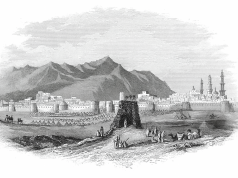
The Prophet passed away in 632 CE. His grave is located under the dome of the Masjid-ul-Nabawi in Medina. The Prophet (pbuh) spent his entire youth married to only one woman, Khadeeja, who gave him great strength and bore four daughters. At a time when he had enough power and popularity to have as many wives and concubines as King Solomon or Lord Krishna, this humble Apostle never had more than 11 at any given time. Most of his wives were widows or divorcees whom he married only to foster alliance with rival tribes and prevent war.
The Prophet also gave an equal status to women, besides emphasising on education; he was the first in recorded history to give the right to individual property and inheritance to women. The Prophet (pbuh) said in his famous Farewell Sermon, “O People, it is true that you have certain rights with regard to your women, but they also have right over you. If they abide by your right then to them belongs the right to be fed and clothed in kindness. Do treat your women well and be kind to them for they are your partners and committed helpers.” Eventually, a woman named Fathima al-Fihri built the University of Qarawiyyin, Morocco, in 859 CE, which is now the oldest surviving university of the world.
Prophet Muhammad (pbuh) had the best manners and judgement. The Prophet once said that he has been sent by God only to perfect people’s manners. He was the most polite and soft-spoken and he commanded the same to his Companions. He said that a servant of God may utter a word without thinking whether it is right or wrong, and because of that, he may slip down deep into the Hell-Fire. Of course, we do realise that careless speech can sometimes hurt our friends and family and it can become very difficult to undo that grief.
Another trait with Prophet Muhammad (pbuh) was a humble lifestyle of simplicity. One of his companions, Qataada, reported that the Prophet hardly ever saw a thin well-baked loaf of bread in his life, and he never saw a large piece of roasted meat with his eyes. Thus, one of the Prophet’s most guileful critics, Edward Gibbon, cannot help but admit, “the good sense of Mohammed despised the pomp of royalty. The Apostle of God submitted to the menial offices of the family; he kindled the fire, swept the floor, milked the ewes, and mended with his own hands his shoes and garments. Disdaining the penance and merit of a hermit, he observed without effort of vanity the abstemious diet of an Arab”. Yet, the Apostle won the hearts of the masses in Arabia and the people of Hejaz region respected him more than the Persians or Byzantines respected their emperors. Bosworth Smith acutely observes this in his book Mohammed and Mohammedanism, “Head of the State as well as of the Church, he was Caesar and Pope in one; but he was Pope without Pope’s pretensions, Caesar without the legions of Caesar … if ever any man had the right to say that he ruled by the right divine, it was Mohammed, for he had all the power without its instruments and without its supports.”
Islam places a great importance on family values. Conjugal rights, upbringing children with benevolence and respecting parents & elders is essential to maintain a well integrated society. The Prophet said that whoever longs for more wealth and a prolonged life, he should keep good relations with his kith and kin. “Keeping peace and good relations between people is better than charity, fasting and prayers, since quarrels and bad feelings destroy mankind.” Forbearance and mercy are the greatest values demonstrated by Prophet Muhammad (pbuh). Almost all orations in the Qur’an begin by invoking God’s Mercy. The Prophet said that whoever is not merciful to others will not be treated mercifully (by God). He advised everyone to be often forgiving so that God may forgive their sins. Patience is perhaps the blood cousin of mercy. A great advice was that a strong person is not the one who wrestles his opponent on the mat but the one who controls himself when struck by anger.
A scourge of our society today is rampant corruption. Most people indulge in corruption due to greed of wealth or position. Prophet Muhammad (pbuh) described this vulnerability in a very amusing manner. He said, “If the son of Adam (man) had two valleys of gold, he would wish for a third; for nothing can fill the belly of Adam’s son except dust (grave), and Allah forgives him who repents unto Him.” The solution to this greed is contentment. The Prophet thus said, “riches don’t mean having a great amount of property, but it is self-contentment.” No doubt, whoever is humble and content with what they have will enjoy the solace that a rich consumerist can never have. Many people want to reach a high position just due to envy, in order to equal someone else. The Prophet (pbuh) advised that envy should be reserved towards only two kinds of people: a person whom God has given wealth and he spends it in the right way, i.e. by helping the poor, needy, spending in education, in God’s way etc. The other person who can be envied is whom God has given wisdom and he gives his decisions accordingly and teaches other people.
Religion is not merely about rituals and mundane customs. Prophet Muhammad (peace be upon him) bonded social welfare with religion. He said that whoever plants a tree is rewarded by Allah as much as the produce yielded by that tree. We know that no person can perform righteous deeds after death but among the good deeds that continue to benefit a believer (of God) after death are: knowledge that he taught and disseminated, a righteous child who lived after him, a copy of the Qur’an that he left as inheritance, a mosque that he built, a house that he built for travellers, a stream of water that he ran or a charity that he gave from his wealth during his healthy lifetime. So, the deceased gets credit with God for every person who drinks from his canal and everyone who benefits from the knowledge he taught.
Amazingly enough, the Prophet was keen about water bodies and environment as well. He commanded his followers not to excrete in stagnant water because people may use that water to bathe. He also forbade us from releasing refuse under a shady or a fruit-bearing tree, on roads, on a river bank, the edge of a water tank or at places where people bathe. It is well known that many of our lakes besides the great rivers of Ganga and Yamuna have today been destroyed by releasing sewage and industrial waste. If India can restore only half of its water bodies, it might become water adequate once again. The Prophet also promoted greenery by announcing that whoever plants a tree and it benefits people after maturity, God plants a tree in paradise for that person. What a great way of conserving the environment and enjoying its fruits in paradise as well!
Thus, Prophet Muhammad (peace be upon him) didn’t just preach about worshipping God and following certain customs but he brought a great message of peace, harmony and serenity for the entire humanity. Alphonse de Lamartine, a founding father of the French Second Republic, sums up about the Prophet in his Histoire de la Turquie, “If grandeur of design, pettiness of means and immensity of results, be the three measures of human genius, who could dare to compare any great men with Mohammed? The most famous men created only arms, laws and empires. They founded, if anything at all, no more than material powers which often crumbled away before their eyes. [But] Mohammed transformed the armies, legislations, empires, peoples and millions of men. More than that, he moved the altars, gods, religions, ideas, beliefs and the souls. His forbearance in victory, his ambition, entirely devoted to ideas and not to an empire; his endless prayers, his mystic conversations with God, his death and his triumph after death; all these attest not to an imposture but to conviction. Philosopher, orator, apostle, legislator, conqueror of ideas, restorer of rational beliefs – of worship without images – the founder of twenty terrestrial empires and one spiritual empire – that is Mohammed. As regards all standards by which human greatness may be measured, we may well ask, is there any man greater than he?”
Interested readers can read Prophet Muhammad’s biography The Sealed Nectar by Safi-ur-Rahman Mubarakpuri besides several scholarly works. Sceptics or critics might consider Misquoting Muhammad by Jonathan Brown; Islam at Crossroads by Muhammad Asad or Orientalism by Edward Said.

Mashallah very very good written ..
Alhamdallah ..!!
Well written
Mashallah Brother Salman. Good information. Hope to see some more posts from you in coming time.