

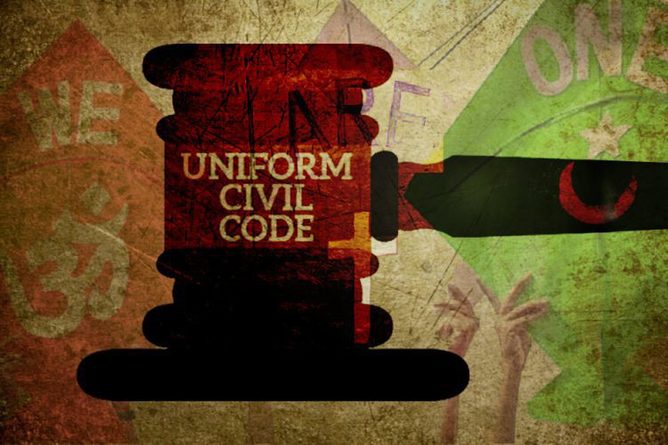
The recent cacophony of the debate around triple talaq, Uniform Civil Code (UCC) and gender justice is a perfect example of how debates are hijacked and then put to merciless execution. While the phrase “healthy debate” has been doing the rounds but on this issue I am yet to see one. So while I unravel the layers of this case please bear with me because it has a lot of grey areas and it is indeed not a yes-no debate.
Let’s start with the terminology of UCC itself, a constitution which promises equality among equals cannot have something called uniform. The legal pluralism enshrined in our constitutional ethics was the reason that the constitution makers had put something called the UCC amongst the directive principles rather than anything which they felt compulsory.
Apart from this as we investigate we find that there has been a lot of efforts to have a legal framework for personal laws related to marriages. From the compilation of relevant legislations in respect of registration of marriages, it appears that there are four Statutes which provide for compulsory registration of marriage. They are: (1) The Bombay Registration of Marriages Act, 1953 (applicable to Maharashtra and Gujarat), (2) The Karnataka Marriages (Registration and Miscellaneous Provisions) Act, 1976, (3) The Himachal Pradesh Registration of Marriages Act, 1996, and (4) The Andhra Pradesh Compulsory Registration of Marriages Act, 2002. In five States provisions appear to have been made for voluntary registration of Muslim marriages. These are Assam, Bihar, West Bengal, Orissa and Meghalaya. The “Assam Moslem Marriages and Divorce RegistrationAct, 1935,” the “Orissa Muhammadan Marriages and Divorce Registration Act, 1949” and the “Bengal Muhammadan Marriages and Divorce Registration Act, 1876” are the relevant statutes. In Uttar Pradesh also it appears that the State Government has announced a policy providing for compulsory registration of marriages by the Panchayats and maintenance of its records relating to births and deaths. Under the Special Marriage Act, 1954 which applies to Indian citizens irrespective of religion each marriage is registered by the Marriage Officer specially appointed for the purpose.
Special Marriage Act especially is a valid legal route for all those who think the personal laws are not gender justice friendly irrespective of what religion caste, or sect they belong to.
Coming to the triple talaq mess, to a great extent the All India Muslim Personal Law Board (AIMPLB) is responsible for the directionless debate that we are having today. They insist on a practice which is not Quranic based on sub-rule of a particular fiqh i.e. Hanafi School (school of Islamic Law) which is not applicable to all sects of Islam that exist in Independent India. They are totally engrossed in a patriarchal and majoritarian mentality which is harming the rest of the sane voices which want a codified or regulated Muslim Law having space for all Muslims and not just the men of the Hanafischool of law. So basically it is the mindset which cannot be changed overnight by a decree from the court or a ban. It is a bad practice like Child Marriage and needs to go from the society from within.
The government in all its zeal to chase the chimera called the UCC forgot to adequately research and frame as to what constitutes a UCC and what all will it cover expect for a sloppily designed questionnaire which seems more like a referendum.
One important aspect of the debate is around the sociology of law which does not normally view and define the law only as a system of rules, doctrine and decisions, which exist independently of the society out of which it has emerged. We need to take this as our contextual background while bull dozing personal laws with the UCC. Also to take into consideration that personal laws do not only concern Muslims, it encompasses all diversity in India including religious identity, spatial identity etc. We also need to understand why people go to these forums for their marriage, divorce and other things civil, as of now what I understand is that these play the role of an arbitration, mediation and conciliation forums and are readily accessible. The government in all its zeal to chase the chimera called the UCC forgot to adequately research and frame as to what constitutes a UCC and what all will it cover expect for a sloppily designed questionnaire which seems more like a referendum. If a conversation has to be had around UCC it has to include everything including things like tax sops that a Hindu Undivided Family enjoys, only Muslim Personal Laws should not hijack the limelight.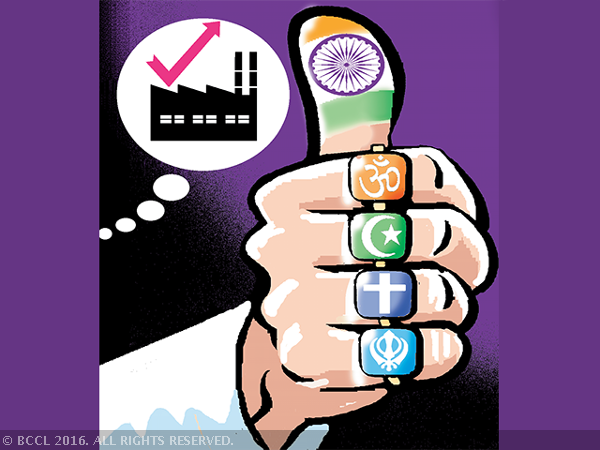
Meanwhile we have the courts where we can knock if our fundamental rights are violated and the court can decide on the merits of the case. The personal laws never closed the doors for anyone and for criminal matters personal laws are not applicable, the uniformity is there where it should be. While a non-representative body like AIMPLB has taken on itself and its ego to be the voice of Muslims which it is not, the government has on its agenda majoritarian politics. Either way it is hard to believe that any sincere efforts of gender justice actually is part of anybody’s agenda.



[…] that it should not come into being in India for it is the rights which should be equal and not Personal Laws.We have laws opposing child marriage, dowry and domestic violence, which women are many a time […]
[…] and also among people that Muslims, and Muslim women in particular, are safe and secured under the Uniform Civil Code as practiced in Goa. Attempts are also made to set it as an example for implementing it in the rest […]
[…] Indian public sphere has been laden with debate on Triple Talaq, which reemerged with the recent controversy involving ShaziaIlmi, a BJP leader who accused Jamia […]