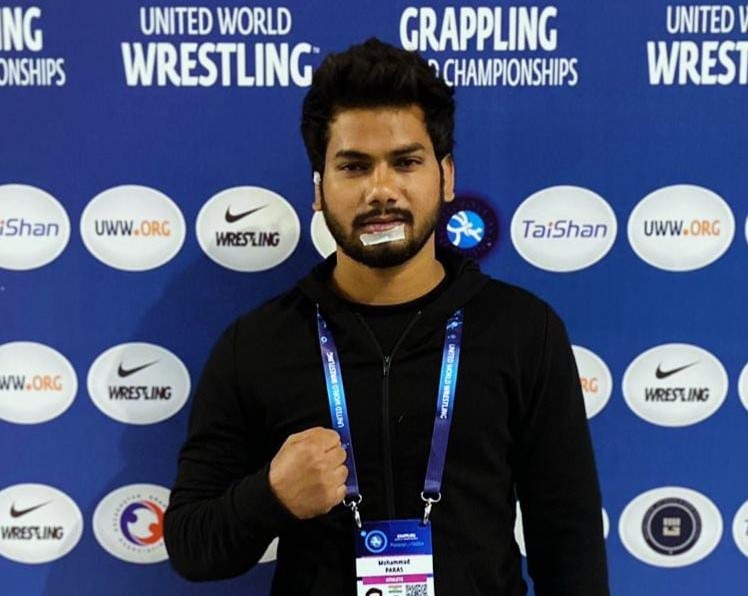
Paras Mohammad, an accomplished student and international athlete, is a graduate and postgraduate from the Department of History at Aligarh Muslim University (AMU). He represented India at the United World Wrestling Grappling World Championship in Astana, Kazakhstan, from October 7 to October 14, 2024. Despite his academic achievements and global recognition in sports, Paras now finds himself battling an unjust denial of his PhD admission, not because of a lack of merit, but seemingly because of his past activism.
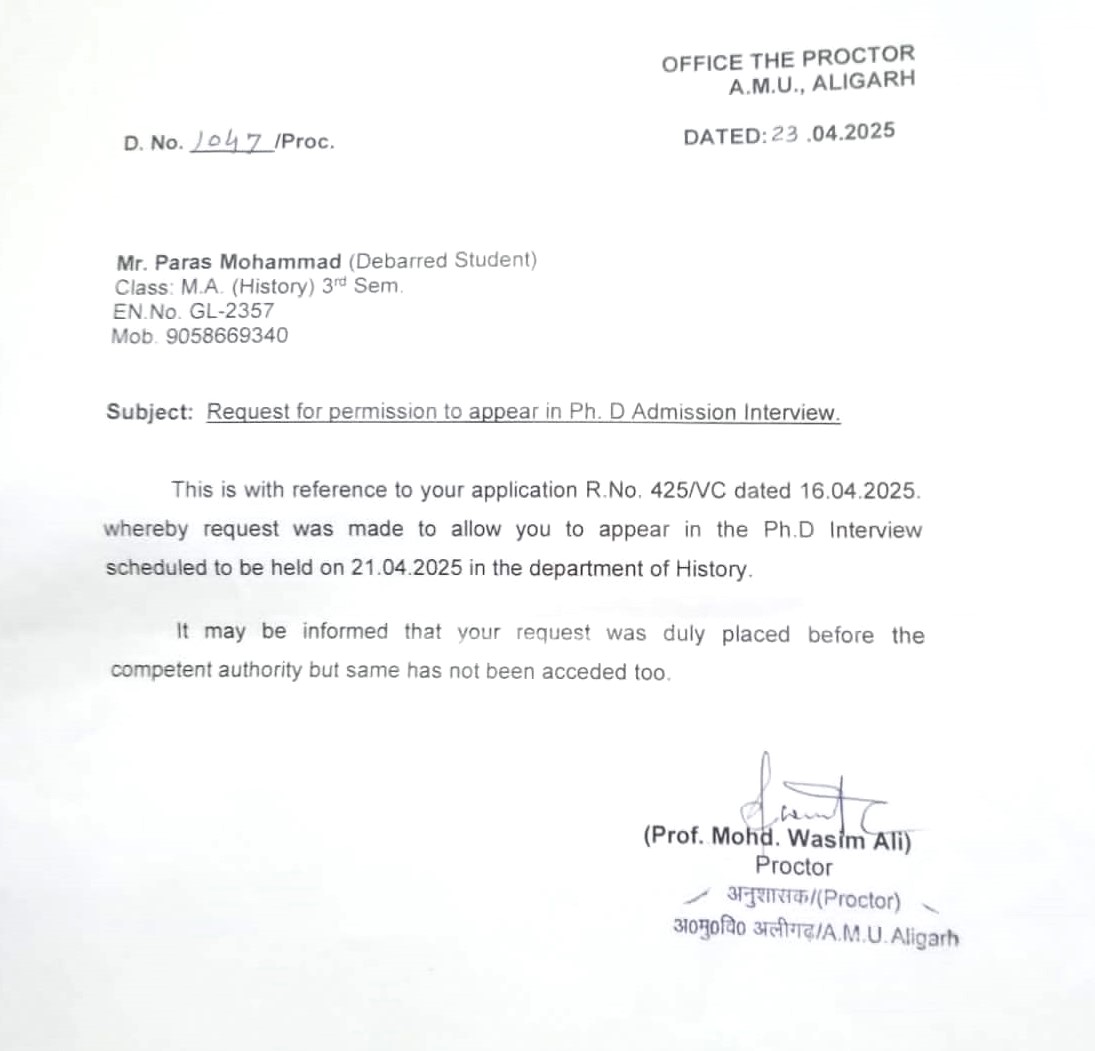
He cleared the entrance exam for the P.hD. program and was shortlisted for the interview. But on April 21, 2025, he was told he had been marked absent. Paras says he was never given the chance to attend the interview and believes this was done deliberately.
During his undergraduate and postgraduate years, he vocally supported student rights and consistently demanded the revival of the AMU Students’ Union (AMUSU), which hasn’t held elections since 2020. He says, “I was not involved in any activism after my Master’s, but my earlier efforts seem to have made me a target.”
His ordeal deepened on November 21, 2024, when he was suspended from the university following a student protest near the administrative block. Paras denies participating in this specific protest. He requested an inquiry based on CCTV footage under Section 36B of the AMU Act. Despite submitting a letter to the Vice-Chancellor demanding a fair investigation, he received no response.
Paras has now approached the High Court, demanding a fair interview for his PhD, removal of false charges, and justice. “If I were suspended, how did I qualify for the P.hD. entrance exam? This clearly shows that I was eligible and capable,” he says. The denial, he believes, was completely unfair.
But Paras’s story is not unique.
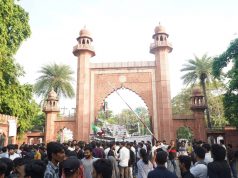
Many students at AMU and other universities face similar punishment for raising their voices. In November 2024, when students peacefully protested for the revival of student union elections at AMU, the university responded with FIRs and disciplinary actions, not dialogue
Even complaints regarding basic needs are being met with threats. At Habib Hall in AMU, students who protested poor food quality and hygiene were allegedly told by the Provost, “Main tumhara career khatam kar dunga” (I will destroy your career). When students submitted a report to the Proctor, they were slapped with show-cause notices.
In the recent protest at Abdullah Hall, girls who demanded basic facilities like adequate electricity and water supply were allegedly threatened with FIRs. If students are punished for simply asking for basic needs, how can anyone expect justice on larger issues?
These are not isolated incidents. They show a clear pattern: students who speak up are being silenced through suspensions, false charges, threats, and a lack of institutional support.
The legal plea by Paras seeks his rightful PhD interview, withdrawal of false allegations, and restoration of a fair and democratic environment at AMU. “I was doing well in both academics and sports. Now, because of these false accusations, I am suffering from mental stress. I can neither study nor continue my training,” he shares. His sporting career has also taken a serious hit.
Paras, despite everything, is still standing firm. “I need people to speak up for rights and truth,” he says. His story, and those of others facing similar repression, are a powerful reminder of the shrinking space for dissent in our universities. If students like Paras, who qualify on merit, are denied opportunities because of activism, what message is AMU giving?
The shrinking space for dissent in universities is a serious concern. If asking for basic rights or fair treatment leads to punishment, how can students feel safe to express themselves or dream freely?